


























Samsung Galaxy Z TriFold hands-on: Flexing is believing at CES 2026

When I first heard whispers about the Samsung Galaxy Z TriFold, I immediately felt conflicted. On one hand it felt like the natural evolution of bi-fold phones like the Z Fold 7. But on the other, all this fancy tech comes with an even higher price — around $2,500 based on current conversion rates from Korean won — not to mention the added bulk you get from a third folding panel. So even as someone who has used a foldable as my daily driver for almost a decade straight, it felt like Samsung’s latest high-end phone was going backwards in terms of both portability and affordability. But then at CES 2026, I got a chance to go hands-on with the Galaxy Z TriFold and all of my concerns pretty much instantly disappeared because with this thing, flexing is believing.
My initial consternation comes in large part from using the Z Fold 7, which hit a major milestone this year thanks to a revamped design that doesn’t come with any added size or weight even when compared to comparable candybar-style phones like the Galaxy S25 Ultra. That’s a major breakthrough considering how hefty and chunky the original Galaxy Fold was back in 2019. And when you compare the Z Fold 7’s dimensions (7.58 ounces and 8.9mm thick when folded) to the new TriFold (10.9 ounces and 12.9mm when folded), there’s no doubt that Samsung’s new flagship foldable comes with a lot of extra bulk. To put things into context, we have to go back several generations to the Z Fold 5 just to find a comparable phone with similar thickness (13.4mm). And even then, that handset is still significantly lighter than the TriFold at 8.92 ounces. 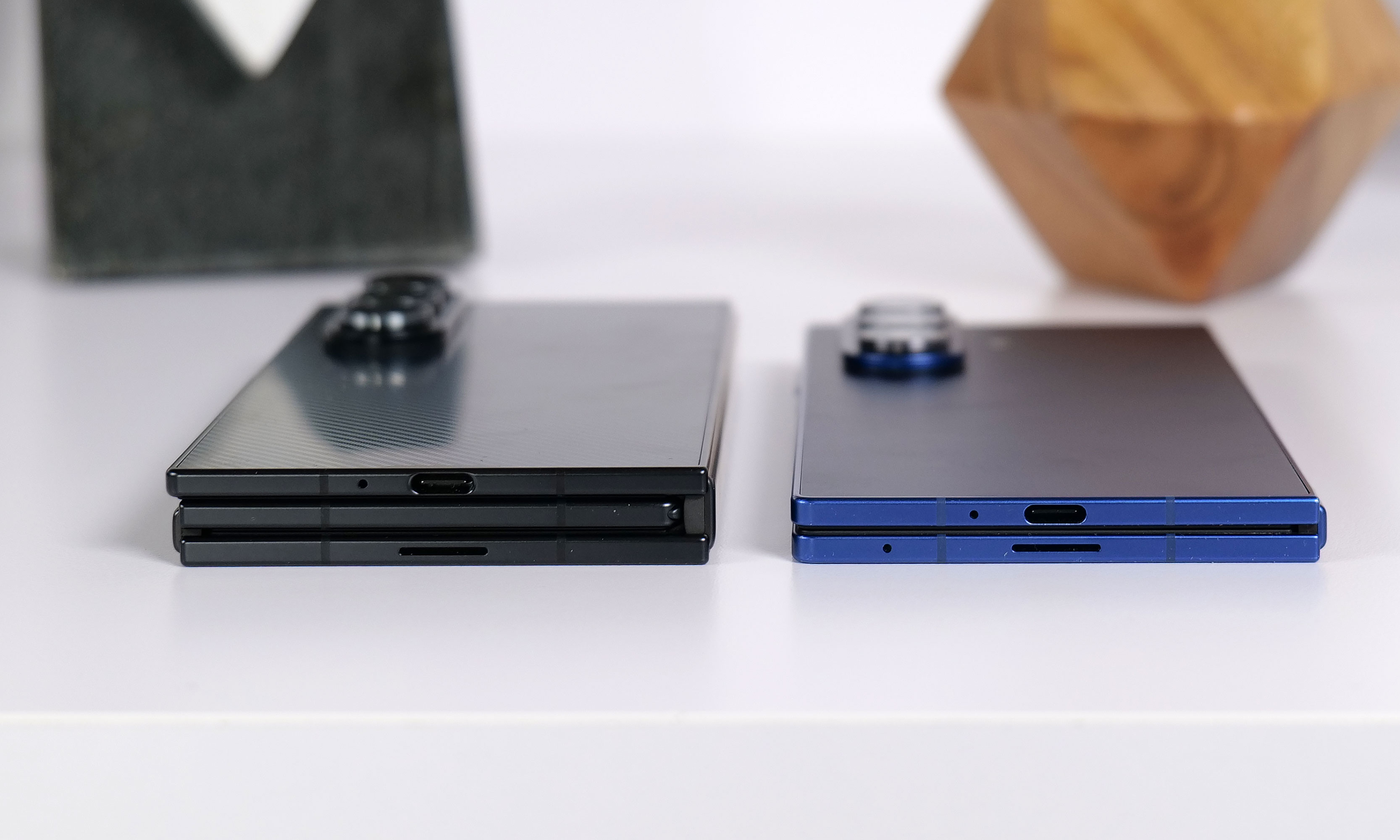
But then I opened it up and my concerns were quickly pushed aside because suddenly you’re greeted with 10 inches of vivid AMOLED goodness. As a phone that can pull double duty as a tablet, the jump up from the Z Fold 7’s 8-inch main display cannot be understated. Not only does it make multitasking so much easier, when combined with Samsung’s DeX desktop mode, you basically get a miniature laptop experience from a device that fits in a pocket. Especially if you don’t mind carrying around a travel-friendly mouse and keyboard. Plus, you can connect the TriFold to an external display (either wired or wirelessly) to access even more screen space. Way more than with the Z Fold 7, I can honestly see myself leaving my PC at home and using the TriFold as my primary work device.
Another important but easily overlooked upgrade on the Galaxy Z Trifold is the 4:3 aspect ratio for its 10-inch main display. Compared to the Z Fold 7 and its almost perfectly square screen, you just get so much extra room on the sides for widescreen movies and shows. I tested this out by watching the trailer for Christopher Nolan’s The Odyssey, and even though that movie uses a super wide aspect ratio due to being filmed entirely on IMAX cameras, the viewing experience was just so much better. Peak watchability is something the regular Z Fold line has sort of left by the wayside as the company moved to larger exterior displays, which resulted in the series’ primary screen becoming more square. The one downside though is that the TriFold may make you more of a resolution snob, as it’s a lot easier to tell the difference between 1080p and 2K or 4K on a larger 10-inch panel.
The final pillar of the TriFold’s kit is all the engineering that Samsung put into making it easy to open and close. Simply moving from one hinge to two while adding a third folding panel undersells the complexity of its design. Samsung actually uses two different types of magnets that push or pull depending on where they are, which makes accessing the TriFold’s primary display practically just as easy as on the Z Fold 7. That’s no small feat. Opening and shutting this thing is just so satisfying on a tactile level, and that’s before you consider that there’s basically no downgrade in terms of image quality.
While there’s only one way to unfurl the TriFold, which might seem confusing at first, Samsung addressed that too by throwing up a warning and making the whole phone vibrate if you try to do it wrong. And then there are components like the glass-reinforced carbon panels Samsung uses to add strength and durability to its chassis while keeping it as thin as possible. The one potential concern in the future is that unlike Samsung’s older foldables, there’s not as much room for improvement to shrink its dimensions much further, as the TriFold’s slimness is currently limited by the size of its USB-C jack. So if the next model wants to make big gains there, it may need to go completely portless.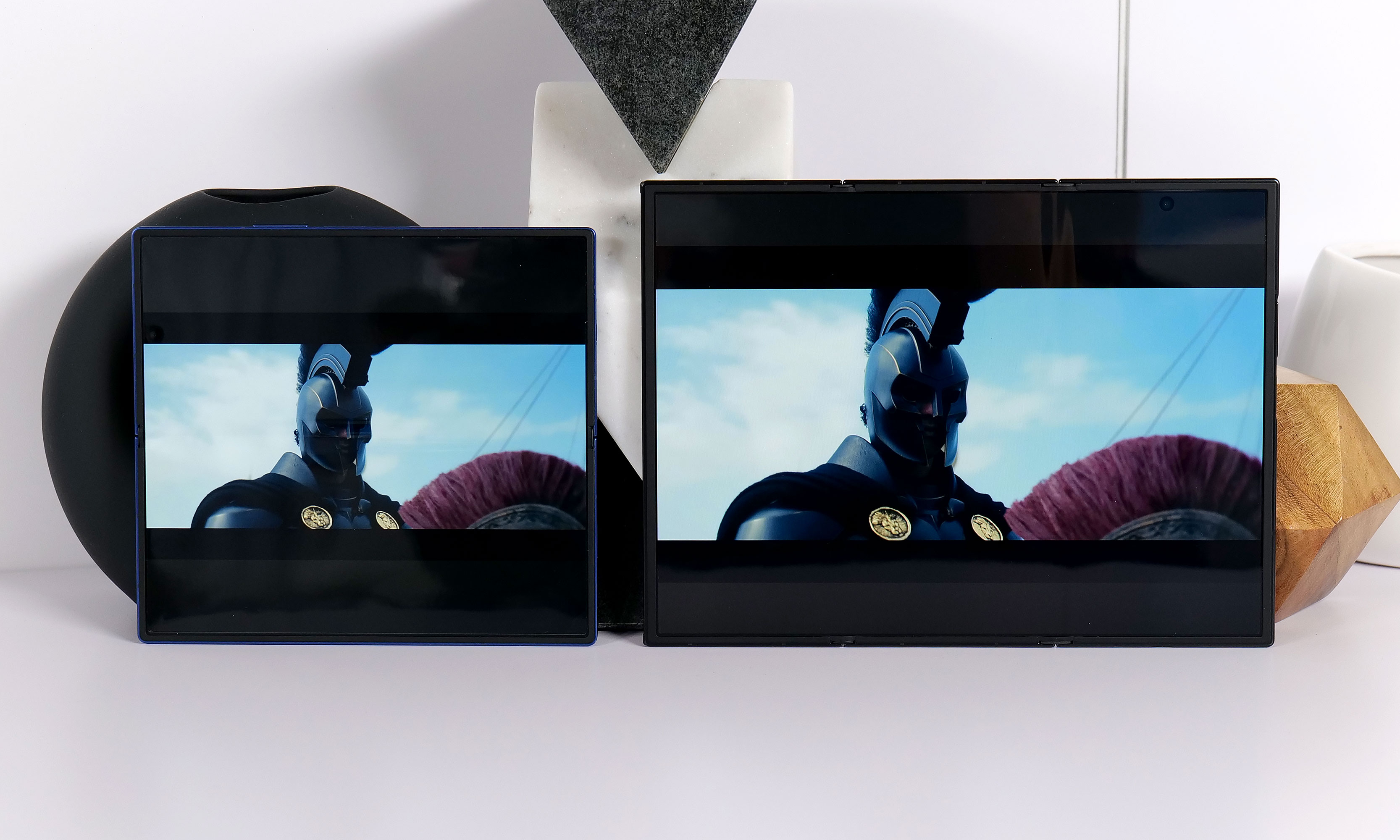
On a certain level, I kind of hate how much I like the Galaxy Z TriFold. I really don’t want to go back to bigger, heavier phones that are even more bulky and expensive than the Z Fold 7. But the appeal is impossible to deny and for people who love a good multitasker, I can easily see how these tradeoffs are worth the upside of Samsung’s latest apex foldable.
The Samsung Galaxy Z TriFold is currently on sale in South Korea, though we’re still waiting for official pricing and availability for the US and North American market.
The Galaxy Z TriFold is one of many new technologies Samsung announced at CES 2026. On the home entertainment side of things, the company revealed updated OLED TVs and showed off a massive 130-inch Micro RGB TV, the latter of which representing a trend we’re seeing at the show this year. There’s also a new Samsung soundbar that offers impressive bass performance sans subwoofer. Samsung’s Music Studio 5 and 7 speakers have unique designs that could blend in nicely with your home decor, and the forthcoming Galaxy Book 6 series of laptops are thin-and-light notebooks powered by Intel Panther Lake chips.
This article originally appeared on Engadget at https://www.engadget.com/mobile/smartphones/samsung-galaxy-z-trifold-hands-on-flexing-is-believing-at-ces-2026-224343480.html?src=rss