























China Just Built a Railway Inside the EU. Here’s Why It’s Just the Beginning
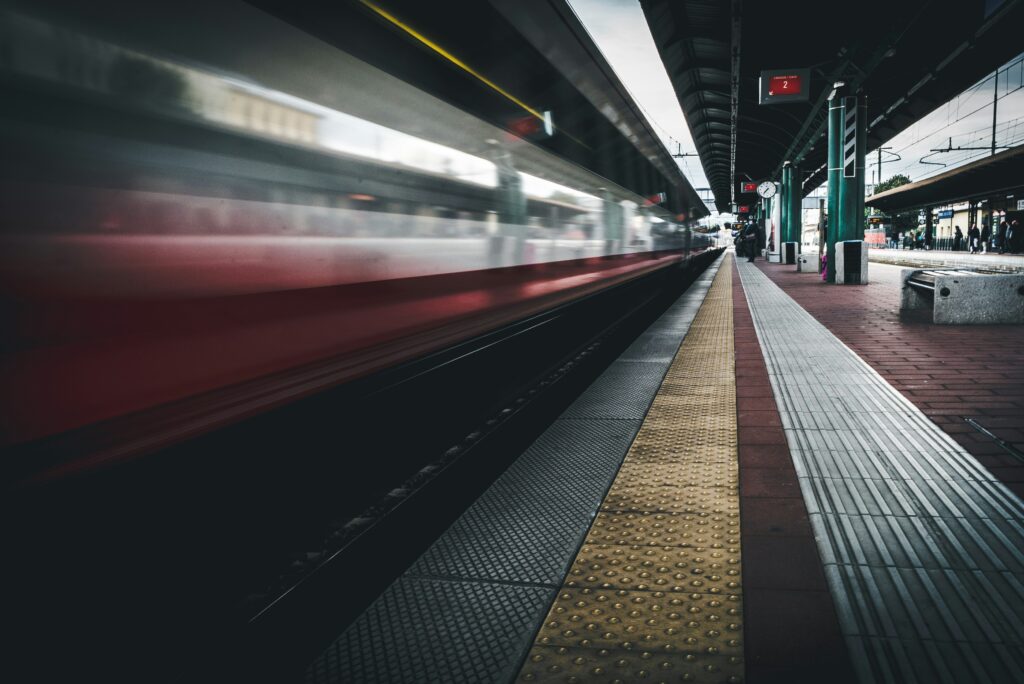
Just after midnight on February 27, 2026, a freight train departed Budapest’s Ferencváros station and rolled south towards the Serbian border. Freight services on the Hungarian section of the Budapest-Belgrade railway officially resumed, with the first train departing from Budapest’s Ferencváros station CasinoBeats — marking the opening of China’s most strategically significant infrastructure project ever completed inside the European Union. A decade in the making, billions of dollars over budget, and delayed by years of regulatory complexity, political controversy, and a train station collapse in Novi Sad that triggered nationwide protests in Serbia, the Budapest-Belgrade line is finally operational. And its implications extend far beyond the 350 kilometres of modernised track it covers.
What Was Built — and How Long It Took
In November 2013, at the Bucharest Summit of the 16+1 initiative, China, Hungary, and Serbia first discussed building a high-speed railway connecting the two capitals. The announcement came just one month after President Xi Jinping put forward the Belt and Road Initiative — and the Budapest-Belgrade railway quickly became the BRI’s most important European project. Tradematesports What was originally announced as a two-year project took over a decade to deliver. The Hungarian section spans 158.6 kilometres, designed for 160 km/h, and was built by a consortium including China Railway No.9 Engineering Bureau Hungary, China Railway Electrification Bureau Hungary, and local Hungarian firms. Casino.org
The Hungarian section involved an estimated investment of around €2.5–2.7 billion, financed primarily by a loan from China’s Export-Import Bank. The cost per kilometre was significantly higher than the Serbian section, explained by EU technical and regulatory requirements including the implementation of the European ETCS train control standard. Wikipedia The full line’s price tag sits at approximately $2.89 billion — though independent analysts suggest the final cost will exceed $3 billion once interest payments are factored in. The Export-Import Bank of China financed the project through 20-year loans of $1.8 billion to Hungary and $1.3 billion to Serbia, covering 85 percent of total costs. According to one Hungarian projection, Hungary would need 2,500 years to repay the loans at current traffic volumes. Tradematesports
Why China Built It — and Why It Matters
The commercial logic is straightforward once you understand what sits at the southern end of the corridor. In 2009 COSCO, the Chinese shipping company, acquired the licence to operate Piraeus’ Pier II for 35 years. In 2016 COSCO bought a 67 percent stake in Pier I, and since then Piraeus has functioned as the commercial anchor for Asian companies importing products to Europe. Tradematesports The Budapest-Belgrade railway is the critical overland link between that port and Central Europe — part of Beijing’s wider Belt and Road strategy to build a seamless China-Europe land-sea freight corridor that bypasses western European ports entirely.
The most direct change is speed. After the full line opens to passengers, travel time between Belgrade and Budapest will be reduced from eight hours to under three hours — a compression of time that strengthens regional economic connections, facilitates logistics efficiency across Central and Eastern Europe, and significantly enhances Hungary’s position as a transportation hub. Racing Post For Beijing, the railway is not primarily about passenger convenience. It is about securing a fast, reliable, China-controlled freight corridor from the Aegean Sea to the heart of the EU — one that does not depend on the goodwill of Western European governments or ports.
The Problem With the Opening
The launch has not been without difficulty. Operations are currently subject to significant restrictions, mainly due to problems with the train control system. Although the physical infrastructure — the line, stations, and electrification — is complete, the ETCS train control system is reportedly not yet fully operational and has not received all necessary authorisations. In the absence of a fully operational system, only one train can currently run in each direction on the entire 160km section. Wikipedia Passenger services, originally expected to begin in late February, have been pushed back to mid-March at the earliest — a reminder that integrating Chinese-built infrastructure with EU technical standards remains genuinely complex, whatever the political optics suggest.
Will There Be More?
Almost certainly. The Budapest-Belgrade line is the first section of the planned Budapest-Belgrade-Skopje-Athens railway — a China-CEE hallmark project connecting Hungary, Serbia, North Macedonia, and Greece’s Chinese-operated Port of Piraeus. TheJournal.ie Sections south of Belgrade towards Niš are already under development, with EU funding now also in the mix — a remarkable situation in which Brussels is part-financing a corridor that primarily serves Chinese strategic and commercial interests.
The deeper question — the one European policymakers have been slow to confront directly — is what it means for EU strategic autonomy when critical infrastructure inside its own borders is built with Chinese loans, by Chinese contractors, using Chinese technology, to serve Chinese commercial priorities. Hungary’s willingness to champion the project under Prime Minister Orbán reflects a broader pattern of economic pragmatism over strategic caution. The terms of the financing agreements are classified for ten years, meaning EU citizens and institutions cannot scrutinise the conditions under which Chinese capital entered the bloc’s infrastructure base.
The Budapest-Belgrade line is open. The corridor to Piraeus is being built. And the strategic architecture China has been constructing patiently across European infrastructure for fifteen years is, piece by piece, clicking into place.
FAQ
Q: Why did China finance the Budapest-Belgrade railway and what does it get in return? A: China’s primary return is strategic rather than financial. The railway connects China’s COSCO-operated Port of Piraeus in Greece to Central Europe, creating a fast, reliable freight corridor that moves Chinese goods deep into the EU market without relying on western European ports or infrastructure. The loans — issued by China’s Export-Import Bank at commercial rates — ensure Chinese contractors built the line using Chinese technology and equipment, while the debt ties Hungary and Serbia into long-term financial relationships with Beijing. The commercial terms are classified for ten years, meaning independent scrutiny is effectively impossible.
Q: Will China build more railways in the EU? A: The Budapest-Belgrade line is explicitly the first section of a planned corridor running from Budapest through Belgrade, Skopje, and on to Athens — with construction already progressing south of Belgrade. Beyond this specific project, China’s infrastructure presence in Central and Eastern Europe is expanding across road, port, and energy networks. The combination of cheap Chinese financing, EU states’ infrastructure funding gaps, and political leaders willing to prioritise economic pragmatism over strategic caution makes further expansion likely — particularly in smaller EU member states where the leverage of Chinese capital is proportionally greater.
The post China Just Built a Railway Inside the EU. Here’s Why It’s Just the Beginning appeared first on European Business & Finance Magazine.