


























Fund Managers Turn Most Bearish on the Dollar in Over a Decade as Policy Chaos Erodes Confidence
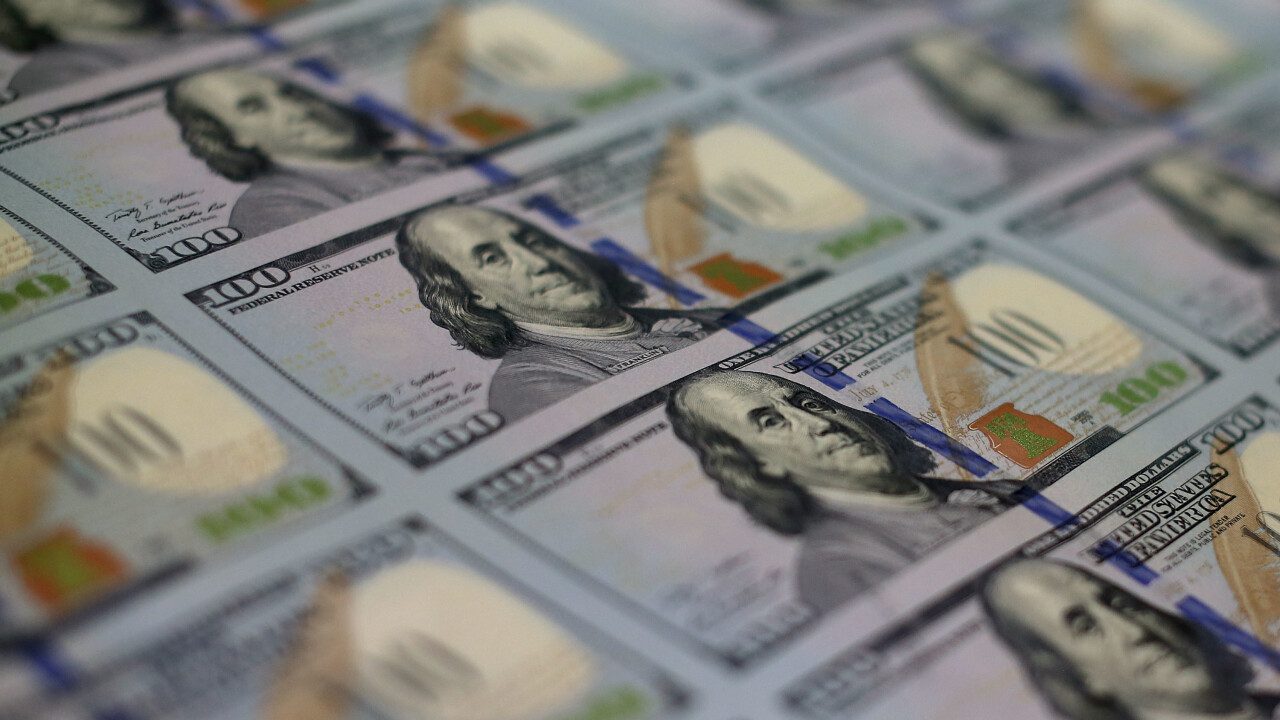
The US Dollar Index is hovering near a four-year low. Bank of America’s February survey shows fund manager positioning at its most negative since at least 2012. Capital is flowing out — and the reasons are structural, not cyclical.
Fund managers have taken the most bearish stance on the US dollar in more than a decade, as the currency absorbs the accumulated damage of unpredictable American policymaking, eroding institutional confidence, and a widening gap between what global investors expect from the world’s reserve currency and what they are actually getting.
The dollar is down 1.3 per cent in 2026 against a basket of peers including the euro and the pound, extending a punishing 9.4 per cent decline across the whole of 2025. The Dollar Index is now hovering close to a four-year low, having briefly dipped below 96 in late January — territory it has not visited since early 2022.
Bank of America’s February fund manager survey, published on Friday, quantified the scale of the retreat. Dollar positioning among the institutional investors polled has dropped below last April’s nadir — the point at which President Donald Trump spooked global markets with sweeping tariff announcements that triggered the sharpest half-year dollar decline since 1973. The survey found that managers’ exposure to the dollar is now the most negative since at least 2012, the earliest year for which the bank holds data.
The Shift Is Not Speculative — It Is Structural
What makes this move particularly significant is its composition. This is not a hedge fund bet. The selling is being driven by so-called real money investors — pension funds, sovereign wealth funds, and long-term institutional allocators — who are either hedging against further dollar weakness or actively reducing their exposure to dollar-denominated assets.
Options data from CME Group confirms the shift. Bets against the currency have outstripped positive wagers on the dollar so far this year, reversing the positioning of the fourth quarter of 2025, when optimism about US economic exceptionalism still prevailed. Bets on further dollar depreciation versus the euro, measured through risk reversals, have reached levels only previously seen during the Covid-19 pandemic and after the April 2025 tariff shock.
Caroline Houdril, a multi-asset fund manager at Schroders, told the Financial Times that the firm is witnessing increasing capital repatriation, with overseas investors who previously held dollars converting their funds back into local currencies. That process — European and Asian institutions bringing capital home — is the kind of structural flow that tends to be sticky rather than speculative.
Why the Dollar Is Losing Its Gravitational Pull
The traditional case for holding dollars rests on three pillars: higher US interest rates relative to peers, the depth and liquidity of US capital markets, and the dollar’s role as the world’s reserve currency. All three are under pressure simultaneously.
The US–Europe interest rate spread has narrowed to approximately 0.25 percentage points as the Federal Reserve has cut rates by 75 basis points since mid-2025 while the European Central Bank has held a tighter stance for longer. That compression has removed one of the dollar’s key advantages and redirected capital flows toward the eurozone. In January alone, net outflows from US Treasuries reached an estimated $18 billion, with a further $22 billion leaving US equities.
Trump’s aggressive geopolitical actions — from sweeping tariffs that disrupted global supply chains to threats against European countries over Greenland — have raised anxiety over America’s attractiveness as a safe destination for the world’s capital. His pressure on the Federal Reserve has compounded the concern. Atlanta Fed President Raphael Bostic acknowledged earlier this month that confidence in the dollar is being questioned and warned that such doubts could create ripples in the currency’s valuation.
The appointment of Kevin Warsh as the new Fed Chair has eased some concerns about institutional independence, but as Bank of America’s Ralf Preusser noted, the easing of those fears has not translated into renewed demand for the dollar or greater optimism toward US assets. The damage appears to have been done.
Where the Money Is Going Instead
The beneficiaries are visible across currency and commodity markets. The euro and the pound have strengthened against the dollar, while the Swiss franc has surged to an 11-year high, gaining 3.5 per cent against the dollar in the first six weeks of 2026 alone. Gold has been a primary recipient of defensive flows, trading near record highs as investors seek insulation from currency debasement and geopolitical risk. European equities have outperformed US equities year-to-date in dollar terms, partly because the falling greenback flatters returns when converted back into local currencies — a dynamic that has accelerated the broader rotation of global capital away from Wall Street.
Expectations are building among reserve managers that diversification away from the dollar will accelerate. Nearly half of Bank of America’s respondents identified strong US economic data — particularly the January jobs report, which significantly exceeded expectations — as the primary near-term catalyst for a potential dollar rebound. But even that caveat underscores how fragile sentiment has become: the bull case for the dollar now rests not on structural advantages but on the hope that a single data print might temporarily reverse a deeply entrenched trend.
The dollar’s decline is no longer a trade. It is a reallocation — and for now, the direction of travel is clear.
The post Fund Managers Turn Most Bearish on the Dollar in Over a Decade as Policy Chaos Erodes Confidence appeared first on European Business & Finance Magazine.