





















How the Iran War Is Threatening Dubai’s Business Model — and What It Means for the Gulf’s Most Ambitious Economy
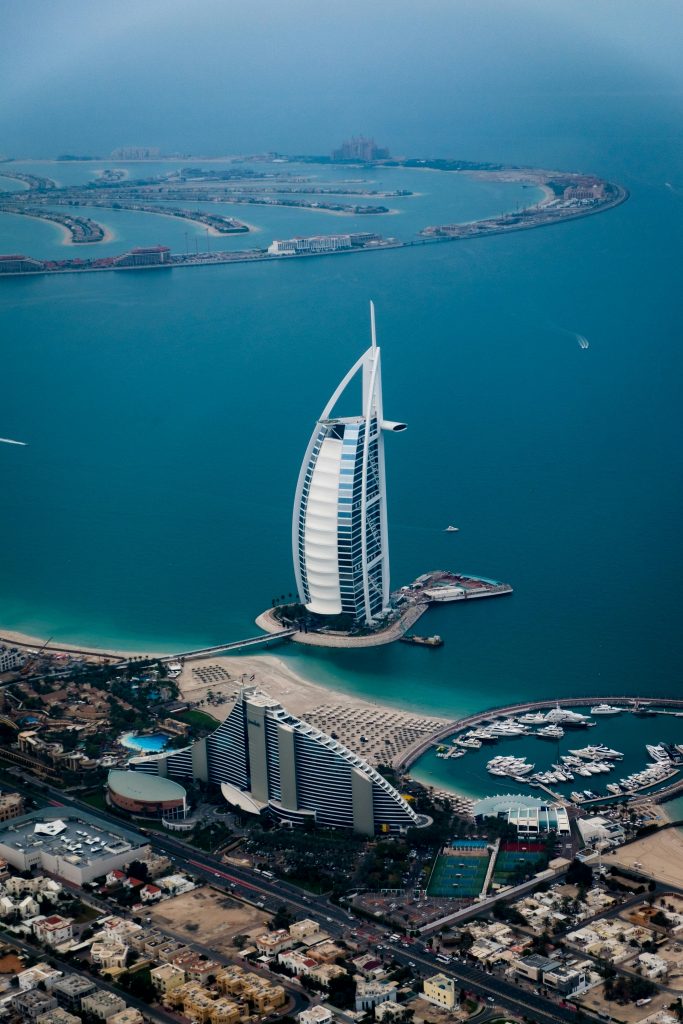
The Iran War Is Threatening Everything Dubai Built
Dubai’s business model is, at its core, a bet on stability. For three decades, the emirate transformed itself from a regional trading post into one of the world’s most sophisticated commercial hubs by offering something the rest of the Middle East could not reliably provide: predictability. Low taxes, world-class infrastructure, an open economy, and a geographic position that made it the natural gateway between East and West. Businesses, wealthy individuals, and global capital flooded in — because Dubai was the safe harbour in a volatile neighbourhood.
The Iran war is testing that proposition more severely than anything in Dubai’s modern history.
The Immediate Shock
The first signs of stress were visible almost immediately after the conflict began. Blasts were heard across Dubai in the early days of the war, with the government confirming it had activated air defences. Passengers at Dubai International Airport — the world’s busiest international airport by passenger numbers — were ushered into train tunnels as a precautionary measure. For a city whose entire identity is built on being open, connected and safe, those images carried enormous symbolic weight regardless of the actual damage sustained.
Dubai International handles over 85 million passengers annually and serves as the operational base for Emirates, one of the world’s most profitable airlines. The aviation and travel sector faces severe disruption as the conflict spreads across the Gulf’s operational radius — and the psychological impact on business travel, tourism, and regional connectivity may outlast the physical threat by months.
The Human Stakes — Residents, Expats and Those Thinking of Moving
Dubai is home to approximately 3.5 million people, of whom over 90% are expatriates. British, Indian, American, European, and Arab professionals have built lives, businesses, and families there — drawn by the tax-free salaries, safety, sunshine, and a quality of life that few cities in the world can match at comparable cost. For many, Dubai was not just a business decision but a life decision.
Those residents are now watching missile interceptions from their apartment windows and asking questions they never expected to ask. Expatriate community forums are reporting a surge in conversations about contingency planning, insurance coverage, and — for some — whether the time has come to reconsider. International schools are fielding calls from parents. Relocation companies report a noticeable uptick in enquiries from Dubai-based families exploring options.
Equally significant is the pipeline of people who had been actively planning to move to Dubai. The Gulf’s appeal as a destination for globally mobile professionals has been one of the defining economic trends of the post-pandemic era — but sustained conflict next door changes the calculation for families and individuals who have not yet committed. The longer the war continues, the more that pipeline slows.
The Trade and Logistics Exposure
Dubai’s position as the Gulf’s premier re-export and logistics hub is directly exposed to the war. The Strait of Hormuz — through which a quarter of the world’s crude oil passes — effectively borders the UAE’s eastern coastline. With tanker traffic through the strait at a near standstill, the flow of goods, energy, and commodities through Dubai’s ports has been disrupted at a structural level. Fujairah, the UAE’s critical oil storage and bunkering hub, has already been targeted. The energy market consequences of the Iran conflict have hit the UAE’s logistics infrastructure at its most vulnerable point.
Capital Flight and the Wealth Hub Question
Over the past five years, Dubai successfully positioned itself as the premier destination for global high-net-worth individuals — Russian oligarchs, Indian industrialists, European entrepreneurs, and crypto billionaires all chose it as their base precisely because it felt insulated from regional instability. That narrative is now under pressure. Wealthy individuals and institutional investors make location decisions on long time horizons — but they reassess rapidly when missiles are intercepted over the city they call home.
Dubai’s Response — and Why It May Not Be Enough
The UAE government has been careful and deliberate throughout — maintaining diplomatic channels, avoiding direct military involvement, and projecting calm. That neutrality has historically been one of Dubai’s most valuable commercial assets. But the Iran war is different in one critical respect: it is not an external shock to be absorbed. It is happening next door, at a scale and duration nobody can confidently predict — and Dubai has never been tested by a sustained conflict this close, this intense, and this unresolved. The political and economic consequences for European businesses operating across the Gulf are deepening by the week.
Dubai has survived disruption before. Its institutional resilience and financial reserves are genuine. But for the millions who live there — and the many more who were planning to — the city’s greatest selling point was that you never had to have this conversation at all.
FAQ
Q: How exposed is Dubai to the Iran war economically? Dubai’s exposure spans aviation and tourism disruption, port and logistics interference at Fujairah and Jebel Ali, energy supply chain disruption through the Strait of Hormuz, and the broader risk to its reputation as a stable base for global capital. With over 3.5 million residents — more than 90% of them expatriates — the human dimension of that exposure is equally significant.
Q: Are people leaving Dubai because of the Iran war? There is no mass exodus, but expatriate communities are reporting increased contingency planning conversations and a rise in relocation enquiries. More significantly, the pipeline of professionals and families actively planning to move to Dubai is slowing as the conflict continues. For a city whose growth model depends on attracting globally mobile talent and capital, that cooling of intent matters as much as current departures.
The post How the Iran War Is Threatening Dubai’s Business Model — and What It Means for the Gulf’s Most Ambitious Economy appeared first on European Business & Finance Magazine.