











Behind Cristiano Ronaldo: How a Kid Who Begged for Burgers Became Football’s First Billionaire
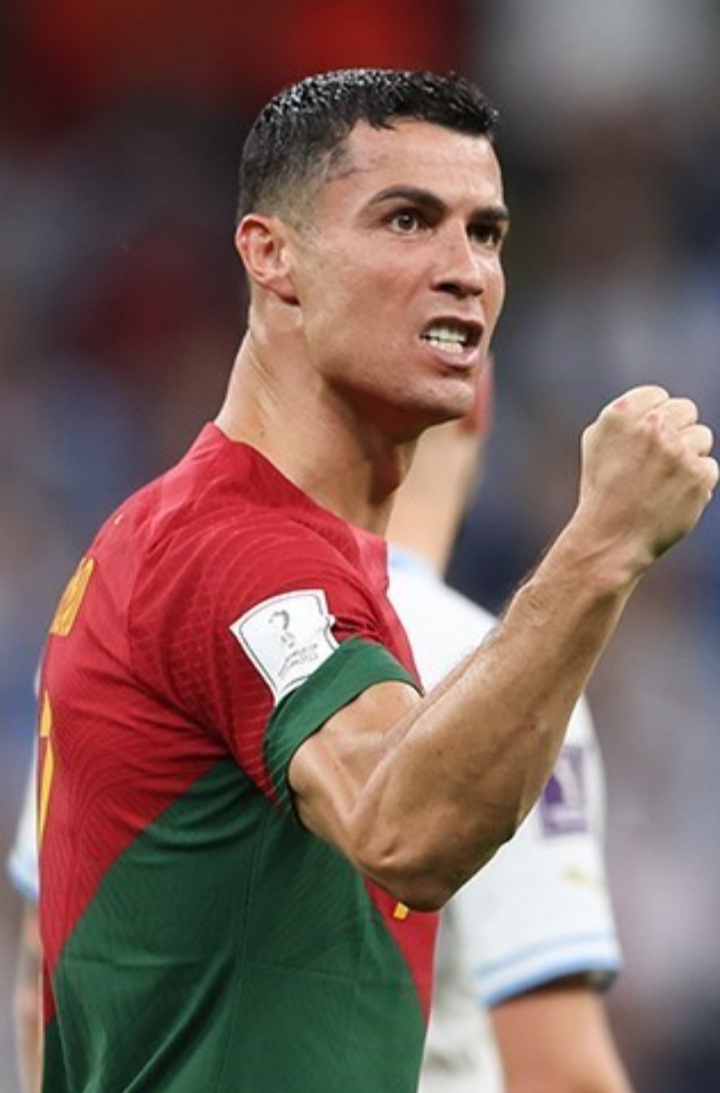
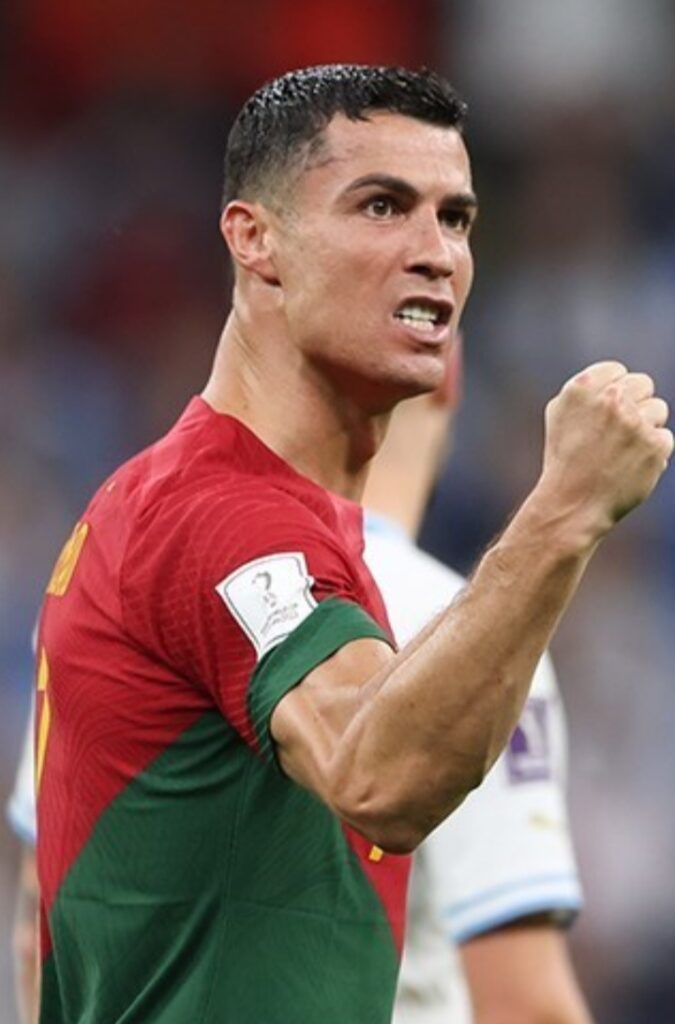
Football’s first billionaire earns more from his name than he ever did from his feet. At 41, with 950+ career goals and 665 million Instagram followers, Ronaldo has built a machine that will keep printing money long after the boots come off.
In 2007, a 22-year-old Cristiano Ronaldo did something that seemed insignificant at the time. He filed a trademark for “CR7” — his initials and shirt number. It was not a vanity project. It was the founding act of what would become one of the most valuable personal brands in the history of sport, and the cornerstone of a business empire now estimated by Bloomberg at $1.4 billion.
Nearly two decades later, the boy who grew up sharing a single room with three siblings in a tin-roofed house in Funchal, Madeira — who by his own account used to wait outside McDonald’s hoping workers would pass him leftover burgers — is football’s first billionaire. He is the highest-paid athlete on the planet, the most-followed human on Instagram, and the architect of a commercial operation so diversified that his playing career, extraordinary as it is, represents only one revenue stream among many.
Understanding how Ronaldo built this is not just a sports story. It is a case study in how elite athletes are redefining wealth creation — much as Formula 1’s transformation from a dying sport into a $3.65 billion machine reshaped how we think about the business of sport itself.
The Al Nassr Contract: The Biggest Deal in Sports History
The financial engine that pushed Ronaldo past the billion-dollar threshold was his June 2025 contract extension with Saudi Arabian club Al Nassr. The deal is widely reported to be worth between $400 million and $620 million over two years, making it the most lucrative contract in the history of professional sport.
The structure goes far beyond salary. Ronaldo’s base pay is reported at around $178 million per year, tax-free under Saudi law. On top of that, the deal includes a $24.5 million signing bonus — rising to $38 million if he completes the full term — and, crucially, a reported 15 per cent ownership stake in the club itself. That equity component transforms Ronaldo from an employee into a co-owner, aligning his financial interests with the long-term growth of the Saudi Pro League at a moment when the kingdom is pouring hundreds of billions into sport as part of its Vision 2030 diversification programme.
By the time his Al Nassr deal expires in 2027, Ronaldo will have earned more than $550 million in playing salaries alone across his career — a figure that no other footballer has come close to matching. But salary, remarkably, is not where most of his wealth comes from.
The Nike Lifetime Deal: $1 Billion and Counting
Ronaldo’s lifetime endorsement deal with Nike, signed in 2016, is reported to be worth in excess of $1 billion over its duration. The deal guarantees annual payments regardless of whether Ronaldo continues to play, effectively decoupling his Nike income from his athletic career. It places him in an exclusive club alongside only Michael Jordan and LeBron James as athletes with lifetime Nike contracts — a company that, despite its recent struggles, remains one of the most powerful brands in global consumer markets.
The present value of the deal is estimated to contribute approximately $200 million to Ronaldo’s current net worth, with future payments continuing to flow for decades. Nike’s bet was not on Ronaldo’s legs but on his brand — and with 665 million Instagram followers, 170 million Facebook followers, and over 60 million YouTube subscribers on his UR Cristiano channel (launched in August 2024 and one of the fastest-growing channels in the platform’s history), that bet has paid off spectacularly.
The Social Media Machine: $3 Million a Post
Ronaldo is the most-followed individual on Instagram — and arguably the most valuable social media account in the world. Each sponsored post on his feed commands an estimated $2.3 to $3 million. The theoretical annual value of his social following, if fully monetised, exceeds $100 million. He exercises strategic restraint, limiting sponsored content to maintain premium pricing — a scarcity model that most influencer-economy participants never master.
His combined audience across platforms exceeds 900 million people. That is not a following. It is a distribution channel, a marketing infrastructure, and an advertising inventory that most global brands spend billions attempting to build. In an era where even Meta’s $201 billion revenue model depends on capturing attention at scale, Ronaldo has built a comparable audience organically — and he owns it entirely.
The CR7 Empire: Hotels, Fashion, Fitness, Film
The CR7 brand, registered when Ronaldo was 22, now spans an extraordinary range of sectors. The CR7 fashion line — underwear, denim, footwear, eyewear, and accessories — sells in over 50 countries and generates hundreds of millions in annual revenue. The brand alone has been valued at between $250 million and $400 million.
 In hospitality, Ronaldo partnered with Portugal’s Pestana Hotel Group in 2016 in a €75 million joint venture to create Pestana CR7 Lifestyle Hotels. The chain now operates in Lisbon, Madrid, Madeira, Marrakech, and New York, targeting a younger, design-conscious traveller. The hotels generate an estimated $200 million in combined revenue.
In fitness, CR7 Crunch Fitness — a partnership with the American gym franchise — operates across Spain and Portugal. Ronaldo also launched Erakulis, a fitness and wellness app that received nearly €788,000 in EU funding. In healthcare, he co-founded Insparya, a chain of hair transplant clinics with branches across the Iberian Peninsula, in which his partner Georgina Rodríguez is listed as an executor.
In 2025, Ronaldo expanded into entertainment, launching UR.MARV, a film studio created in a 50-50 joint venture with British producer Matthew Vaughn. The studio has already financed and produced two action films and is planning a third, with distribution targeted at major streaming platforms.
He has also invested in Portuguese ceramics group Vista Alegre Atlantis, taking a 10 per cent stake through CR7 SA and a 30 per cent stake in its Spanish subsidiary. The deal includes plans for a joint venture to expand the brand across the Middle East and Asia. Other investments include a luxury watch line with Jacob & Co, an alkaline water brand (Ursu9), a padel centre in Portugal, and a stake in the Zela restaurant group co-owned with Rafael Nadal, Pau Gasol, and Enrique Iglesias.
His investment vehicle, CR7 Lifestyle, holds more than €20 million in equity capital and is managed by his brother Hugo Aveiro and two long-standing advisers.
The Structural Advantage: Why Ronaldo’s Wealth Will Grow After Retirement
What separates Ronaldo from the vast majority of professional athletes is not the size of his earnings but their architecture. Most footballers’ income collapses when they stop playing. Ronaldo’s is designed to do the opposite.
His Nike deal pays regardless of playing status. His CR7 brand operates independently of his career. His hotel, fitness, and fashion ventures generate revenue whether or not he scores another goal. His social media audience — nearly a billion people — is not going anywhere when he retires.
Ronaldo has confirmed that the 2026 World Cup will be his last tournament for Portugal, and his Al Nassr contract runs until 2027. By the time he hangs up his boots, he will have earned well over $2 billion in career income from salary, endorsements, and business ventures — a figure that no other footballer, and only a handful of athletes in any sport, will have matched.
The comparison most often drawn is with Michael Jordan, whose net worth of $3.5 billion is driven almost entirely by his post-playing Nike royalties and ownership stake in the Charlotte Hornets. Ronaldo is following the same playbook — but with a wider portfolio, a larger global audience, and a brand architecture that was designed from the start to outlast his career on the pitch.
Roger Federer, who recently became a billionaire through his stake in On Running, achieved it through a single transformative equity bet. Ronaldo has taken the opposite approach: dozens of businesses, hundreds of partnerships, and a personal brand so deeply embedded in global culture that it functions as its own economy.
The kid from Madeira who couldn’t afford a burger now earns more per Instagram post than most people earn in a lifetime. But the real story is not the money. It is the machine he built to make it — and the fact that, unlike almost every other athlete in history, the machine does not need him on the pitch to keep running.
The post Behind Cristiano Ronaldo: How a Kid Who Begged for Burgers Became Football’s First Billionaire appeared first on European Business & Finance Magazine.