



























WEEKEND READ: The Quiet Billionaire: How Zara’s Founder Built a $25 Billion Property Empire

A Coruña, June 27 (EBM Weekend Read) — Amancio Ortega is recognised globally as the founder of Zara, the fast-fashion chain that reshaped global retail. What almost nobody outside specialist property circles knows is that the 90-year-old Spaniard has spent the past two decades quietly assembling the largest privately held real estate portfolio on the planet — more than 200 properties across 13 countries, valued at roughly $25 billion, according to Forbes’ 2026 reporting, a sum that now exceeds Spain’s two largest publicly listed property companies combined.
From Shop Assistant to the World’s Richest Retailer
 Ortega’s story begins about as far from billionaire glamour as it’s possible to get. Born in 1936 to a railway worker and a housewife in northwestern Spain, he started working in a clothing shop in A Coruña at age 13. In 1963, alongside his siblings and his then-wife Rosalia Mera — who hand-stitched some of the earliest garments at home — he began making women’s bathrobes. The first Zara store opened in 1975, and a decade later the operation was incorporated into Inditex, the holding company that would eventually become the world’s largest fashion retailer, encompassing Zara, Massimo Dutti, Pull&Bear and several other chains. Inditex now operates more than 7,400 stores and generated €39.8 billion in revenue in its most recent full year. Ortega’s roughly 59-60% stake in that business is the foundation of a personal fortune Forbes places at approximately $148 billion in 2026 — the tenth-richest person on the planet, and for one brief stretch in 2015, the single richest man in the world, ahead of Bill Gates.
Why Property, and Why So Much of It
The real estate empire exists because of a specific, recurring problem most billionaires would consider a luxury: too much cash arriving too quickly. Ortega receives enormous annual dividends from his Inditex stake — a record $3.8 billion is expected this year alone — and idle cash sitting in an account is, from a tax and capital-efficiency perspective, the least productive place for that money to sit. Through his holding company Pontegadea, established after Inditex’s stock market listing, Ortega has systematically redirected a significant share of those dividends into property and other operating assets over the past two decades, rather than letting wealth accumulate passively. By funnelling dividends into corporate-structured property holdings rather than personal accounts, Ortega has also sidestepped hundreds of millions in Spanish wealth taxes while minimising exposure to dividend taxes — making the real estate strategy as much a sophisticated tax structure as an investment thesis.
A Genuinely Unusual Investment Philosophy
What separates Ortega from virtually every other major real estate investor globally is his approach: he doesn’t borrow money. Pontegadea’s acquisitions are overwhelmingly all-cash, a near-total rejection of the leverage that defines how most institutional and private real estate capital operates. He also doesn’t flip properties, and rarely sells — Pontegadea has sold just ten properties across the past two decades, a remarkable figure in an industry built on transaction churn and exit timelines. One of those rare sales, a Manhattan property, reportedly required swallowing a $65 million loss, illustrating that even Ortega’s occasional exits aren’t always profitable, but the broader pattern of holding indefinitely rather than trading has remained consistent regardless. Brokers covering the fund have described the approach less like opportunistic real estate investing and more like assembling a fine art collection: identify the single best asset available in a given market, pay cash for it, and hold it essentially forever.
The Trophy Buildings Inside the Portfolio
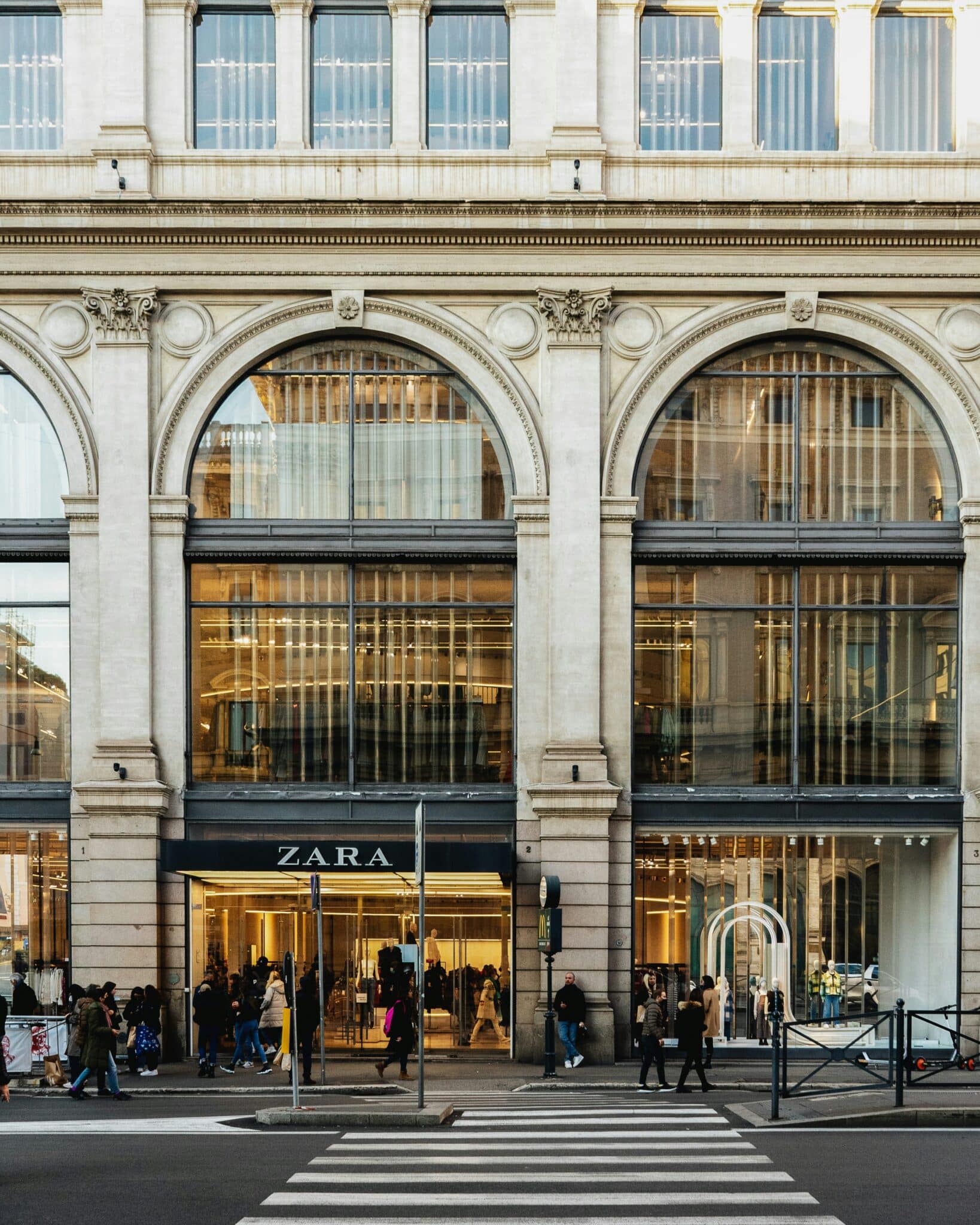
The scale of individual acquisitions illustrates just how selectively Pontegadea operates. The portfolio includes London’s Devonshire House, Madrid’s Torre Picasso, and Toronto’s gold-clad Royal Bank Plaza — the largest single acquisition in the fund’s history and a deal that, when paired with a record-setting Vancouver office purchase, underscored just how far beyond Spain Ortega’s ambitions now reach. In 2025 alone, a particularly active year, Ortega deployed roughly $3 billion across nine separate property transactions spanning eight countries, including an $850 million all-cash purchase of a Vancouver office building leased entirely to Amazon. The tenant roster across the broader portfolio reads like a directory of the world’s largest companies — Amazon, Google, Meta, Nike and Spotify all lease space inside Pontegadea-owned buildings, alongside Zara stores occupying some of the same prime retail locations the fund has acquired.
Beyond Buildings: Energy, Ports and Infrastructure
In recent years Ortega’s diversification has extended well beyond traditional office and retail real estate. Through Pontegadea, he now holds a 5% stake in Enagás and Red Eléctrica, Spain’s energy and electricity grid operators, alongside a 12% stake in REN, the equivalent Portuguese grid operator — giving him a meaningful position inside the physical infrastructure underpinning two national energy systems. He has also acquired a 49% stake in PD Ports, a British port operator, and more recently moved into logistics real estate and luxury rental housing, alongside an emerging position in Qube, an Australian infrastructure group. This pattern — converting retail cash flow into ownership of the physical infrastructure multiple economies depend on — represents a meaningfully different model of billionaire wealth deployment than the one most ultra-high-net-worth individuals pursue, where capital typically flows into financial assets, private equity, or passion investments rather than directly into ports, power grids and trophy office towers.
How Ortega’s Model Compares to Other Billionaire Athletes and Entrepreneurs
Ortega’s quiet, cash-funded approach to building generational wealth outside his core business sits in instructive contrast to how other recently created billionaires have diversified. Roger Federer’s path to a $1.1 billion fortune ran almost entirely through a single concentrated bet: a 3% equity stake in On Running, purchased for roughly $50 million in 2019, which grew alongside the company’s valuation to become worth more than all of Federer’s career tennis earnings combined. Rafael Nadal has taken a more operationally active route, co-founding Palya Invest with Spanish hotelier Abel Matutes to develop branded luxury residences across the Costa del Sol — a genuine operating business rather than a passive holding structure. Ortega’s model resembles neither: rather than a single concentrated bet or an actively managed development business, Pontegadea functions as a permanent, unlevered holding vehicle, acquiring irreplaceable assets and essentially never selling — a strategy that prioritises capital preservation and tax efficiency over the kind of outsized multiple-expansion returns Federer captured through On Running’s growth.
A Philanthropic Footprint That Matches the Scale
Ortega’s wealth deployment hasn’t been limited to property and infrastructure. In 2017 he donated €300 million to fight cancer across Spain, funding 440 stereotactic radiotherapy machines and lifting the number of equipped public hospitals from 20 to 70 — though the decision drew criticism from some Spanish political parties who argued essential medical equipment shouldn’t depend on a single billionaire’s philanthropy. More recently, in November 2024, he created a €100 million fund to support populations hit hardest by Spain’s catastrophic DANA flooding event. Unlike many billionaires who attach significant public branding to charitable giving, Ortega’s philanthropic activity follows the same low-profile pattern as the rest of his business career — large in scale, minimal in publicity.
The Bottom Line
What makes Ortega’s case genuinely instructive isn’t simply the size of the portfolio — it’s the discipline behind how it was built. Most concentrated fortunes of this scale eventually chase yield through leverage, trading, or increasingly speculative diversification as the capital base grows large enough that conventional returns no longer feel sufficient. Ortega did the opposite: as Inditex’s dividends grew larger, his strategy became more conservative, not less — all-cash purchases, near-zero portfolio turnover, and a relentless focus on irreplaceable assets in markets he understood. For a public unfamiliar with his face or his name, the lesson embedded in Pontegadea’s quiet accumulation of $25 billion in property is a useful corrective to the prevailing image of billionaire wealth-building: the most successful diversification strategy of the past two decades belonged not to the boldest risk-taker, but to the most disciplined one.
Related reads:
- WEEKEND READ: Inside Rafael Nadal’s €200 Million Real Estate Empire Beyond Tennis
- Roger Federer and How He Built a Multi-Billion-Dollar Brand
- How British Buyers Are Outpricing Spanish Locals: The Costa del Sol Gold Rush
The post WEEKEND READ: The Quiet Billionaire: How Zara’s Founder Built a $25 Billion Property Empire appeared first on European Business Magazine.