





























Study: Over 70 percent of citizens support EU membership, with a slight increase in Euroscepticism
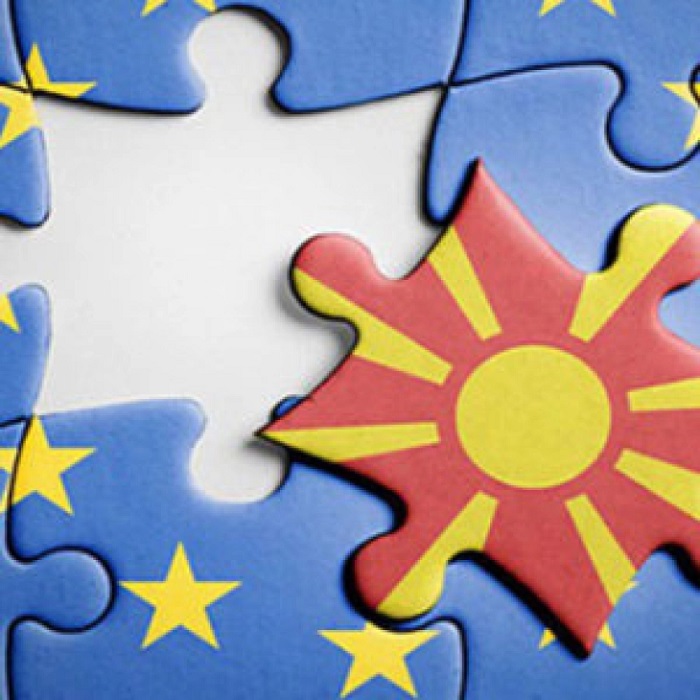
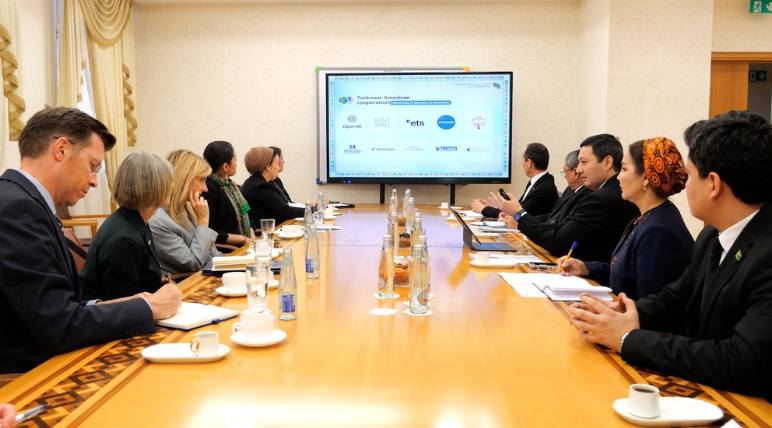
Skopje – A total of 71 percent of the population support EU membership, which is almost ten percent more compared to the previous year, according to the results of the research “Analysis of Public Opinion on the Accession of North Macedonia to the European Union (2014 – 2025)” by the Institute for Democracy – “Societas Civilis” – Skopje, presented today in the Parliament.
The key findings of the research show that Eurosceptic attitudes are slightly increasing – from 11 to 14 percent of the population are expressing Euroscepticism, while the number of undecided and apathetic respondents has significantly decreased over the past year.
The long-standing gap in support for EU membership between the two largest ethnic groups – ethnic Macedonians and ethnic Albanians – has decreased. A total of 71 percent of ethnic Macedonians support the country’s candidacy for EU membership, which represents an increase of 15 percent compared to the previous year.
Among ethnic Albanians, strong support for the country’s aspirations for EU membership continues to be expressed. This support is maintained in 2025, with 76 percent of respondents from this group declaring themselves positively. However, this percentage is 8 percent lower compared to the previous year.
According to the research, 40 percent of the population believe that the country is ready to become a member state, and slightly more than 60 percent of the population believe that progress has been made in the accession process over the past year. The research shows that 46 percent of the population believe that obstructions from neighboring countries are the biggest obstacle to North Macedonia’s progress towards EU membership.
The number of respondents who believe that the country will become an EU member in the next 3–5 years has increased and in 2025 stands at 30 percent, while a relatively high share of the population (19 percent) remains pessimistic about North Macedonia’s prospects for EU membership.
Anamarija Velinovska, researcher at the Center for European Integrations at IDSCS, emphasized that the first part of the research shows how citizens view the process from within and what the necessary steps are.
– What we have been following for three years now is that support for the constitutional amendments remains at 24 percent and here there is an obvious gap between ethnic Macedonians and ethnic Albanians. In fact, it shows that 57 percent of ethnic Albanians are in favor of constitutional amendments, while only 11 percent of Macedonian respondents are in favor of constitutional amendments – said Velinovska.
Marko Troshanovski, president of ICDS, emphasized that for the first time this year, after several years of decline, support for the EU has recorded a significant increase and exceeds 70 percent.
– What is also interesting is that the number of those citizens who think that Macedonia should sit on the sidelines and do nothing regarding the enlargement process has decreased. From 2023, when that percentage was 29 percent, it is now 21, that is, eight percentage points fewer citizens think that Macedonia should do nothing and not be active in this challenge, but that our country, state and Government should be much more active in the area of European integration – says Troshanovski.
According to him, what is an interesting piece of data is that the EU continues to be considered the most important and most influential ally of the country and, in the context of current geopolitical upheavals, it is obvious that citizens are leaning towards the alternative or option in which they see the greatest security, safety and perspective. (28 January 2026)