

















Sony A7 V review: Awesome speed and photo quality

Sony A7 series camera launches are eagerly anticipated by camera lovers, as those models are typically a showcase for the company’s latest imaging tech. The new A7 V is a great example of that: it’s equipped with Sony's new 33-megapixel partially-stacked sensor — the most advanced in any midrange full-frame mirrorless model.
The A7 V’s resolution is higher than rivals like Panasonic’s S1 II and the Nikon Z6 III in this category while matching Canon’s R6 III. However, Sony trumps the latter with a faster sensor that promises lower rolling shutter distortion in electronic mode. Sony also boasts that it offers the highest dynamic range of any of its cameras to date.
Unlike Canon with the R6 III, Sony didn’t bend over backwards to accommodate creators, though. Video resolution is limited to 4K, and the A7 V lacks any RAW video capability, compared to 7K and RAW for Canon’s latest model. All of that means the A7 V may be great for some buyers, but fall short for others.
Design and handling
Like other recent Sony cameras, I didn’t find the A7 V comfortable to hold for long periods of time. That’s because the grip, while deep, is a bit short and too small for large hands. At the same time, it has harder exterior materials than Canon’s cameras and is a bit heavier than the A7 IV at 1.53 pounds (698 grams) compared to 1.45 pounds (653 grams) for its predecessor.
The handling makes up for the lack of comfort, though. It has two dials for the primary controls (shutter speed and aperture), along with a third for exposure compensation. There’s a dual dial with a shooting mode on top and video/photo/S&Q below, plus a rear joystick, rear dial and nine buttons. The main controls fell nicely to my hands, which made camera control a cinch.
The A7 V has the same well-organized menu system as other recent Sony models and it's easy to customize dials, buttons and quick menus to your liking. Overall, Sony’s menus are now among the best, and functions are easier to access than on Canon’s R6 III, for example.
The 3.69-million dot EVF display is relatively sharp and on par with the R6 III, but falls short of 5.76-million-dot EVF on the significantly cheaper Nikon Z6 III. The 3.2-inch rear display fully articulates as before, but it also tilts now, so I was able to easily shoot from high and low angles. It’s also slightly bigger and has 2.1 million dots, up from 1.65 million dots on the A7 IV.
The A7 V has a dual-slot card system with two SD UHS II slots and a faster CFexpress Type A slot. However, Type A CFexpress cards are less than half as fast as the CFexpress B cards used in other cameras. The A7 V includes a full-sized HDMI port for external display, 3.5mm mic and headphone ports, and two USB-C ports — one for charging and one for 10Gbps data transfers. Battery life is decent with up to 630 shots on a charge or 100 minutes of continuous 4K 30 fps capture. The camera isn’t constrained much by temperature limits, as I was able to shoot 4K 30p video for 90 minutes straight with no issues.
Performance
The 33MP partially-stacked sensor has made a big difference in the A7 V’s speed and autofocus accuracy. It can now hit 30 fps blackout-free RAW burst speeds with the electronic shutter (with autofocus and auto exposure enabled), compared to an anemic 10 fps with the A7 IV. That makes it a surprisingly good choice for sports and wildlife photography, or just shooting fast-moving kids or pets. Speeds drop to 10 fps in mechanical shutter mode, which is on par for this category.
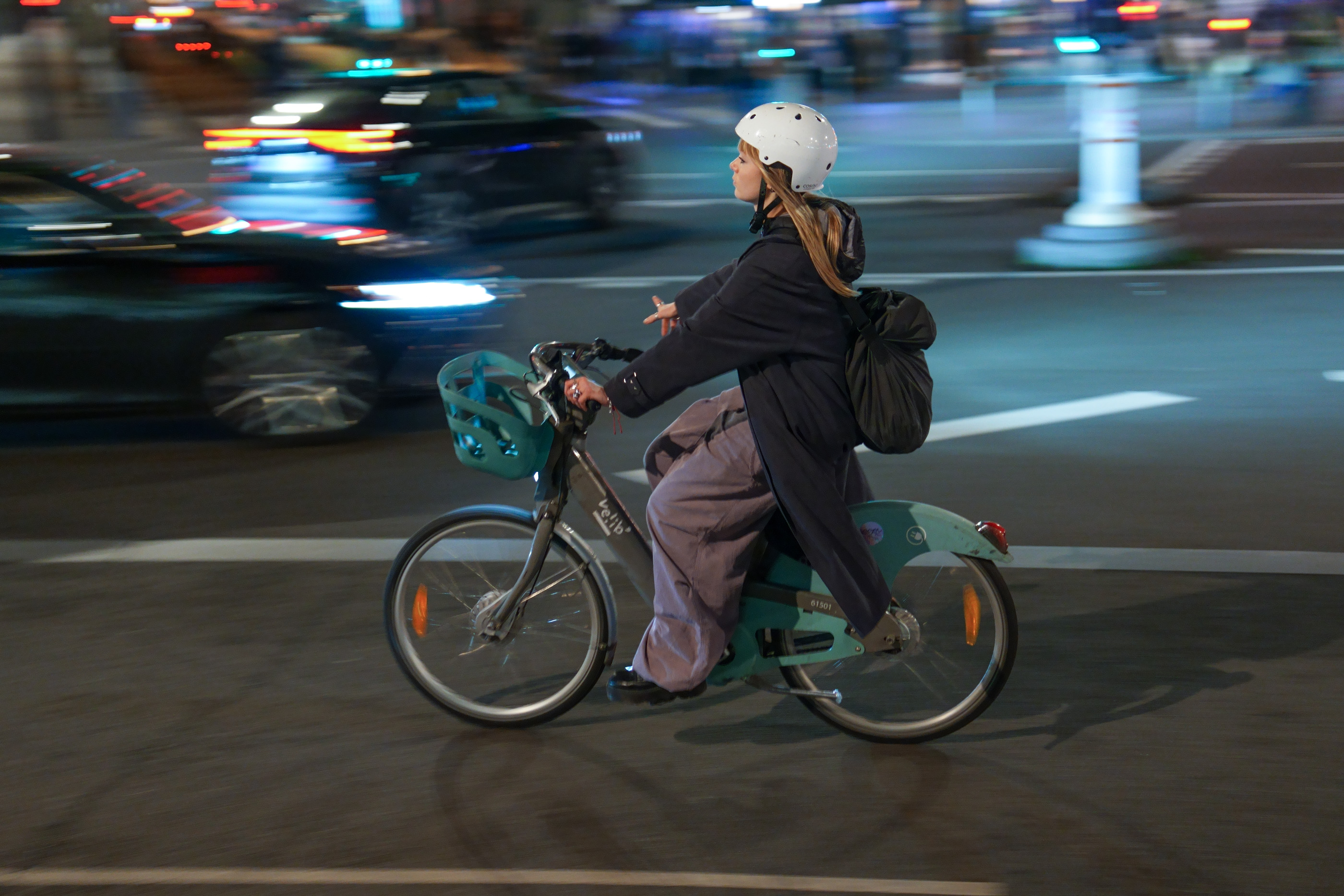
Rolling shutter distortion is only an issue when shooting super fast subjects like airplane propellers or golf swings. And unlike Canon’s R6 III and other rivals, the A7 V maintains full 14-bit RAW quality during electronic shutter bursts instead of dropping to 12-bit RAW, which allows for higher dynamic range.
As you’d expect with Sony, autofocus is fast and extremely accurate, delivering the best in-focus hit rate of any camera in this price range. When tracking moving subjects like bikes, birds or kids, I rarely saw a blurry shot. This applied even in tricky lighting and chaotic situations with multiple subjects. The A7 V also nailed auto exposure and auto white balance, even when I shot at dusk with a mix of indoor and outdoor lighting.
Sony’s latest AI features make it easy to track nearly anything. Face, eye and body tracking are supported for people, and you can also follow animals, birds, insects, cars, trains and airplanes. The AI has been trained to track people in any position, even if they’re partially obscured or disappear in the frame. This proved to be convenient when I shot street photos in crowds with a specific subject in mind.
This does bring up one sore point with the A7 V. When using third-party lenses, the burst rate speeds drop from 30 fps to 15 fps. In addition, you may not be able to use some lenses at all in AF-C (continuous) mode without applying a firmware update.
In-body stabilization is improved significantly over the A7 IV from 5.5 to 7.5 stops with compatible lenses, but falls short of all rivals that hit at least eight stops. Still, I was comfortably able to shoot at shutter speeds as low as a half second handheld without any camera blur.
Image quality
Photo quality is where the A7 V shines. Dynamic range is superior to rival cameras, both in the real world and specialized testing. This is due to Sony’s latest dual gain output tech that combines two ISO levels at once integrated with the new 33MP partially-stacked sensor (when using the mechanical shutter).
I noticed this when taking photos at twilight in several of Paris’ squares. After shooting a statue against a bright sky, I was able to extract noise-free shadow detail from RAW files and easily adjust bright areas. When shooting ducks in water that reflected a bright sky, I saw similarly high levels of detail in both dark and bright picture areas. There is one thing to keep in mind, though: As Photons to Photos noted, there’s a slight drop in dynamic range below ISO 1,000 when using the electronic shutter.
Should you need even more detail and dynamic range, Sony’s new Composite RAW feature that’s borrowed from the A9 III combines four, eight, 16, or 32 RAW images to reduce noise and improve image quality. I used it to photograph some high-contrast scenes on a sunny Paris day and it dramatically reduced noise, but isn’t a good option for moving subjects.
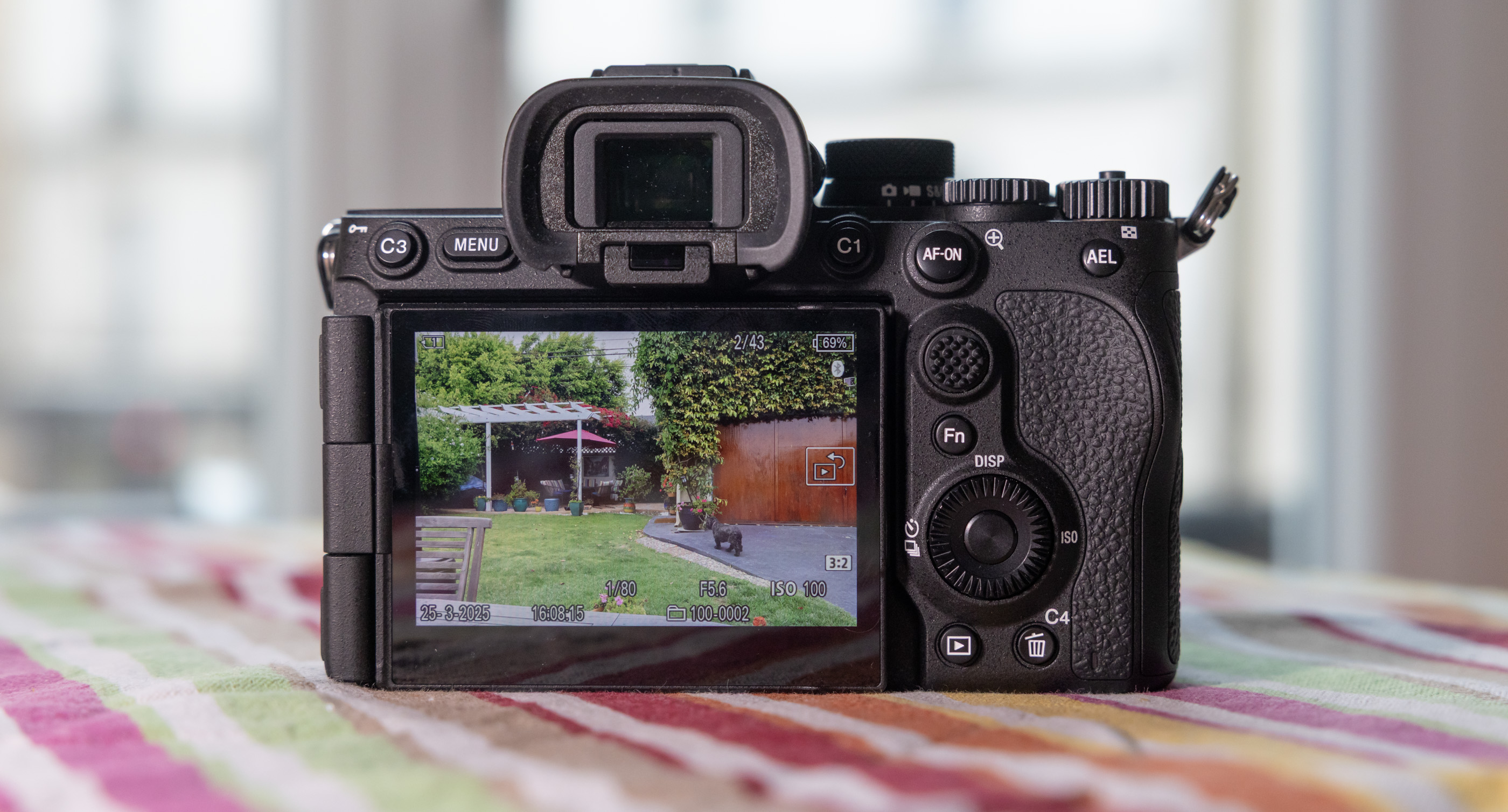
JPEGs look great straight out of the camera with excellent detail, though noise reduction can be a bit excessive at high ISOs. Sony’s color science has improved over the last model, so colors are accurate and the magenta-hue issues seem to be largely resolved. However,I still find Canon’s cameras capture more accurate skin tones.
The A7 V is a low-light marvel, with relatively noise-free photos all the way up to ISO 12,800 and usable shots at ISO 25,600. What’s remarkable is that the A7 V beats all its 24MP rivals in this regard, despite the nearly 50 percent higher resolution.
Sony added a new “Compressed RAW HQ” mode with the A7 V, designed to deliver better compressed RAW quality while keeping files smaller than “Lossless RAW.” Note that this new mode is not currently supported by Adobe Lightroom, so I’d avoid using it for now.
Video
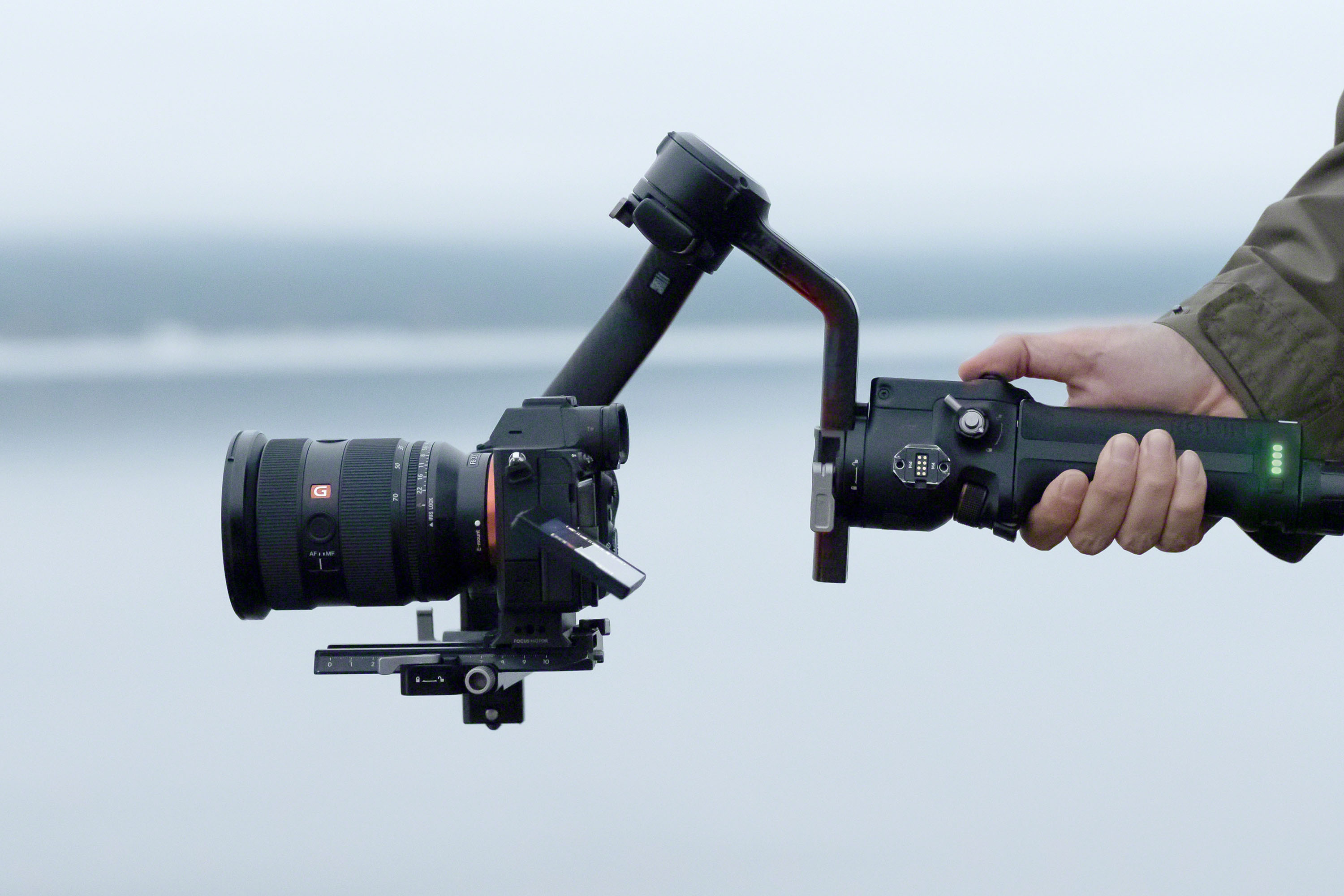
Two or three years ago, the A7 V would have been fine for video but not in 2026. While all its rivals are embracing internal RAW video at 6K or 7K, Sony is sticking with 10-bit 4K MP4 at up to 60 fps, or 4K 120 with an APS-C crop. The video is oversampled from a 7K sensor size so it’s very sharp though, and S-Log3 is available to boost dynamic range.
Sony likely thinks that creators using this camera will mostly shoot 4K MP4 (as I do), so it didn’t feel that RAW was a must. However, users who do need the benefits of RAW — like minimal degradation when editing, flexible white balance and improved dynamic range — can’t even do external RAW capture. The 4K max resolution and lack of open gate 3:2 is also a downside for creators who like to reframe shots in post or output to social media.
With that all said, you can capture high-quality 10-bit 4K 60 fps video with the A7 V. The S-Log3 Cine/S-Log 3 option and high data rate 4:2:2 HS video provide flexibility in post, letting you easily correct over- or under-exposed video or tweak colors. As with photos, color accuracy is nearly on par with Panasonic and other rivals. Shooting in low-light is a breeze, especially when you know that noise levels will be minimal even at high ISO speeds.
Sony has some extra video tricks like focus breathing compensation that eliminates zooming when focusing from a near to a far subject. And the A7 V comes with a new AI Auto Framing mode, which recognizes and crops in on humans, keeping them centered in the frame. I was able to keep subjects centered (while stabilizing the shot) as long as I didn’t move the camera excessively.
Autofocus is just as excellent for video as photos, with the same level of speed and accuracy. AI-powered autofocus supports all the same modes (people, animals, etc.) and usually nails focus of human or animal eyes, like when I captured footage of some ducks and dogs.
Video stabilization is also very good, just behind Panasonic’s S1 II and ahead of the Canon R6 III. In regular optical-only mode, it removes shaking from handheld video without too much movement. When you engage the “Active” mode, it adds electronic stabilization with a small crop for panning or tilting, and “Dynamic Active” lets you walk with surprisingly smooth results. Rolling shutter is rarely an issue for most types of shooting, including walking, unless you really whip the camera around. The lack of rolling shutter skew also makes it easier to apply stabilization in post with Adobe Premiere or DaVinci Resolve.
Wrap-up

The A7 V is an incredible camera for photography, with speeds, autofocus accuracy and image quality ahead of rivals, including the Canon R6 III, Panasonic S1 II and Nikon Z6 III.However, Sony isn’t keeping up with those models for video. The A7 V is missing RAW, native resolution and open gate capture, all of which can be found on the aforementioned cameras. That makes it hard to recommend for serious video users or creators who use full-frame open gate to export high-quality vertical video.
There’s one intangible, though. I enjoyed taking pictures with the A7 V more than other cameras I’ve tested lately because of the AF accuracy and image results. For anyone who wants a fast, reliable and easy-to-use camera for photography, I can’t recommend it enough. For video creators, though, I’d look at Canon’s R6 III, the Panasonic S1 II, or if you’re on a budget, Nikon’s Z6 III.
This article originally appeared on Engadget at https://www.engadget.com/cameras/sony-a7-v-review-awesome-speed-and-photo-quality-130000592.html?src=rss