
























Sam Altman’s OpenAI Is Burning Billions — Most Users Pay Nothing — As Anthropic Closes In
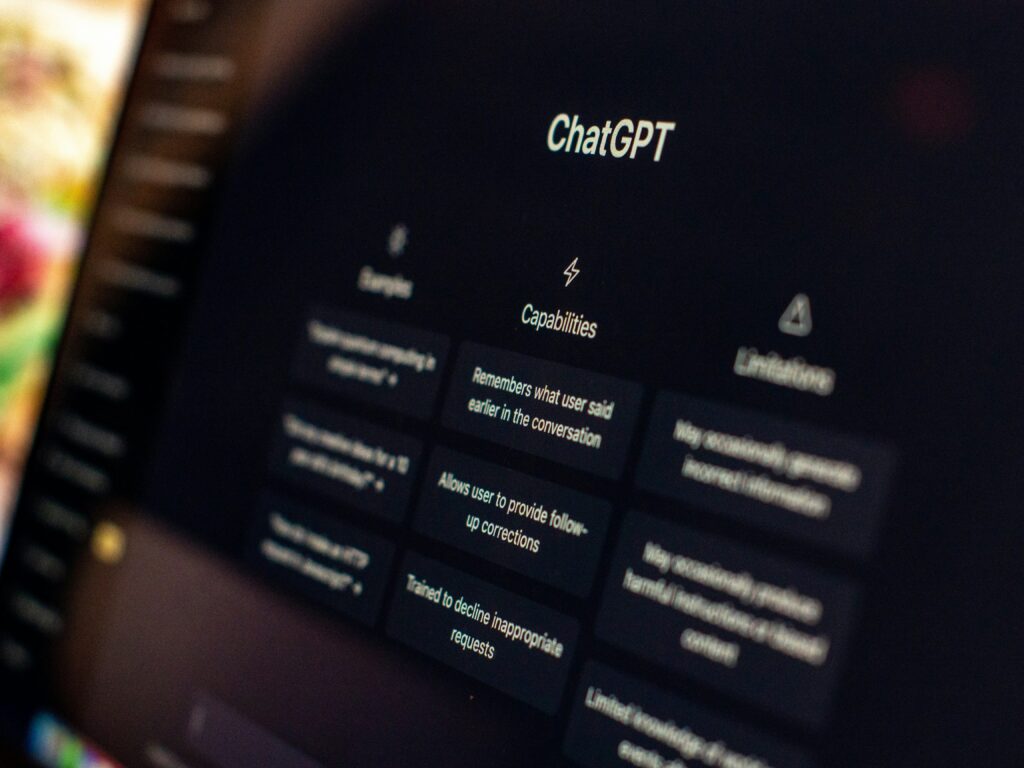
The AI race has a financial problem, and it belongs primarily to the company that started it. OpenAI is projected to lose $14 billion in 2026 — nearly triple earlier estimates for 2025 — even as it reports $20 billion in annualised revenue and 900 million weekly ChatGPT users. According to internal OpenAI financial projections first reported by The Information, the company expects cumulative losses of $44 billion between 2023 and the end of 2028, with profitability not arriving until 2029 at the earliest. The numbers tell the story of a business that has built the world’s most recognisable AI product and still cannot find a path to profit.
The reason is structural. Only 5.5% of ChatGPT’s 900 million users pay for a subscription. The other 94.5% access the service for free — while OpenAI bears the compute cost of every single query across that user base. Infrastructure, model training and talent costs are scaling faster than revenue. Industry-wide, AI companies are expected to spend $690 billion in capital expenditure in 2026 alone. As Google prepares to deploy $185 billion on AI infrastructure this year, the scale of capital deployment required to stay competitive is becoming almost incomprehensible — and OpenAI, unlike Google, has no diversified revenue stream to fund it.
Against that backdrop, Anthropic’s trajectory looks markedly different. The company hit $19 billion in annualised revenue in March 2026 — up from $9 billion at the end of 2025 and just $1 billion fifteen months earlier. In February, Anthropic announced a $30 billion Series G funding round at a $380 billion post-money valuation, led by GIC and Coatue — with the company’s CFO Krishna Rao noting that Claude is “increasingly becoming critical to how businesses work.” Critically, Anthropic projects positive cash flow by 2027. OpenAI does not.
The divergence reflects a fundamental strategic difference. OpenAI is a consumer company building enterprise products. Anthropic is an enterprise company that has a consumer product. That distinction shapes everything from pricing to unit economics. OpenAI’s share of enterprise AI spending fell from 50% to 27% over the past year while Anthropic’s climbed to 40%. Two years ago, 12 customers spent $1 million or more annually with Anthropic. Today that number exceeds 500. Eight of the Fortune 10 are paying customers. As questions about AI valuations and whether the market has already priced in the next decade of growth grow louder, Anthropic’s demonstrable path to profitability through enterprise concentration is becoming a genuine differentiator for institutional investors.
The product driving Anthropic’s growth most aggressively is Claude Code — its AI coding assistant, which went from zero to $2.5 billion in annualised revenue in ten months. Engineers at major companies are reporting the tool recreates a year’s worth of development work in hours. Claude now holds 42-54% of the code generation market while OpenAI sits at 21%. The talent picture reinforces the narrative. Engineers at OpenAI are reportedly eight times more likely to leave for Anthropic than the reverse. Since 2024, OpenAI has lost its CTO, Chief Scientist, co-founder John Schulman — who went directly to Anthropic — and Chief Research Officer. Only three of the original thirteen founding members remain.
Anthropic has not been without controversy. The Trump administration ordered federal agencies to stop using its technology, labelling it a supply-chain risk after Anthropic refused to permit its tools in autonomous weapons systems or mass surveillance. The response was telling: Anthropic’s app shot to the top of the App Store, and within hours OpenAI announced a Pentagon deal that included the same prohibitions Anthropic had insisted on. As SoftBank’s $64 billion concentration in a single AI company continues to draw scrutiny from credit rating agencies, the question of which company has the superior long-term business model is becoming more pointed by the quarter.
OpenAI’s position is not without defences. GPT-5 remains competitive on benchmarks, Microsoft’s backing provides capital runway that most competitors cannot match, and ChatGPT’s consumer brand recognition is an asset Anthropic has not replicated. The 900 million weekly active user base is a distribution advantage that could convert to enterprise revenue if OpenAI improves monetisation conversion. The problem is that conversion requires changing user behaviour trained on years of free access — a harder problem than Anthropic faces, which is converting paying enterprise customers into deeper, longer-term contracts.
For European enterprises and investors, the question matters directly. As Europe’s own AI investment landscape accelerates, with billions flowing into industrial automation, financial services AI and sovereign infrastructure, the choice of which AI platform to build critical workflows around has long-term consequences. A vendor burning $14 billion a year on investor capital is a different proposition from one projecting positive cash flow by 2027. As a British scientist attempts to raise $1 billion for a rival approach to superintelligence from European soil, the competitive landscape around both OpenAI and Anthropic is only becoming more crowded.
The AI race of 2026 is no longer simply about who has the best model. It is about who has the most sustainable business. Right now, that contest looks far less certain for OpenAI than its valuation, its user base, or its press coverage would suggest.
 Subscribe to our free weekly newsletter
  https://europeanbusinessmagazine.beehiiv.com/
The post Sam Altman’s OpenAI Is Burning Billions — Most Users Pay Nothing — As Anthropic Closes In appeared first on European Business & Finance Magazine.