





























Porsche Hit by Biggest Sales Decline Since 2009 as Chinese Carmakers Gain Ground
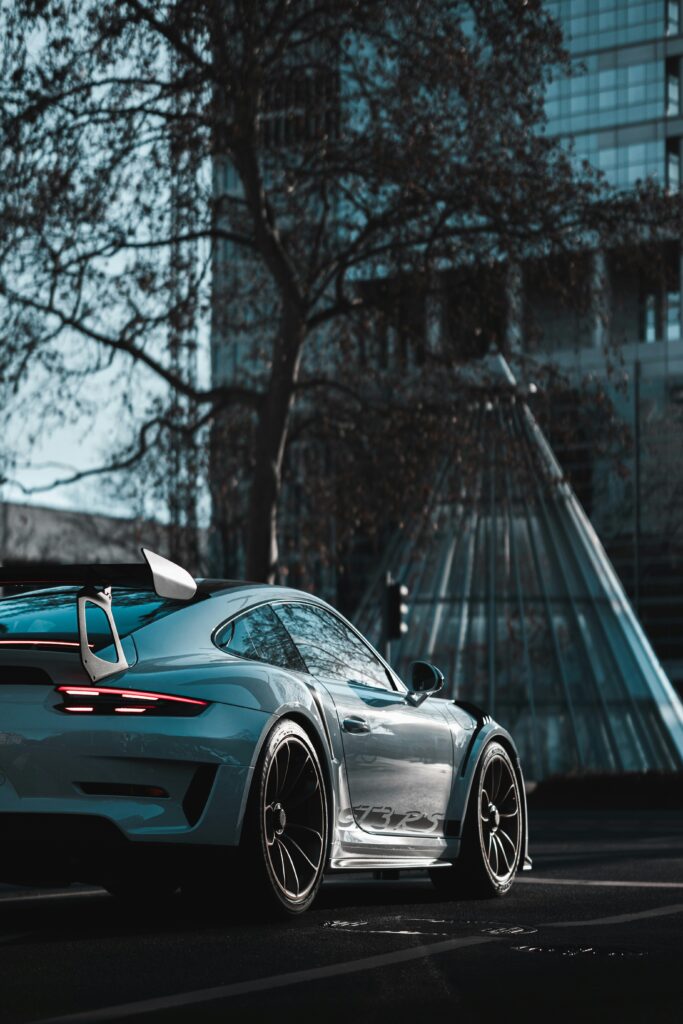
Porsche AG reported its steepest annual sales decline in 16 years this week, delivering 279,449 vehicles globally in 2025—a 10% drop from the previous year that represents the marque’s worst performance since the 2009 financial crisis devastated global consumer confidence. The headline figure, however, masks a more nuanced crisis that strikes at the heart of European automotive competitiveness and raises existential questions about legacy luxury brands navigating the electric vehicle transition.
The China Catastrophe: A Market in Rapid Transformation
China’s luxury automotive landscape has undergone a seismic realignment that left Porsche particularly exposed. Sales in the world’s largest car market plummeted 26% year-on-year to just 41,938 units—marking the fourth consecutive year of decline. This erosion is all the more striking given that Chinese buyers represented a crucial growth engine during Porsche’s remarkable expansion from 2009 to 2023, when global deliveries nearly tripled.
The Porsche Taycan, once celebrated as proof that electrification need not compromise brand prestige, has become emblematic of the company’s struggles. The electric sedan—unveiled at the 2019 Frankfurt Motor Show and now showing its age—faces withering competition from domestic manufacturers that combine aggressive pricing with technological sophistication. Huawei’s Maextro S800, priced from $100,600, outsold the Porsche Panamera and BMW 7-Series combined in November, demonstrating that Chinese consumers increasingly view local brands as genuine luxury alternatives rather than aspirational substitutes.
Alexander Pollich, Porsche’s China CEO, acknowledged the competitive reality with unusual candour: “The pace of innovation in China is breathtaking. There is a veritable flood of electric sedans in completely different price segments.” Xiaomi’s SU7, featuring AI systems that greet drivers with personalised music preferences, sold over 100,000 units in 2024 at roughly half the Taycan’s price point. Such vehicles don’t merely undercut on cost; they represent a different conceptualisation of luxury centered on connectivity, autonomous capabilities, and software refinement.
The regulatory environment compounded market pressures. China reduced its luxury tax threshold from 1.3 million yuan ($184,000) to 900,000 yuan ($127,000) in July 2024, pushing more Porsche models into higher tax brackets and further undermining competitiveness against domestic rivals exempt from import duties.
European Regulatory Thicket: Supply Gaps and Compliance Costs
Porsche’s European performance suffered its own distinct challenges. Sales declined 16% in Germany and 13% across the rest of Europe, driven largely by cybersecurity regulations that came into force in July 2024. The EU’s mandate requiring carmakers to integrate secure software architectures created supply gaps for the 718 Boxster and Cayman models, as well as the combustion-engine Macan—Porsche’s bestselling vehicle.
The regulatory compliance burden extends beyond immediate sales disruption. Adapting vehicle offerings to meet cybersecurity standards while simultaneously managing the transition to electric powertrains has strained engineering resources and capital allocation. The company announced it would invest €831 million in 2025 specifically on combustion and hybrid powertrains, representing a strategic pivot that acknowledges the premature optimism around EV adoption rates.
Matthias Schmidt, the European automotive analyst, noted that the ICE Macan’s unavailability throughout 2025 created an artificially high baseline for year-on-year comparisons. The electric Macan successor, while technologically advanced, costs 22% more than its predecessor and arrived during a period of cooling EV sentiment across European markets. This pricing gap—driven by battery costs and development expenses—highlights a fundamental challenge: can legacy manufacturers profitably electrify their core product lines without alienating price-sensitive segments of their customer base?
North American Resilience Masks Underlying Fragility
Porsche’s North American performance appears superficially robust, with sales remaining essentially flat at 76,219 units—just 52 vehicles more than 2024. This microscopic gain, however, likely reflects what Schmidt characterises as a “pull-forward effect,” with dealerships registering inventory ahead of anticipated tariffs rather than genuine underlying demand.
President-elect Trump’s proposed automotive tariffs pose an existential threat to Porsche’s North American strategy. Unlike competitors with US manufacturing facilities, Porsche imports all vehicles, making it maximally exposed to import levies. Analysts estimate tariffs could cost the company approximately €700 million in 2025 alone, forcing multiple price increases throughout the year that tested consumer tolerance for premium pricing.
The 50 most powerful business leaders in Europe now face a landscape where protectionist trade policies threaten decades of carefully constructed global supply chains. For Porsche, which derives significant profitability from the American market, this represents a fundamental strategic challenge.
The 911 Exception: Brand Heritage as Strategic Asset
Amidst widespread decline, the iconic 911 sports car achieved modest growth, with deliveries increasing 1% to 51,583 units globally. This performance underscores an important strategic reality: Porsche’s emotional core—represented by rear-engine sports cars with combustion powertrains—retains powerful consumer appeal even as the broader portfolio struggles.
The 911’s resilience suggests that brand heritage and mechanical distinctiveness remain valuable differentiators in an increasingly homogenised automotive landscape. While competitors pursue scale through electrification and software, Porsche retains unique equity in analogue driving dynamics and engineering iconography. Whether this advantage suffices to offset structural headwinds in mass-market segments remains uncertain.
Strategic Reset: Value Over Volume
Michael Leiters, Porsche’s new CEO appointed in 2025, inherits a company in the midst of what CFO Jochen Breckner describes as “major restructuring.” Profitability has declined consistently since the company’s 2022 IPO, forcing a fundamental re-evaluation of growth assumptions. The company is scaling back its Chinese dealer network from 150 locations in 2024 to a projected 80 by the end of 2026, acknowledging that market share preservation in an increasingly hostile competitive environment requires prohibitive investment.
Porsche’s pivot toward “value over volume” represents a necessary accommodation to changing market realities. The company delayed several all-electric vehicle launches at a cost of €1.8 billion to earnings, prioritising combustion and hybrid models where competitive advantage remains sustainable. The next-generation 718 will offer internal combustion options alongside electric variants—a reversal of earlier plans for an EV-only platform.
This strategic repositioning acknowledges what European business trends increasingly demonstrate: the transition to electrification will be slower, more uneven, and more expensive than many established manufacturers anticipated. Chinese competitors, unencumbered by legacy manufacturing infrastructure and labour agreements, can iterate faster and price more aggressively.
Broader Implications for European Luxury
Porsche’s struggles mirror challenges facing the entire German premium automotive sector. Mercedes-Benz and Audi reported similarly disappointing results, with Chinese sales declining 19% and comparable figures respectively. The broader Volkswagen Group—Porsche’s parent company—faces its own existential questions about manufacturing footprint, labour costs, and electrification strategy.
Analyst sentiment reflects this pessimism: Bloomberg data shows just five buy ratings for Porsche compared to 13 neutral and 11 sell ratings. Shares have declined to their steepest weekly drop since trading began in late 2022, reflecting investor concerns that profitability pressures will persist through 2026 and beyond.
The crisis extends beyond individual companies to implicate European industrial competitiveness more broadly. If established luxury manufacturers cannot successfully navigate electrification while defending against Chinese competition, the implications for employment, tax revenue, and technological leadership are profound.
Conclusion: A Brand at the Crossroads
Porsche’s 2025 performance represents more than a cyclical downturn; it signals a potential permanent shift in global automotive hierarchies. The company’s ability to charge premium prices for distinctive engineering faces unprecedented pressure from manufacturers that conceptualise luxury differently—as software sophistication, connectivity, and rapid technological iteration rather than mechanical refinement.
The path forward requires uncomfortable compromises: slower electrification, strategic retreat from unprofitable markets, greater product segmentation, and acceptance of lower volumes in exchange for preserved margins. Whether Leiters can execute this strategic reset while maintaining the brand’s emotional resonance and engineering credibility will determine if Porsche remains a luxury icon or becomes a cautionary tale of disruption’s inexorable logic.
For now, the 911’s continued success provides both financial ballast and a reminder that some competitive advantages—heritage, emotional resonance, mechanical distinctiveness—cannot be easily replicated. Whether these qualities suffice in an industry being fundamentally reimagined remains 2026’s defining question.
Further Reading
“Huawei’s Maextro Tops China’s Luxury Car Market Beating Porsche, Mercedes, BMW” – Bloomberg (December 22, 2025)
Analysis of how Huawei’s technology-driven luxury sedan achieved dominance in China’s $100,000+ segment through aggressive pricing and advanced features.
“Porsche Admits Chinese Automakers Are Innovating at ‘Breathtaking’ Pace” – Motor1 (December 11, 2025)
Porsche China CEO Alexander Pollich’s candid assessment of competitive pressures and strategic responses including dealer network consolidation.
“Global Porsche Sales Tanked in 2025, But Two Models Refused to Comply” – Carscoops (January 16, 2026)
Detailed breakdown of model-specific performance highlighting the 911 and Macan’s relative resilience amid broader portfolio decline.
“Europe’s Top Corporate Gateways: Frankfurt, Paris and Amsterdam Strengthen Their Global Position” – European Business Magazine
Contextual analysis of European business competitiveness amid shifting global manufacturing dynamics.
“The 50 Most Powerful Business Leaders in Europe 2025 Edition” – European Business Magazine
Profiles of executives navigating similar challenges across European manufacturing and technology sectors.
“Porsche’s China deliveries decline for 4th consecutive year” – CnEVPost (January 16, 2026)
Data-driven analysis of Porsche’s four-year decline in China including dealer network reduction and charging infrastructure withdrawal.
The post Porsche Hit by Biggest Sales Decline Since 2009 as Chinese Carmakers Gain Ground appeared first on European Business & Finance Magazine.