






















Napoli’s Journey From Maradona to Modern Icons
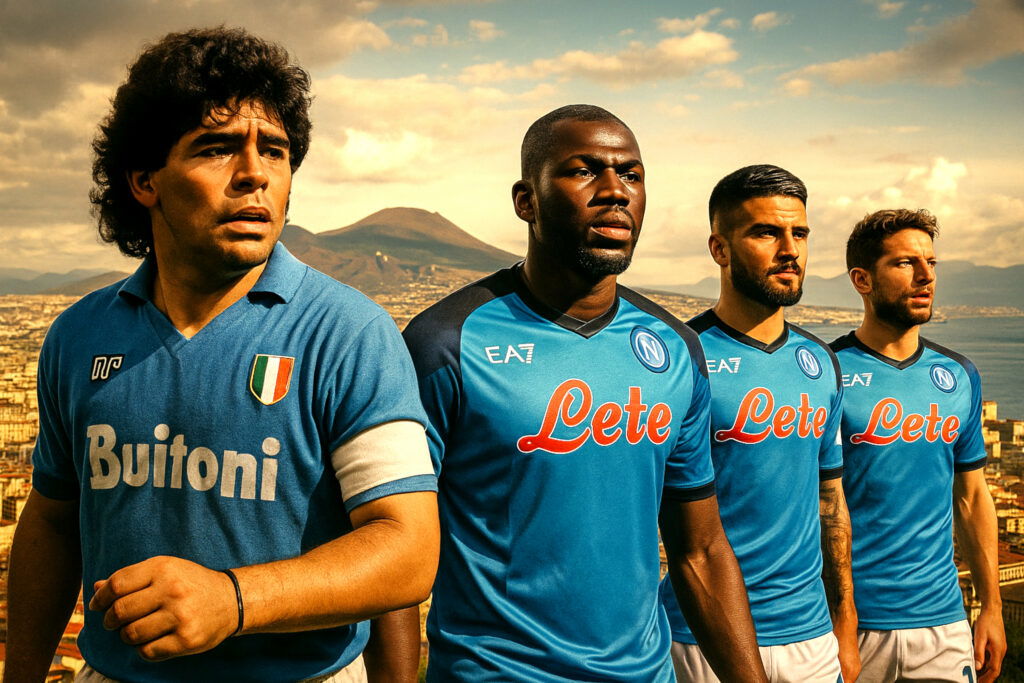
Napoli live in that rare space where football becomes folklore. You hear the name and it carries a weight built from triumph, torment and a sense of theatre that belongs only to this club. Maradona is the anchor, of course, but the story after him has its own colour, its own chaos and its own brilliance. If anything, the modern era proves that the spirit he left behind never really faded. It simply learned to wear new faces.
Maradona and the City He Rebuilt
Before Maradona arrived in 1984, Napoli were passionate but rarely powerful. His presence changed the club from a stubborn challenger into a team that looked giants in the eye and refused to blink. The two Scudetti, the UEFA Cup and the sheer audacity of his football carved a permanent mark on the city. People sometimes forget the discipline behind his talent. Napoli did not win only because he was a genius. They won because he set a standard that forced everyone around him to believe they could do something extraordinary.
Even now, older fans speak of him as if he were a family member rather than a footballer. That tells you how deep the bond runs.
The Post Maradona Search for Identity
Napoli without Maradona stumbled through turbulence, rescues and resets. The 1990s brought financial strain and the eventual fall into the lower divisions. Yet the club never lost its sense of self. Supporters filled the San Paolo even when the football was messy, because the jersey itself meant something that did not depend on results.
Rebirth came with Aurelio De Laurentiis and a methodical climb back up the ladder. Promotion seasons felt like celebrations of survival rather than simple sporting achievements. Napoli were putting their pieces back together, and the city treated it as a shared restoration project.
The Modern Era Begins, Led by Hamsik and Lavezzi
When Marek Hamsik arrived, he brought stability, style and a reliable heartbeat. Ezequiel Lavezzi offered the spark. Together they gave Napoli a recognisable identity again. Their football was quick, expressive and occasionally reckless in a way fans adored. They restored the sense that Napoli could compete with the elite, even if they were still growing into the role.
Edinson Cavani then lifted the ceiling further. His goals carried Napoli into Europe with authority. The front three of Hamsik, Lavezzi and Cavani still sits fondly in memory because it marked the first time since Maradona’s era that Napoli felt genuinely dangerous.
Sarri’s Napoli and the Pursuit of Beauty
Maurizio Sarri reshaped Napoli into something more elegant. The football was fluid and obsessive in its detail. At times it looked like a lesson in geometry laid over a football pitch. For a brief spell, Napoli played some of the most attractive football in Europe. They pushed Juventus close, in that almost season where everything felt possible.
You could argue that this team changed perceptions of Napoli more than any since the Maradona years. They proved that the pursuit of beauty and the pursuit of trophies could live in the same building.
The Rise of Modern Icons: Koulibaly, Insigne and Mertens
Kalidou Koulibaly became the defensive anchor, a player who moved with the authority of a captain even when he did not wear the armband. Lorenzo Insigne, a Neapolitan through and through, embodied the club’s soul. Dries Mertens shifted from winger to record-breaking forward with a style that made him impossible not to admire.
This trio carried Napoli through European nights, domestic title pushes and moments that deserved silverware even when it slipped away. They were not replacements for Maradona, because nobody is, but they carved their own legacy without shrinking under his shadow.
The Spalletti Revolution and a Long Awaited Scudetto
Luciano Spalletti arrived with a calm confidence that Napoli needed. He built a team that relied on collective trust rather than pure individualism. Victor Osimhen became the spearhead, all energy and instinct. Khvicha Kvaratskhelia brought unpredictability, drifting past defenders with a mix of sharpness and freedom.
This side finally delivered the Scudetto that had eluded Napoli for three decades. It felt different from the Maradona triumphs. Less mythic, more modern. A triumph built on structure, chemistry and a city that had waited far too long.
Napoli Today and the Weight of Legacy
Modern Napoli live in conversation with their own past. Every success invites comparison with Maradona’s era, which is both a blessing and an impossible challenge. Yet the club has grown into the idea that its identity does not depend on one man, even if he remains its brightest star.
New players step into a jersey that already carries the echo of greatness. They do not run from it. They absorb it. That is the real journey from Maradona to today, a steady handoff from one generation to the next where the city itself acts as the bridge.
TIF Takeaway
Napoli’s story is not a straight line. It bends and loops, full of contradictions that somehow make perfect sense when placed together. From Maradona’s wild brilliance to the discipline of modern icons, the club has reinvented itself without losing its soul. That balance is rare in football.
Napoli remain a club shaped by its past but not trapped by it. The legacy is heavy, yet the way they carry it feels natural. Maybe that is why the bond between team and city continues to feel so alive.