

























Majority of EU countries say yes to trade agreement with South American countries
After 26 years of negotiations, the EU is now on its way to approving the trade agreement with the South American Mercosur countries.
This is clear after a qualified majority of EU countries on Friday gave the green light to the agreement at a meeting of the EU countries’ permanent representatives.
Now a formal approval via written procedure is pending.
It is expected to be completed on Friday evening, an EU diplomat reports. Thus, the President of the European Commission, Ursula von der Leyen, may already next week travel to South America to sign the agreement.
In the end, it was Italy that had the decisive vote as a result of the EU’s special rules for what constitutes a qualified majority.
The rules require that 15 of the EU’s 27 member states must support the proposal. At the same time, those at least 15 countries must together represent 65 percent of the EU’s population.
Since large EU countries such as France and Poland have made it clear that they will say no, Italy was crucial.
At the EU summit in December, Italy’s Prime Minister, Giorgia Meloni, initially stated that she wanted a few more weeks to secure more protection for European agriculture.
It is the result of that work that has now led Italy to give the green light.
The South American trade bloc Mercosur consists of Argentina, Bolivia, Brazil, Paraguay and Uruguay.
The trade agreement will thus open up a combined market of over 700 million consumers spread across the four countries and the EU.
The hope is that it can open up increased exports and thus revenue for Europe.
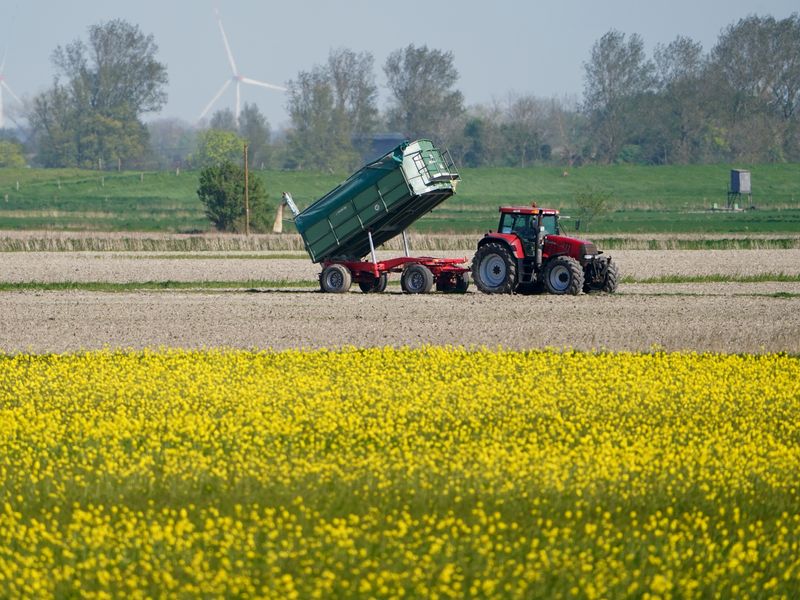
However, the agreement has been met with extensive demonstrations from farmers in, among other countries, France, Poland and Belgium.
Against this background, France’s President, Emmanuel Macron, announced on Thursday that France will vote against the agreement.
“France is positively disposed towards international trade, but the EU-Mercosur agreement is an agreement from another time, which has been negotiated for far too long on a far too outdated basis,” Macron wrote on X on Thursday.
Macron also pointed out that the French parliament has unanimously rejected the agreement.
France’s opposition was nevertheless not enough to stop the trade agreement.
The agreement has taken on a special significance after the President of the United States, Donald Trump, has imposed tariffs on European goods, which has increased the EU’s ambitions to find new markets so that the EU can become more independent of the United States.