


























🔴 Gunboat vs Supertanker: Why Trump’s Tariff Whims Leave Europe Structurally Outmatched in Trade Wars
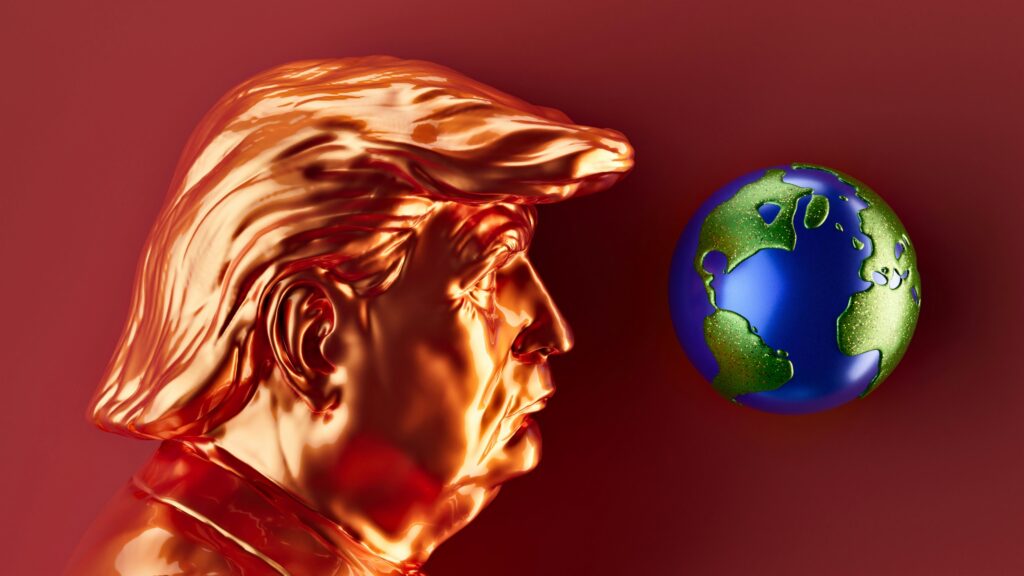
Brussels confronts existential governance dilemma as US president’s executive order blitz exploits EU’s consensus-based deliberation, raising fundamental questions about whether democratic multilateralism can compete with autocratic agility in economic conflict
When Donald Trump threatened 10% tariffs on eight European nations over Greenland—pledging escalation to 25% by June—the asymmetry defining transatlantic trade conflict crystallized with brutal clarity. Within hours of European resistance, Trump fired off social media posts threatening 200% levies on French wine, demonstrating what trade strategists term “escalation dominance”: the Cold War doctrine of raising costs faster and further than adversaries can respond. As Treasury Secretary Scott Bessent mockingly characterized Brussels’ predicament, Europe faces “the dreaded European working group”—weeks or months of fraught deliberation to agree retaliation packages while Trump raises tariffs on presidential whim, tweeting policy changes that rewrite global commerce rules faster than EU diplomats can schedule emergency coordination meetings.
The confrontation pits not merely longtime allies with profound economic interdependence but fundamentally incompatible systems for managing conflict: the gunboat versus the supertanker. Trump’s controversial executive order proliferation—226 orders in his second term’s first year, surpassing the 220 across his entire first presidency—has weaponized institutional agility against Europe’s consensus-based governance. The challenge confronting Brussels alongside allies Norway and UK transcends specific tariff disputes, raising existential questions about whether democratic multilateralism can compete against executive unilateralism when economic coercion becomes primary geopolitical instrument.
Escalation Dominance: The Asymmetric Battlefield
“If Trump has to go to 1,000% tariffs, he’ll not bat an eyelid,” observes Agathe Demarais, geoeconomics policy fellow at the European Council on Foreign Relations think tank. “The EU is a different beast. It is pragmatic, bureaucratic and cold-headed. So if Trump wants to escalate he will always have the upper hand.”
This structural disadvantage derives from institutional architecture rather than political will. When Trump announces tariffs via Truth Social post or impromptu press availability, implementation begins immediately—customs officials receive guidance, importers face new duties, and market reactions cascade within hours. European retaliation requires sequential approvals: European Commission proposal drafting, consultation with member state trade ministries, European Council deliberation among 27 governments with divergent economic exposures, European Parliament scrutiny, and final implementation only after exhaustive legal review ensuring WTO compliance.
The timeline asymmetry proves devastating in escalatory cycles. Trump’s French wine threat—from conception to 200% tariff announcement—consumed perhaps minutes of presidential attention. Brussels’ response calculating equivalent retaliation against American goods, ensuring no single member state bears disproportionate costs, and securing unanimous Council approval might require three weeks minimum, during which Trump could announce five additional tariff escalations targeting different European sectors.
This dynamic mirrors Cold War escalation dominance principles where Soviet strategists agonized over America’s perceived ability to climb the nuclear ladder faster than Moscow could deliberate responses. The side that can credibly threaten further escalation—and implement those threats rapidly—gains coercive leverage regardless of ultimate capacity for inflicting pain. Trump’s tariff threats succeed not because American consumers won’t suffer (they will) but because European institutional constraints create asymmetric vulnerability to rapid-fire escalation.
The Executive Order Blitz: Weaponizing Institutional Agility
Trump’s second-term acceleration of executive orders represents deliberate exploitation of unilateral presidential authority that circumvents Congressional oversight. The 226 orders issued within twelve months—spanning immigration enforcement, environmental deregulation, energy policy and crucially trade restrictions—demonstrate systematic preference for executive action over legislative process precisely because it maximizes speed and minimizes accountability.
Constitutional scholars debate whether Trump’s tariff authorities—primarily invoked under Section 232 (national security) and Section 301 (unfair trade practices) of trade laws—exceed intended statutory scope. Yet legal challenges require months or years to adjudicate while tariffs inflict immediate economic damage, creating fait accompli that courts hesitate to reverse given market disruptions. Trump’s legal strategy accepts eventual judicial constraints as acceptable cost for near-term policy implementation, knowing that temporary measures can permanently alter supply chains and investment patterns.
European institutions possess no equivalent unilateral authority. The European Commission holds exclusive competence over trade policy under EU treaties, but this centralization paradoxically constrains rather than enables rapid response. Commission President Ursula von der Leyen cannot decree retaliatory tariffs; she must propose measures that Council unanimously (or by qualified majority for trade defense) approves. This ensures democratic legitimacy and prevents individual Commissioners wielding unchecked power—virtues that become vulnerabilities when facing adversaries who prioritize speed over process.
The Supertanker Problem: Turning Collective Weight
Brussels officials privately acknowledge institutional disadvantages while arguing Europe’s collective economic mass creates different leverage. The EU’s €18 trillion economy, representing 450 million affluent consumers, theoretically wields devastating retaliatory capacity. American businesses—from Boeing to bourbon distillers—face existential threats if locked out of European markets. Germany’s automotive sector, France’s luxury goods manufacturers, and Netherlands’ logistics infrastructure all possess bargaining chips in escalating trade wars.
Yet deploying this economic weight requires consensus that proves elusive amid divergent national interests. When Trump threatened tariffs on European steel and aluminum during his first term, Italian steelmakers demanded aggressive retaliation while German automakers—heavily invested in American production—urged restraint. France’s agricultural lobby pushed for targeting American farm goods while Spain’s tourism industry warned against escalations risking American visitor declines. Forging compromises satisfying 27 governments with conflicting priorities consumes political capital and time that Trump exploits through further escalations.
The “dreaded working group” Bessent mocked reflects this consensus-building reality. Trade retaliation proposals circulate through permanent representatives (Coreper), sectoral councils, and ultimately heads of government summits where unrelated issues—migration policy, fiscal rules, defense spending—create horse-trading dynamics. Poland might block agricultural tariffs to secure German support for military aid to Ukraine. Hungary could threaten vetoes to extract concessions on rule-of-law procedures. These interlocking bargains produce compromise packages inevitably watered down from initial Commission proposals, signaling irresolution that emboldens Trump to escalate further.
Autocratic Agility vs Democratic Deliberation
Demarais’s comparison between EU processes and autocratic efficiency highlights uncomfortable questions about governance models’ competitive advantages. China responded to Trump’s tariff threats within hours by announcing immediate retaliatory measures—possible because Xi Jinping’s administration requires no legislative approval, confronts no independent judiciary, and answers to no voters. Russia similarly deployed economic countermeasures against Western sanctions with implementation speeds democratic systems cannot match.
Yet equating speed with effectiveness oversimplifies. China’s retaliatory tariffs on American soybeans devastated Iowa farmers, creating political pressure on Trump to negotiate. However, they simultaneously harmed Chinese consumers and livestock industries dependent on imported feed. Autocratic systems can impose these costs without facing electoral backlash; democratic leaders confront angry farmers, manufacturers and voters who punish governments for economic pain regardless of justification.
Europe’s deliberative processes—while slow—incorporate broader stakeholder input that identifies unintended consequences, builds coalitions sustaining long-term policies, and maintains legitimacy even when measures inflict economic pain. Tariffs approved through European democratic frameworks carry institutional durability that outlasts individual leaders or political cycles. Trump’s whiplash policy reversals—threatening tariffs then suspending them, imposing duties then granting exemptions—undermine long-term strategic credibility even as they provide tactical advantages.
The Retreat Myth: Has Trump Actually Backed Down?
European officials cling to narratives that Trump “always chickens out” when faced with determined opposition—citing first-term episodes where threatened tariffs were postponed or modified. Yet this framing misreads Trump’s actual track record. His retreat under “duress” typically occurred only when domestic political costs (angry farmers, stock market crashes) or intra-Republican opposition created untenable pressure. He conceded not to European demands but to American constituencies whose pain exceeded his tolerance for political damage.
Trump’s second-term behavior suggests learning from first-term constraints. By preemptively attacking Federal Reserve independence, intimidating Congressional Republicans, and cultivating business leader coalymns through crypto/finance reception access, he’s systematically dismantled accountability mechanisms that previously forced retreats. The Supreme Court’s expanded presidential immunity doctrine further insulates executive actions from judicial review that constrained first-term tariff authorities.
Rather than reflexive backing down, Trump now exhibits calculated escalation management—raising tariffs high enough to extract concessions, then “generously” reducing them while pocketing negotiated gains. His 200% French wine threat likely represents opening bid for eventual 50% compromise that Macron will hail as diplomatic victory despite representing massive tariff increase from pre-threat baseline. Trump understands that in tariff poker, controlling escalation tempo lets him define negotiation parameters regardless of ultimate settlement.
Creating Time and Space: Europe’s Patient Game
European analysts argue Brussels cannot match Trump’s speed but can leverage different advantages—institutional patience, coalition breadth, and market stability—to outlast tariff storms until domestic American opposition or financial market pressure forces presidential recalibration. This strategy accepts near-term vulnerability while betting on medium-term unsustainability of Trump’s trade wars.
The calculation holds some merit. American importers paying tariffs ultimately pass costs to consumers through price increases that fuel inflation—Trump’s political kryptonite given his 2024 campaign promises of price relief. Manufacturing supply chains disrupted by tariff uncertainty delay investment and hiring, creating recessionary signals that spook equity markets and erode Trump’s economic approval ratings. Republican lawmakers representing agricultural districts face farmer fury when retaliatory tariffs devastate soybean, pork and corn exports—creating Congressional pressure for tariff de-escalation.
Europe’s collective response can amplify these dynamics by coordinating retaliation targeting Trump’s political vulnerabilities—swing-state manufacturers, agricultural exporters, tech companies seeking European market access. Rather than matching Trump’s erratic escalations blow-for-blow, Brussels can implement measured, sustained pressure that accumulates American domestic opposition while maintaining moral high ground as defender of rules-based trade order.
Yet this patient approach requires political stamina that may not survive extended economic pain. European businesses caught in tariff crossfire demand government action, not strategic patience. Voters punish leaders for job losses and price increases regardless of whether tariffs caused the pain. Populist parties across Europe exploit trade conflict frustrations to attack establishment governance—paradoxically pressuring Brussels toward Trumpian unilateralism that erodes the democratic processes distinguishing Europe from autocracies.
The Anti-Coercion Instrument: Untested Deterrent
EU officials cite the Anti-Coercion Instrument—adopted 2023 specifically to counter economic blackmail by authorizing punitive measures against countries using trade leverage for political ends—as potential equalizer. The tool permits rapid Commission countermeasures without normal consultation processes when facing coercive economic pressure, theoretically matching Trump’s executive order agility.
Yet ACI remains untested, its legal boundaries uncertain, and its deployment requiring political courage Brussels hasn’t demonstrated. Invoking ACI against America—NATO’s security guarantor and Europe’s largest trading partner—represents nuclear option that European leaders hesitate contemplating even as Trump’s Greenland threats escalate. The instrument’s existence may deter some coercion but using it risks transatlantic rupture that permanently reorders Western alliance structures.
Moreover, ACI’s effectiveness depends on credible threat of deployment—precisely the escalation dominance challenge Brussels faces. If Trump believes Europe will never actually invoke ACI due to alliance considerations, the deterrent fails. Successful coercive diplomacy requires adversaries believing you’ll follow through on threats; Trump’s track record of implementing tariff threats regardless of consequences grants him credibility Europe struggles to match.
The Supertanker’s Hidden Strength: Institutional Durability
Yet Europe’s bureaucratic deliberation contains underappreciated strategic advantage: policy durability. Trump’s Twitter tariffs can be reversed by his successor, rescinded via court order, or abandoned when political winds shift. European measures approved through multi-year consultations, Parliamentary votes, and unanimous Council agreements carry institutional permanence that survives electoral cycles and leadership changes.
American businesses planning long-term European investment must account for regulatory stability that persists regardless of individual leaders. Chinese manufacturers considering European market entry evaluate predictable trade frameworks rather than whiplash policy reversals. This stability attracts capital seeking refuge from Trump’s erratic governance, offsetting near-term tariff disadvantages with long-term investment attraction.
Financial markets increasingly price this governance quality differential. European sovereign bonds trade at premiums reflecting institutional predictability while American assets face volatility discounts from presidential caprice. Multinational corporations structure supply chains emphasizing European reliability over American political risk—gradual but profound shifts in global economic architecture that compound over decades.
The Existential Question: Can Democracy Compete?
The Trump tariff confrontation ultimately poses fundamental governance question transcending specific trade disputes: can democratic deliberation compete against autocratic agility in 21st-century economic statecraft? If escalation dominance consistently defeats institutional consultation, does Europe abandon consensus processes for streamlined executive authority—becoming what it opposes to defeat what it faces?
This dilemma haunts Brussels strategists who recognize that matching Trump’s speed requires abandoning democratic safeguards distinguishing European governance from authoritarian models. Yet maintaining those safeguards while hemorrhaging economic competitiveness may prove equally unsustainable if voters conclude democracy delivers inferior outcomes.
The answer likely lies in exploiting rather than lamenting institutional differences. Europe cannot out-Trump Trump—nor should it try. But it can leverage collective economic weight, regulatory coherence, and alliance breadth to impose cumulative costs that autocratic speed cannot overcome. The supertanker turns slowly but once committed to course, possesses momentum the gunboat cannot match.
Whether this proves sufficient depends on European political will sustaining patient strategy through inevitable storms ahead—a test of democratic resilience whose outcome will define transatlantic relations and global economic governance for decades to come. Trump’s escalation dominance poses immediate tactical advantages, but Europe’s institutional durability may yet prove decisive in conflicts measured not in news cycles but in historical arcs.
The gunboat commands the waves today. But history’s verdict awaits the supertanker’s destination.
The post 🔴 Gunboat vs Supertanker: Why Trump’s Tariff Whims Leave Europe Structurally Outmatched in Trade Wars appeared first on European Business & Finance Magazine.