






























Gold Records Best Week Since 2008 as Greenland Crisis Batters Dollar

Precious metal surges toward $5,000 as Trump’s territorial ambitions spark safe-haven stampede
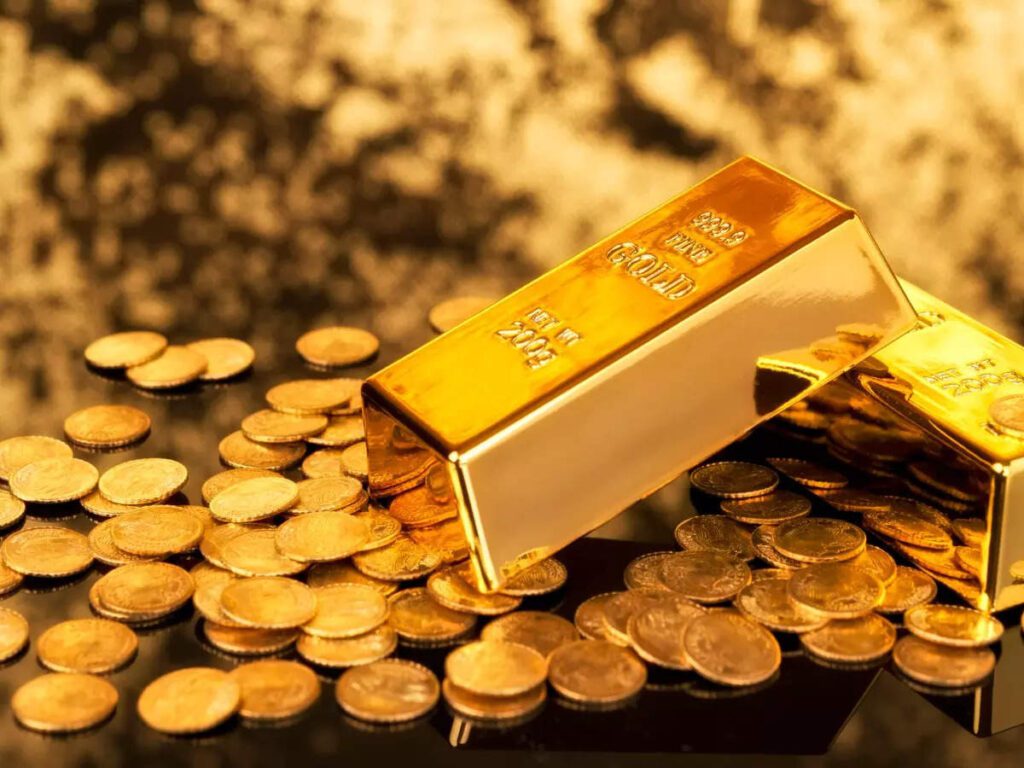
Gold has recorded its strongest weekly performance since March 2020, surging approximately 5% as President Donald Trump’s escalating threats over Greenland triggered a crisis of confidence in the US dollar and sparked the most dramatic safe-haven flight to precious metals in nearly two decades.
Spot gold touched a record $4,966.93 per ounce on Friday before settling near $4,900, capping a week that saw the metal breach the psychologically significant $4,700 level and advance relentlessly as geopolitical tensions between Washington and its European allies reached heights not witnessed since the transatlantic rift over the Iraq War.
The Greenland Catalyst: How Trump’s Arctic Ambitions Shook Markets
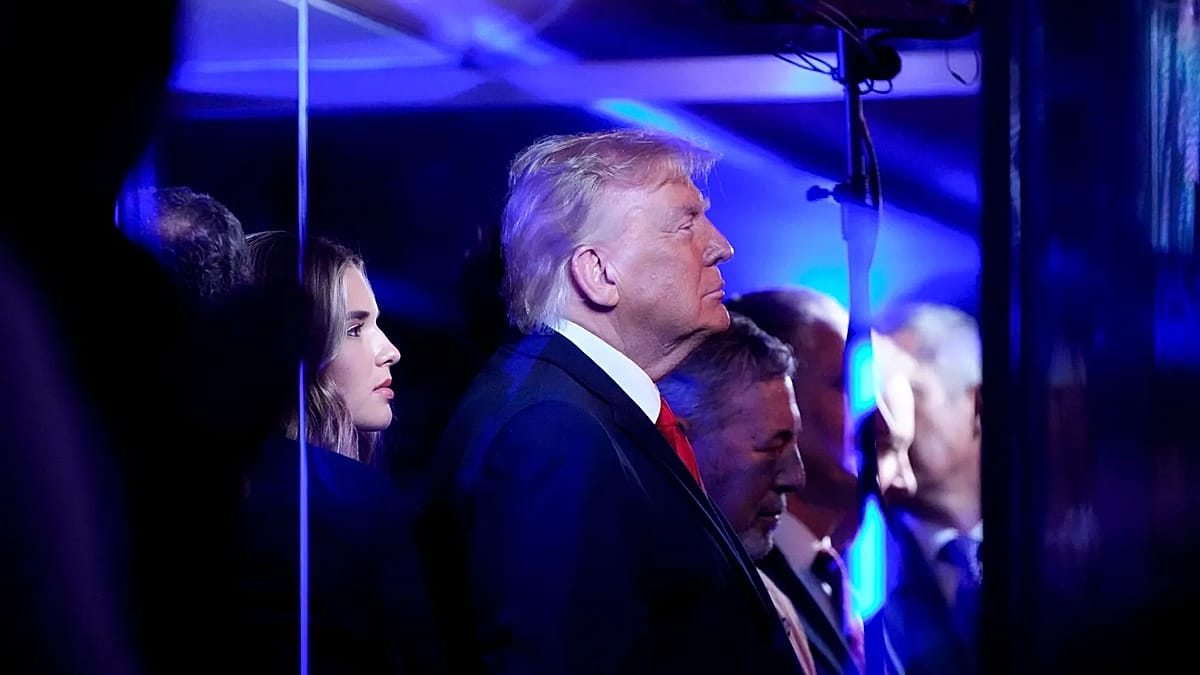
The catalyst for gold’s extraordinary rally was Trump’s announcement over the weekend of 10% tariffs on eight European nations—including France, Germany, and the United Kingdom—that have opposed his stated ambition to acquire Greenland from Denmark. The levies, set to commence 1 February and escalate to 25% by June, represent an unprecedented threat against NATO allies over territorial disputes.
Trump’s Davos address on Tuesday provided little reassurance. Whilst stating the United States would not use military force to take Greenland, he declared there was “no going back” on American control of the Arctic island, citing its strategic importance for missile defence systems. European leaders responded with alarm, with France deploying military contingents to Greenland and the European Parliament freezing votes on trade agreements.
The Bloomberg Dollar Spot Index plunged 0.8% on Tuesday alone—its steepest single-day decline in over a month—as investors questioned whether the world’s reserve currency could maintain stability under a president willing to threaten economic warfare against America’s closest allies over Arctic real estate.
Why Gold Is Surging: The Flight From Dollar Assets
This week’s 5% surge in gold prices reflects what analysts describe as a fundamental crisis of faith in traditional dollar safety. When the US President threatens tariffs on NATO allies over territorial ambitions, investors lose confidence in stability. Gold, being immune to central bank policy mistakes or geopolitical blunders, becomes irresistible.
“What we’re witnessing is nothing less than a crisis of confidence in the dollar as a safe-haven asset,” said Julia Du, senior commodities strategist at ICBC Standard Bank, who forecasts gold could reach $7,150 this year. “When American foreign policy becomes this unpredictable, holding dollars starts to feel like holding risk rather than managing it.”
The rally has been turbocharged by mounting evidence of capital flight from US assets. European investors, facing the prospect of a trade war with their largest export market, have begun diversifying reserves away from Treasuries. Gold ETF holdings climbed to a 3.25-year high this week, whilst silver—often viewed as gold’s more volatile cousin—surged to an all-time high of $95.78 per ounce.
Central Banks Accelerate Gold Buying Amid De-Dollarization
The Greenland crisis has intensified a longer-term trend: central bank diversification away from dollar reserves. China’s People’s Bank added 30,000 ounces of gold to its reserves in December, marking the fourteenth consecutive month of purchases. The World Gold Council reports global central banks purchased 220 metric tonnes in Q3 2025, up 28% from the previous quarter.
This “de-dollarization” effort—led by BRICS nations seeking alternatives to dollar-denominated trade—has provided structural support for gold prices throughout 2025. The metal gained 67% last year, its strongest annual performance since 1979, driven by geopolitical uncertainty, fiscal deficits amongst developed economies, and concerns that inflation represents the only viable path to managing sovereign debt burdens.
India’s Reserve Bank provides a striking case study. Despite adding just four tonnes of physical gold in 2025, the proportion of RBI reserves held in gold climbed from 10% to 16%—entirely through price appreciation. This passive accumulation underscores gold’s role as a hedge against currency debasement and political instability.
Market Concerns: Is Gold Overvalued at $5,000?
Gold’s parabolic ascent has not occurred without scepticism. A Bank of America survey conducted before the weekend’s Greenland escalation found that a majority of fund managers considered gold the “most crowded trade” in markets. Some 45% of respondents believed gold was overvalued—tying with May 2025 as the highest share on record.
Goldman Sachs, whilst maintaining gold as its highest-conviction trade, acknowledges the risks of a sharp correction. The bank notes that gold’s rally has been driven not merely by traditional retail investors but by a fundamental shift in who buys the metal: central banks and sovereign wealth funds seeking alternatives to dollar reserves.
Critics warn that technology giants’ massive investments in artificial intelligence infrastructure—microchips, data centres, and computing power—could be creating a bubble. Michael Burry, famous for predicting the 2008 financial crisis, has cautioned that overinvestment in AI may burst disastrously, potentially dragging down tech-related assets whilst boosting safe havens like gold.
The Path to $5,000 and Beyond
Analysts surveyed by the London Bullion Market Association now expect gold to breach $5,000 per ounce in 2026, with some forecasting prices as high as $7,150. These projections rest on three pillars: continued Federal Reserve monetary easing, persistent geopolitical tensions, and accelerating central bank diversification from dollar reserves.
The Federal Reserve is widely expected to maintain its current accommodative stance, with markets pricing in two interest rate cuts later this year. Lower real interest rates make non-yielding assets like gold more attractive relative to bonds, which offer income but carry duration risk and potential principal losses.
Geopolitically, the Greenland crisis represents merely the latest flashpoint. Trump’s actions in Venezuela, ongoing tensions in Ukraine and the Middle East, and trade conflicts with China have created an environment where investors perceive elevated tail risks. Gold has historically thrived during periods when multiple crisis scenarios seem plausible simultaneously.
Perhaps most significantly, regulatory changes may supercharge demand. China recently permitted insurance companies to hold 1% of reserves in gold—a seemingly modest allocation that, given the scale of Chinese financial institutions, could translate to hundreds of billions in new demand. If other jurisdictions follow suit, the impact on prices could dwarf even the introduction of gold ETFs in the mid-2000s.
What Gold’s Rally Signals About Global Order
The deeper significance of gold’s rally extends beyond immediate price movements. For seven decades, the Bretton Woods system and its successors have relied on dollar hegemony—the assumption that US Treasury securities represent the ultimate safe asset. Gold’s ascent challenges that assumption.
When gold outperforms equities and bonds simultaneously, as it has for two consecutive years, markets are signalling profound unease about monetary stability and geopolitical order. The metal’s 75% gain over twelve months reflects not merely inflation concerns but a judgement that traditional financial architecture—underpinned by US economic and military primacy—faces structural challenges.
For ordinary investors and portfolio managers, the message is stark. Financial advisers who long cautioned about gold’s volatility are quietly acknowledging that such volatility beats holding depreciating currency amid escalating trade wars. Whether gold’s rally represents a temporary panic or a permanent shift in the global monetary order may only become clear in retrospect.
What remains certain is that gold has delivered its most powerful weekly performance since the depths of the 2008 financial crisis—and this time, the crisis emanates not from collapsing banks but from the deliberate policy choices of the world’s most powerful government. That distinction may prove more unsettling than any banking panic.
Related Resources
• [London Bullion Market Association]{.underline} – Gold price data and market analysis
• [World Gold Council]{.underline} – Central bank gold holdings and demand trends
• [Bloomberg Commodities]{.underline} – Real-time precious metals pricing and news
• [Kitco Metals]{.underline} – Gold and silver market commentary
The post Gold Records Best Week Since 2008 as Greenland Crisis Batters Dollar appeared first on European Business & Finance Magazine.