

































European Stocks at a Tipping Point: Why 2026 Could Decide the Continent’s Economic Future
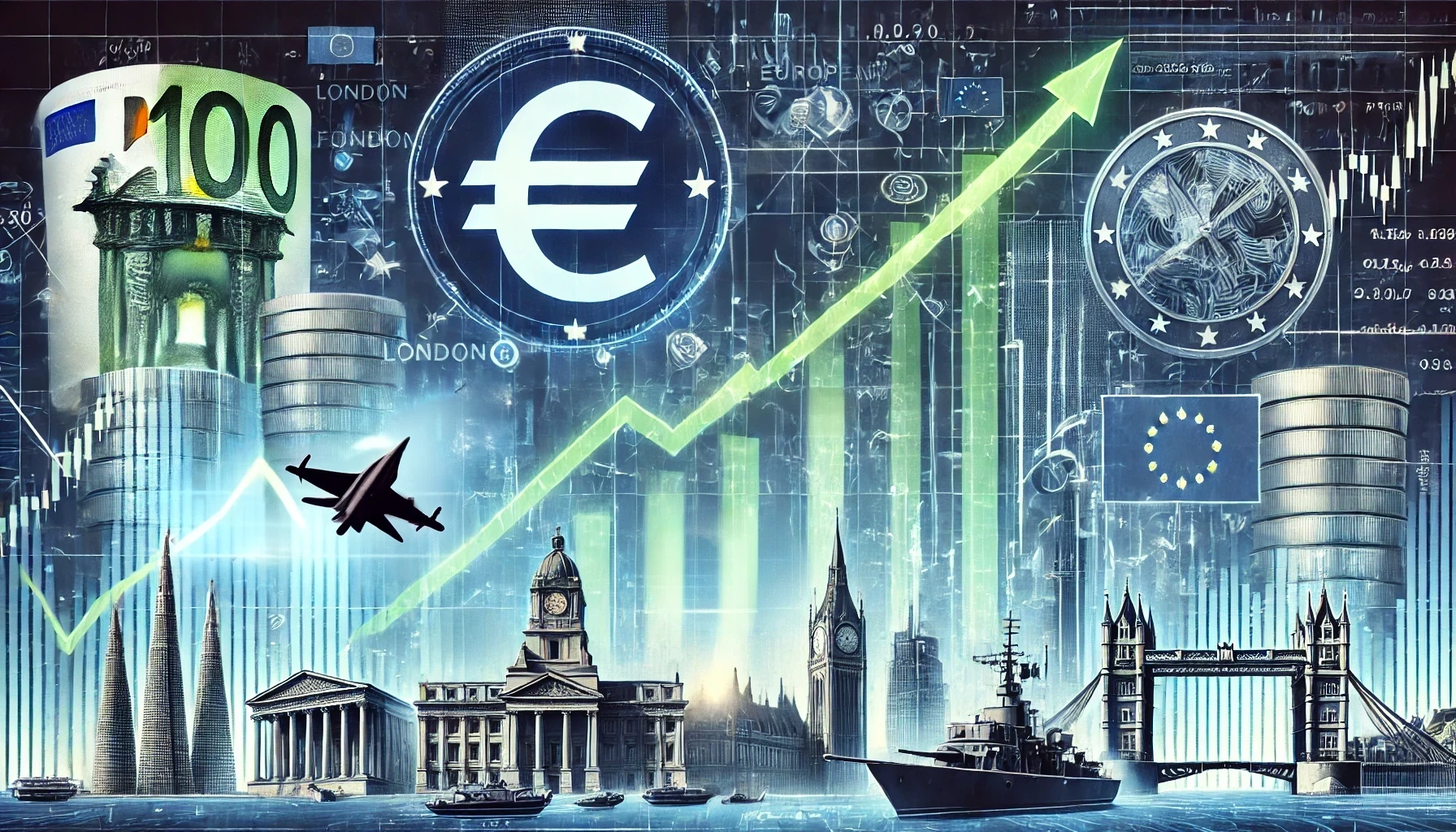

After outperforming Wall Street in early 2025, European equities face a critical year as structural weaknesses collide with ambitious fiscal stimulus, Chinese competition intensifies, and investor confidence hinges on whether Germany’s spending revolution can offset decades of industrial decline
The Year of Two Halves
European equity markets enter 2026 at an inflection point that could determine the continent’s economic trajectory for years to come. The STOXX Europe 600 surprised investors by outperforming the S&P 500 through much of 2025, with Germany’s DAX, France’s CAC 40, and Italy’s FTSE MIB all delivering stronger returns than their American counterparts. Yet this rally masks profound structural challenges that threaten to derail the continent’s economic competitiveness unless addressed decisively in the months ahead.
Morgan Stanley’s European equity strategists forecast earnings growth of just 3.6% for 2026, starkly below the bottom-up consensus estimate of 12.7%. This divergence reflects a familiar pattern: European equities typically begin the year with elevated forecasts that are gradually downgraded as reality intrudes. The question confronting investors is whether this time will be different—or whether Europe’s old economy exposure and rising Chinese competition will once again constrain corporate profitability.
Germany’s Fiscal Revolution
The most significant development reshaping European markets is Germany’s dramatic abandonment of fiscal conservatism. After decades of adhering to strict debt limits, Europe’s largest economy passed a comprehensive investment package worth an estimated €500 billion to €1.3 trillion over the next decade. This marks the most significant fiscal expansion since German reunification and represents a tectonic shift in the nation’s economic philosophy.
The spending priorities are clear: defence expenditure rising to 4% of GDP by 2035, infrastructure modernisation including roads, rail, and digital networks, and green energy investments to reduce dependence on foreign fossil fuels. Germany’s fiscal deficit is projected to increase from 2.7% of GDP in 2024 to 3.4% in 2026 and 4.0% in 2027, according to International Monetary Fund forecasts.
This infrastructure boom creates tangible opportunities for European industrials, materials companies, and banks. Cement producers stand to benefit from carbon credit systems that constrain supply even as demand expands for roads, bridges, and railways. Defence contractors like France’s Safran have transformed from dormant stocks into market darlings as NATO members commit to sustained military spending increases. European banks, trading at 9-10 times earnings—a discount to US counterparts—could see loan portfolio expansion as fiscal stimulus drives credit demand.
The China Challenge Intensifies
Yet Germany’s spending spree unfolds against a backdrop of intensifying competition from China that threatens to overwhelm domestic manufacturers. Chinese overcapacity in strategic sectors—electric vehicles, solar panels, steel, chemicals—is depressing global prices and squeezing profit margins across European industry. In Germany, profit margins for non-financial companies have fallen 5 percentage points over the past three years, with even steeper declines in manufacturing sectors directly exposed to Chinese imports.
The structural nature of this challenge cannot be overstated. China invested nearly as much in clean energy in 2025 as the United States and European Union combined, cementing its status as the world’s clean technology powerhouse. Chinese companies lead manufacturing across most clean energy supply chains, from solar cells to lithium batteries to wind turbines. European efforts to compete through the Net-Zero Industry Act—which aims for 40% domestic production of annual deployment needs by 2030—face the reality that Chinese manufacturers have decade-long head starts and substantial cost advantages.
Goldman Sachs Research identifies increased Chinese competition as reinforcing structural weaknesses already plaguing the euro area economy: demographic decline, overregulation, and persistently high energy costs. These headwinds explain why European GDP growth is forecast at just 1.1% to 1.3% in 2026—modest by historical standards and well below the continent’s potential.
Energy Costs and Industrial Exodus
The energy crisis catalysed by Russia’s invasion of Ukraine continues reverberating through European manufacturing. While wholesale gas prices have retreated from 2022 peaks, energy costs remain approximately 40% above pre-2022 levels for many industrial users. This persistent premium relative to American and Asian competitors undermines Europe’s ability to retain energy-intensive industries.
The consequences are stark. German chemical giant BASF has announced 2,600 job cuts, with peer Evonik eliminating 2,000 positions. Dow Chemical is closing European facilities entirely. Recent surveys indicate 75% of German energy-intensive companies are shifting investments abroad to regions with lower power costs and fewer regulatory burdens. This industrial exodus threatens the manufacturing base that underpins European prosperity.
Europe’s pivot away from Russian energy sources—aiming to phase out Russian gas, oil, and nuclear entirely—creates both challenges and opportunities. The transition requires massive infrastructure investment in LNG terminals, renewable generation capacity, and grid modernisation. Yet the timeline for completing these investments extends years into the future, leaving manufacturers exposed to price volatility and supply uncertainty in the interim.
Monetary Policy Divergence
The European Central Bank faces a delicate balancing act in 2026. After cutting its deposit facility rate four times in 2025, the ECB is expected to hold rates steady at 2% through much of 2026 even as inflation hovers near the 2% target. This cautious stance reflects concerns that German fiscal stimulus could reignite price pressures, particularly given tight labour markets across much of the eurozone.
This monetary policy divergence relative to the Federal Reserve—which is expected to continue rate cuts—creates both risks and opportunities. A stronger euro could further undermine European export competitiveness, particularly against Chinese manufacturers. However, stable ECB policy should support credit growth and money supply expansion, potentially boosting corporate activity and earnings performance.
Political Uncertainty and Market Fragmentation
Political instability continues weighing on investor sentiment, particularly in France where the equity market trades at an outright discount to the EURO STOXX 50—historically a warning sign reserved for major crises. French stocks have underperformed by 15% since January 2024 amid recurring political turmoil. While markets showed resilience when the government survived October’s no-confidence vote, the underlying political fragmentation remains unresolved.
The upcoming US midterm elections in November 2026 add another layer of uncertainty. Potential shifts in American trade policy could trigger renewed tariff threats targeting European manufacturers, particularly in automotive and aerospace sectors. The polarisation of global trade into US-led and China-led blocs forces European companies to navigate increasingly complex supply chain decisions.
The Verdict: Cautious Optimism
Despite formidable challenges, European equities offer compelling value for investors with appropriate time horizons. The STOXX Europe 600 ex UK Index trades at 14.8 times 2026 consensus earnings—slightly above its long-term average but justified by improving fiscal dynamics. Sectors positioned to benefit from German stimulus—select industrials, materials, and banks—present tactical opportunities.
J.P. Morgan strategists forecast eurozone earnings growth approaching 15% in 2026, driven by easy base effects, improving macro conditions, rising liquidity, and better Chinese demand. This optimistic scenario requires multiple catalysts to align: German spending accelerating on schedule, Chinese stimulus supporting export demand, and European companies successfully defending margins against Asian competition.
The pessimistic case is equally plausible: delays implementing fiscal programmes, continued Chinese overcapacity depressing prices, and energy costs remaining structurally elevated. Under this scenario, Morgan Stanley’s 3.6% earnings growth forecast looks more realistic, implying limited upside for equity indices trading near fair value.
What’s certain is that 2026 represents a pivotal year for European capitalism. The continent’s ability to execute ambitious fiscal plans, defend industrial competitiveness against Asian rivals, and modernise regulatory frameworks will determine whether recent stock market gains prove sustainable or merely a brief respite before renewed underperformance. For investors, the choice is stark: embrace Europe’s transformation potential or acknowledge that structural decline may prove irreversible without radical reform.
Additional Reading
The post European Stocks at a Tipping Point: Why 2026 Could Decide the Continent’s Economic Future appeared first on European Business & Finance Magazine.