



























EssilorLuxottica’s Future Hangs on a €56 Billion Family Buyout as Del Vecchio Heir Moves to End Succession War
When Leonardo Del Vecchio died in June 2022, he left behind one of the most formidable business empires ever assembled in Europe — and the seeds of a succession dispute that has paralysed it ever since. Del Vecchio, who founded Luxottica at the age of 25 in a small workshop in northern Italy and spent six decades building it into a global industrial colossus, split ownership of his Luxembourg holding company Delfin between his six children, his widow, and a stepson. He also provided for significant payouts to his longtime lieutenant Francesco Milleri, the chief executive of both Delfin and EssilorLuxottica. What followed was three years of infighting, frozen dividends, blocked governance decisions, and a family stalemate that has hung over some of the most consequential corporate assets in Italy.
That may finally be about to change. Leonardo Maria Del Vecchio, the founder’s son and EssilorLuxottica’s chief strategy officer, has confirmed he is close to agreeing terms to buy out two of his siblings — brother Luca and sister Paola — from their stakes in Delfin. The deal, structured as a leveraged buyout backed by a pool of banks, would triple his current 12.5% holding to approximately 37.5%, making him the single largest shareholder in a company that controls around €56 billion in net assets. “We are close to agreeing a price,” Leonardo Maria told the Financial Times. “I have been very clear I am willing to buy their stakes in order to become Delfin’s main shareholder, close the outstanding issues around my father’s estate and execute my father’s will.”
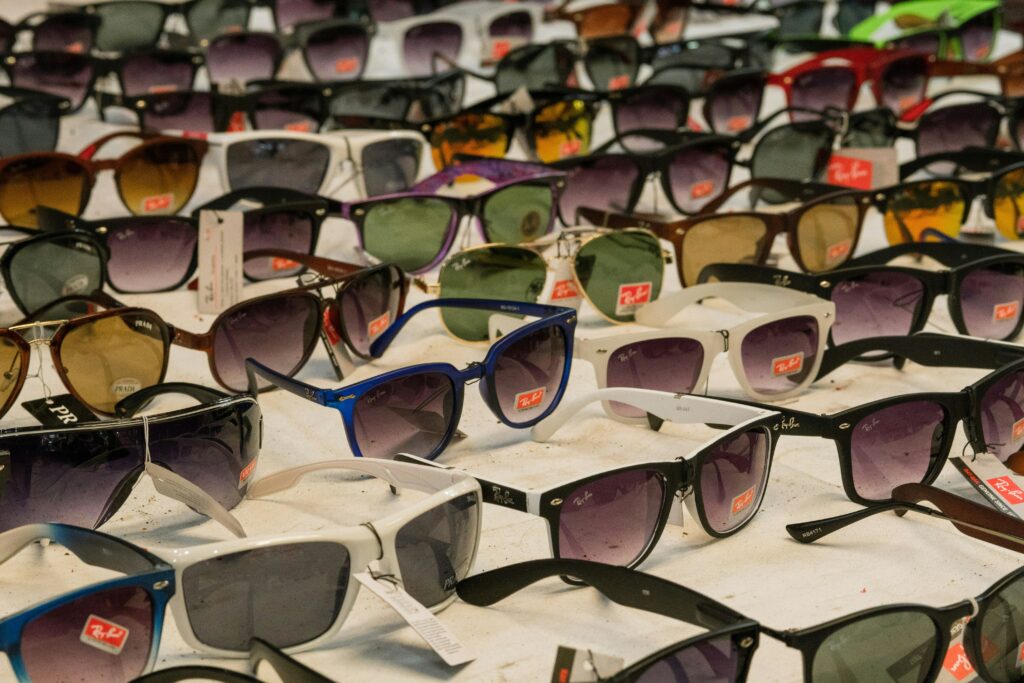
The stakes could hardly be higher. Delfin holds a controlling 32% stake in EssilorLuxottica, along with significant positions in insurer Generali at 10%, Banca Monte dei Paschi di Siena at 17.5%, UniCredit at 2.7%, and real estate group Covivio at around 28%. EssilorLuxottica itself — the product of Luxottica’s landmark 2018 merger with French lens manufacturer Essilor — sits at the heart of the global eyewear and luxury goods industry with a market capitalisation of approximately €111 billion. It owns Ray-Ban, Oakley, and Persol, controls retail chains including LensCrafters and Sunglass Hut, and holds premium licences with luxury houses from Chanel to Prada. Leonardo Maria has been unambiguous about his priorities once control is consolidated. “EssilorLuxottica is our crown jewel and we never want to be diluted,” he said.
The dispute that has made this deal necessary reflects the almost impossible complexity of the inheritance Del Vecchio left behind. With six children from three different relationships, Del Vecchio divided his estate into eight equal parts among his heirs, who have not been able to agree on a plan for the division of assets in the more than three years since his death. Disagreements among shareholders have prevented the distribution of a dividend above 10% of net profit or any change to the current governance structure — a stranglehold that has frustrated Milleri’s ability to execute strategy and blocked the kind of decisive capital allocation that a holding company of Delfin’s scale routinely requires. The payments owed to Milleri himself under Del Vecchio’s will have remained frozen throughout, adding another layer of tension to an already combustible situation.
The dispute has not been confined to boardrooms. Leonardo Maria was placed under investigation by Milan’s anti-Mafia prosecutor, amid allegations of trafficking in private information acquired illegally — including alleged surveillance of four of his brothers during the succession dispute. His lawyer described him as a victim rather than a perpetrator, and EssilorLuxottica publicly backed him. The investigation adds a layer of legal complexity to an already delicate transaction, though it has not visibly derailed the buyout discussions. Italy’s complex corporate governance landscape has long made succession at this level fraught with legal and political dimensions that extend well beyond the boardroom.
The proposed deal structure is telling. A leveraged buyout backed by external bank financing — rather than a straightforward cash purchase — signals both the ambition of the move and its financial complexity. The plan involves a discount to current market values, as is standard practice for transactions of this kind where a controlling premium is not being paid and the seller is in a structurally weaker position. Luca and Paola had previously attempted to transfer their shares into separate entities to make them more tradable, but failed to secure the required majority at a Delfin shareholders’ meeting — leaving them with limited options and strengthening Leonardo Maria’s negotiating hand considerably.
Alongside the buyout discussions, the prospect of a stock market listing for Delfin is beginning to take shape, with scenarios under consideration including the creation of a separate vehicle for the financial holdings to be floated, or the listing of the entire Delfin entity. A listing would fundamentally reshape one of Europe’s most powerful private corporate structures, introducing public market discipline and external shareholders into what has until now been an entirely private family affair. Whether that prospect accelerates or complicates the sibling buyout remains to be seen.
What is not in doubt is the significance of the moment for corporate Italy more broadly. Delfin’s web of stakes in EssilorLuxottica, Generali, Monte dei Paschi, and UniCredit makes it one of the most consequential shareholders in the country’s financial and industrial architecture. A resolved, consolidated ownership structure with a single dominant shareholder would free Milleri to execute strategy with the decisiveness the company’s scale demands — and would restore the dividend flows that have been suppressed for three years. Delfin reported net profits of €1.393 billion in 2024, more than doubling the previous year’s result, with dividend revenues totalling over €1.144 billion — a 29% increase from 2023. The underlying business is thriving. The family dispute is the only thing standing between Delfin and its potential — and Leonardo Maria Del Vecchio is moving decisively to remove that obstacle.
FAQ
Q: What is Delfin and why does it matter to European business? A: Delfin is the Luxembourg-based family holding company through which the Del Vecchio heirs control their stakes in some of Europe’s most significant corporations. Its crown jewel is a 32% controlling position in EssilorLuxottica — the world’s largest eyewear company with brands including Ray-Ban and Oakley and a market cap of around €111 billion. Beyond eyewear, Delfin holds major positions in Italian insurer Generali, Banca Monte dei Paschi di Siena, UniCredit, and real estate group Covivio, giving it an outsized influence over the Italian financial and corporate landscape. With around €56 billion in net assets and over €1.1 billion in annual dividend income, it is one of the most powerful private holding companies in Europe.
Q: Why has the Del Vecchio succession dispute taken so long to resolve? A: The complexity stems from the inheritance structure Del Vecchio left behind — eight equal stakes distributed among six children, a widow, and a stepson from three different relationships. No single heir held a dominant position, meaning any significant decision required broad consensus that proved almost impossible to achieve. The result was a three-year deadlock that froze dividend distributions above 10% of net profit, blocked governance changes, and prevented the payouts owed to CEO Francesco Milleri under the founder’s will. Leonardo Maria’s leveraged buyout of his two siblings’ stakes is designed to break that deadlock by creating a clear majority shareholder with both the authority and the motivation to execute his father’s strategic vision.
The post EssilorLuxottica’s Future Hangs on a €56 Billion Family Buyout as Del Vecchio Heir Moves to End Succession War appeared first on European Business & Finance Magazine.