



































Dow Jones Pulls Back Sharply As Yields Rise And Tariff Risks Return
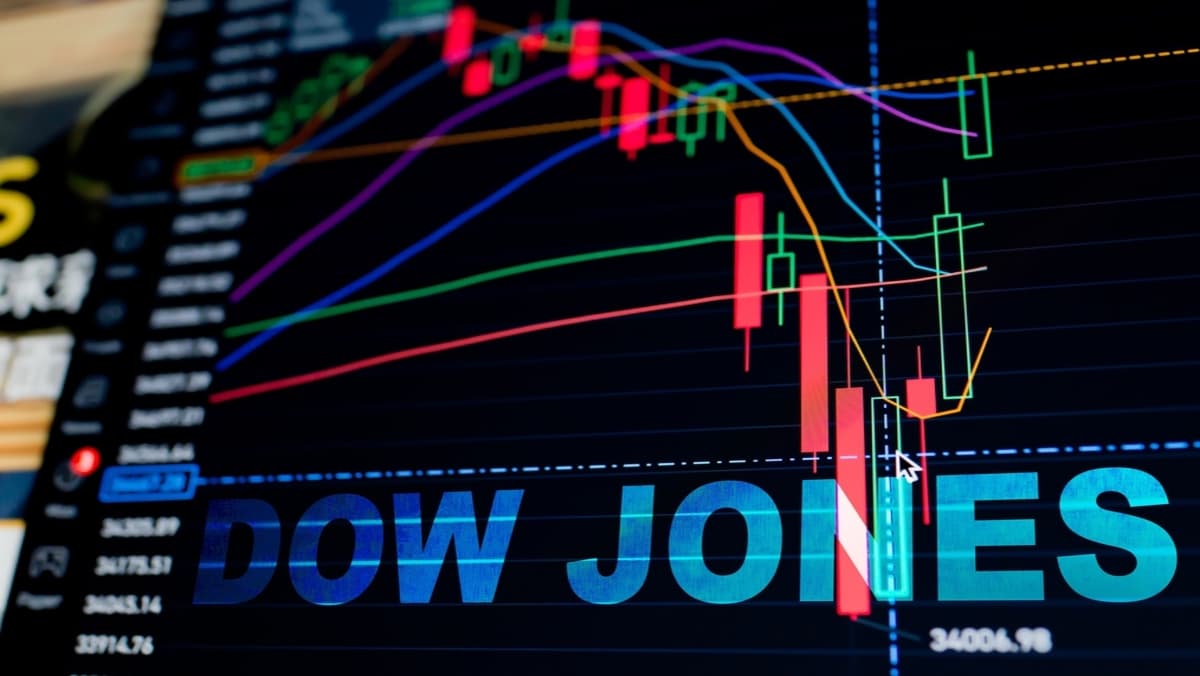

The recent sharp sell-off (down nearly 1.76%) in the Dow Jones was not merely a random technical correction, but rather reflects a systemic short-term re-pricing, driven by three key factors: a renewed rise in U.S. Treasury yields, more cautious expectations regarding monetary policy in 2026, and a shift in market focus during the current earnings season.
The U.S. 10-year Treasury yield is currently holding near 4.29%, significantly higher than levels seen toward the end of Q4 2025. This yield level not only increases the discount rate applied to future cash flows, but also erodes the relative attractiveness of equities versus bonds – particularly for companies with stable business cycles and moderate growth, which make up a large portion of the Dow Jones.
What stands out is not just the absolute level of yields, but the speed of the recent increase. The rapid rise in yields over a short period left markets little time to adjust expectations, triggering deleveraging, profit-taking, and portfolio rebalancing across blue-chip stocks.
In addition, although U.S. inflation has eased from its 2024 peak, core CPI remains around 2.6%, while core PCE (the Fed’s preferred inflation gauge) has yet to show a decisive move back toward the 2% target. As a result, markets have begun to reassess expectations that the Fed will ease policy further anytime soon, with interest rates likely to remain elevated for longer than previously anticipated.
For the Dow Jones, this backdrop is more unfavorable than for the Nasdaq, as the index is more directly sensitive to capital costs, credit conditions, and the real economic cycle. As the “higher-for-longer” rate narrative returns, valuations of industrials, financials, and consumer-staple companies have come under pressure, even though underlying profit fundamentals have not deteriorated materially.
A notable feature of the recent decline is the negative market reaction even to companies that reported reasonably solid earnings. This reflects a shift in investor focus toward 2026 profit outlooks, amid persistently high capital costs, wages and operating expenses that have yet to ease meaningfully, and signs of slowing consumer demand in certain segments.
Given that the Dow Jones is a price-weighted index, sharp declines in just a handful of high-priced constituents can have an outsized impact on the overall index. As such, the recent sell-off carries a strong element of technical amplification, rather than signaling a broad-based weakening of the U.S. economy.
Beyond monetary factors, tariff-related risks and renewed trade tensions are gradually returning to the market’s agenda. A more hardline trade stance from President Donald Trump, along with remarks suggesting that 10 – 20% tariffs could be imposed on EU goods as early as February, have added another layer of uncertainty around supply chains and input costs.
The Dow Jones is particularly exposed to this risk, given its heavy weighting toward industrial, manufacturing, and multinational corporations – sectors highly dependent on global trade. Tariff risks not only affect cost structures, but also undermine investment confidence and expansion plans, prompting capital to temporarily retreat from cyclical equities.
Even if tariffs are not ultimately implemented, policy uncertainty alone is sufficient to make markets more cautious and reduce exposure to risk assets, especially at a time when capital costs are already elevated.
In the near term, I believe the Dow Jones is more likely to continue correcting or move sideways within a wide range, rather than rebound immediately. The area around 48,000 points represents a key short-term support; if this level holds, the market may begin to form a base and attract rebalancing flows from long-term investors. However, under a more cautious scenario—where U.S. Treasury yields continue to rise and tariff risks escalate – the Dow could extend its pullback toward the 47,500 area.
Overall, the recent sharp decline in the Dow Jones should be viewed as a re-pricing correction, reflecting shifts in interest-rate expectations and capital costs, rather than a sign of fundamental deterioration in the U.S. economy. While volatility and dispersion are likely to remain elevated in the near term, this phase is best understood as a period of position cleansing and preparation for the next trend, rather than the end of the cycle.
The post Dow Jones Pulls Back Sharply As Yields Rise And Tariff Risks Return appeared first on European Business & Finance Magazine.