




























Chinese Automakers Step Up UK Push Amid Global EV Race

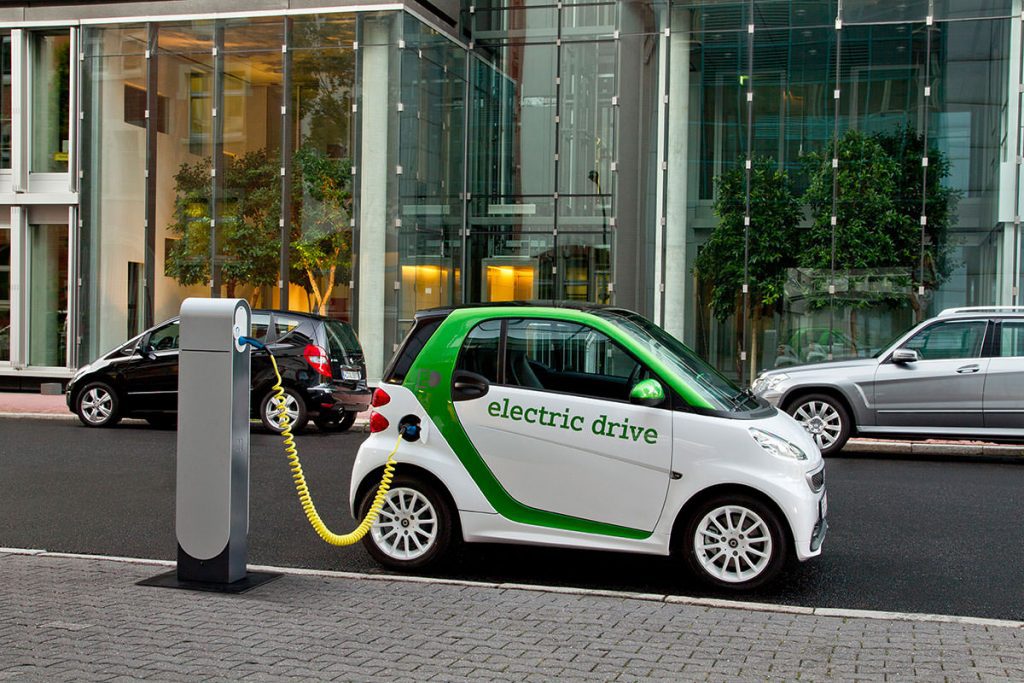
BYD surpasses Tesla in Britain as wave of new Chinese brands floods Europe’s second-largest EV market, capitalizing on absent tariffs and domestic saturation to reshape global automotive hierarchy
Chinese electric vehicle manufacturers are orchestrating an unprecedented assault on the United Kingdom market in 2026, leveraging Britain’s absence of protective tariffs and growing consumer acceptance of unfamiliar brands to establish beachheads for global expansion. With domestic Chinese sales stagnating under brutal price competition, automakers including BYD, Nio, Zeekr, Aion, and Xpeng are flooding the UK with technologically advanced EVs priced significantly below European and American rivals, fundamentally reshaping automotive market dynamics and threatening established manufacturers across all segments.
The most dramatic manifestation of this strategic pivot emerged in 2025 annual sales data: BYD registered 51,422 vehicles in Britain compared to Tesla’s 45,513, marking the first time the Chinese manufacturer outsold Elon Musk’s company in a major Western market. BYD’s 880% year-over-year surge occurred even as UK electric vehicle sales grew 24% overall, with Tesla experiencing a 10% decline that analysts partially attribute to political backlash against Musk’s interference in British affairs. The UK has now become BYD’s largest market outside China, with over 35,000 vehicles on British roads and retail networks expanding from 14 sites in 2023 to over 130 by year-end 2025.
Price War at Home Drives Export Tsunami
The aggressive international expansion reflects desperate circumstances in China’s domestic market, where a destructive price war has compressed margins to unsustainable levels. BYD, despite global success, recorded domestic sales declines for three consecutive months in late 2025—the company’s first sustained domestic contraction in years. Entry-level EVs in China have fallen to prices once considered impossible, with some models cut more than 30% to maintain competitiveness. Analysts characterize the situation as “involution”—destructive competition that destroys value without creating new demand.
Market concentration has intensified sharply, with the top ten Chinese manufacturers now controlling approximately 95% of new energy vehicle sales, up from 60-70% just two years ago according to Citic CLSA research. This consolidation forces second-tier brands into increasingly aggressive international strategies. As Tu Le, founder of Sino Auto Insights consultancy, observed: “Slowing demand at home is pushing Chinese electric carmakers to expand aggressively overseas, where profit margins are often higher.”
China’s November 2025 EV exports jumped 87% year-over-year to nearly 200,000 units, reflecting a deliberate pivot toward international markets. For many manufacturers, overseas sales now serve as the primary buffer against falling domestic revenues. Chinese automakers are projected to sell approximately 27 million vehicles globally in 2025, surpassing Japan for the first time in over two decades and cementing China’s position as the world’s automotive manufacturing powerhouse.
UK: The Gateway to European Dominance
Britain’s strategic importance extends beyond its status as Europe’s second-largest EV market. Unlike the European Union, which imposed anti-dumping tariffs up to 45.3% on Chinese EVs following subsidy investigations, the UK maintains no equivalent barriers post-Brexit. This regulatory divergence creates asymmetric competitive advantages, allowing Chinese manufacturers to price aggressively while European rivals face margin compression.
Auto Trader’s chief commercial officer Ian Plummer projects Chinese brands could command 20% of the UK market by 2028, warning: “They’re not just taking sales from one group. They’re taking a bit of share from everybody.” The threat extends across all segments—Chinese manufacturers offer not only battery electric vehicles but also petrol and hybrid models, enabling comprehensive market penetration rather than niche positioning.
The UK’s vulnerability stems partially from the absence of major domestic mass-market manufacturers following decades of industry consolidation. Without homegrown champions requiring protection, British consumers demonstrate greater willingness to experiment with unfamiliar brands based purely on value propositions. This openness, combined with the government’s Zero Emission Vehicle mandate pushing drivers toward EVs, creates ideal conditions for Chinese market entry.
Three major brands—Nio, Aion, and Zeekr—are launching UK operations in 2026, joining recent arrivals including Changan, Xpeng, and Leapmotor (backed by Stellantis). Each brings distinctive value propositions targeting specific market segments:
Nio introduces battery-swap technology enabling 5-minute “refueling” alongside conventional charging, targeting premium segments with the ET7 sedan offering over 400 miles of range.
Zeekr, Geely’s luxury EV arm already operating across 12 European countries, plans UK entry later this year with the 9X plug-in hybrid SUV boasting 1,400 horsepower, 750-mile total range, and Rolls-Royce Cullinan-inspired styling.
Xpeng launched its G6 SUV in Q1 2026 with “industry-leading” 451kW charging delivering 10-80% replenishment in just 12 minutes, priced from £39,990 to compete directly with Tesla Model Y.
Aion, GAC Group’s EV subsidiary, enters with the V SUV emphasizing spacious interiors and value pricing under £30,000.
Leapmotor, partnering with Stellantis for distribution through existing Peugeot/Vauxhall/Fiat networks, offers the T03 city car at £16,000—among Britain’s most affordable EVs.
Technology Leadership Drives Competitive Advantage
Chinese manufacturers’ dominance stems from vertical integration and software-first development approaches that contrast sharply with traditional automakers. BYD’s Blade Battery technology, a lithium-iron-phosphate design, delivers approximately €10 per kWh cost advantages versus nickel-cobalt alternatives while eliminating precious metals including cobalt, nickel, and manganese. The second-generation Blade Battery launching in 2025 targets 200 Wh/kg energy density with 400-kilometer range added in five-minute charging sessions.
Software differentiation proves equally significant. Companies including Xpeng and Nio employ thousands of software engineers developing operating systems, autonomous driving capabilities, and over-the-air update functionality from the ground up—treating software as core competency rather than afterthought. Xpeng’s XPILOT system rivals Tesla’s Full Self-Driving in capability, while Nio’s NOMI AI assistant demonstrates superior natural language understanding compared to European competitors.
This technological prowess extends to manufacturing efficiency. BYD controls vertically integrated supply chains from lithium mining rights to the world’s largest car-carrier ship capable of transporting 9,200 vehicles simultaneously, enabling aggressive pricing while maintaining profit margins above industry averages.
Tariff Evasion Through Local Production
Recognizing that tariffs represent existential threats to European expansion, Chinese manufacturers are establishing local production facilities. BYD’s Hungary plant, commencing trial production in early 2026, will initially produce 800,000 units annually with mass manufacturing ramping shortly thereafter. The facility focuses on compact models designed specifically for European buyers, allowing BYD to sidestep import duties while embedding deeper into regional supply chains.
Geely’s operations illustrate the scale of ambition: the company entered Australia, Vietnam, and four additional markets in H1 2025, extending reach to approximately 90 countries. Its UK division targets 100,000 annual vehicle sales, competing across multiple segments through subsidiary brands including Polestar, Lotus, and Zeekr. Such geographic diversification insulates manufacturers from single-market disruptions while building global brand recognition.
Aftermarket Challenges Cloud Rapid Growth
Yet explosive growth generates substantial friction. Over 35,000 BYD owners in Britain face chronic parts shortages, with forum discussions documenting multi-month waits for basic components. Insurance companies respond by hiking premiums or refusing coverage entirely, while body shops struggle without repair documentation. BYD acknowledges these issues, operating parts warehouses across UK, Netherlands, and Sweden, but supply infrastructure lags demand growth.
The UK automotive aftermarket represents £21 billion annually supporting 345,000 jobs, with EV segments growing 14-17% CAGR. Chinese manufacturers must rapidly professionalize aftermarket operations to avoid reputational damage that could derail expansion trajectories. First-mover advantages exist for specialist parts retailers, but systemic solutions require manufacturer investment in distribution networks, technical training, and inventory management systems.
Legacy Automakers Face Existential Reckoning
The Chinese onslaught places immense pressure on established manufacturers already struggling with electrification transitions. Tesla’s 9% global sales decline in 2025 reflects stale product lineups—the company relies on Model 3 and Model Y for 95% of volume despite promising affordable sub-$25,000 models for years. European luxury brands including Mercedes, BMW, and Audi face margin compression as Chinese premium offerings undercut pricing by 30-40% while matching or exceeding performance specifications.
Japanese automakers suffer acute distress. In Thailand, Southeast Asia’s largest EV market, the top five brands are all Chinese. Market share erosion accelerates across Latin America and Africa as affordability and rapid rollout trump brand loyalty accumulated over decades. Honda, Nissan, and Toyota each posted sales declines between 2-7% in H1 2025, with profits declining and capacity utilization weakening.
Volkswagen’s response illustrates the strategic dilemma: the German giant forged joint ventures with Xpeng and Horizon Robotics while establishing its largest non-German R&D center in Hefei, China. Such partnerships enable faster product development cycles but risk technology transfer that could ultimately strengthen competitors. VW plans several new China-specific models for 2026 launch, attempting to recapture share in the world’s largest automotive market.
The fundamental challenge confronting legacy manufacturers transcends tariffs—Chinese companies lead in battery technology, software integration, manufacturing efficiency, and product development speed. Without radical restructuring, established brands face relegation to niche players in an industry increasingly defined by Chinese innovation and scale.
For Britain, the influx of affordable, technologically advanced Chinese EVs accelerates electrification while hollowing domestic automotive employment. The trade-off between consumer benefits and industrial policy will define UK government responses as Chinese market share inevitably grows toward the projected 20% threshold by 2028—and potentially far beyond.
Further Reading
China sets sights on UK car market as lack of tariffs puts British manufacturing at risk – GB News (January 20, 2026)
https://www.gbnews.com/lifestyle/cars/china-uk-electric-car-market-tariffs-british-manufacturing
BYD officially crushes Tesla in all-electric sales for 2025, secures global BEV crown – Electrek (January 2, 2026)
BYD officially crushes Tesla in all-electric sales for 2025, secures global BEV crown
China EVs in 2026 look less like a boom and more like a survival test as global expansion ramps up – CNBC (December 30, 2025)
https://www.cnbc.com/2025/12/30/china-electric-car-2026-price-war-evs-sales-global-expansion-slowdown-price-war-2025.html
China’s EV Export Explosion: How a Domestic Price War Is Reshaping the Global Auto Market – Carbon Credits (January 6, 2026)
https://carboncredits.com/chinas-ev-export-explosion-how-a-domestic-price-war-is-reshaping-the-global-auto-market/
Tesla’s Dramatic Fall In The UK In 2025, And BYD’s Rise! – CleanTechnica (January 8, 2026)
The post Chinese Automakers Step Up UK Push Amid Global EV Race appeared first on European Business & Finance Magazine.