




















Brussels’ €5bn Tech Fund Hasn’t Made a Single Investment. France and the UK Are Already Fighting Over It.
London, June 29 (EBM Newsdesk Analysis) — By Brad Adams
Europe’s tech sector has long struggled with a lack of late-stage venture capital. The EU’s €5 billion Scaleup Europe Fund was built to fix exactly that, backing strategically important startups before they’re tempted across the Atlantic. Before the fund has made its first investment, politics is already threatening to get in the way.
A National Dispute Before a Single Euro Has Moved
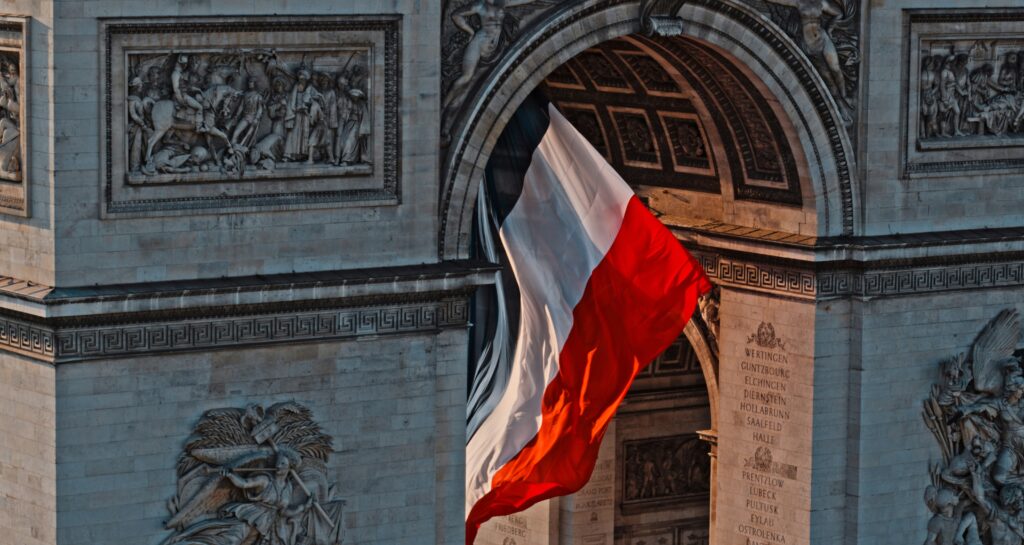
Sifted reported this week that France is seeking to block the UK’s participation in the fund, raising fresh questions over whether Europe’s drive for tech sovereignty will be undermined by national political interests before it’s even had the chance to prove itself commercially. I haven’t been able to independently verify the specifics of France’s position beyond Sifted’s own reporting, but the dispute itself is entirely consistent with tensions that have been building around this fund since before a manager was even chosen.
Supporters of UK inclusion argue that excluding Britain — home to roughly a third of Europe’s unicorn startups — only weakens the continent’s overall competitiveness at the exact moment it’s trying to demonstrate strength. Others insist EU-backed capital should stay within the bloc, full stop. I think both positions are coherent on their own terms, which is precisely why this dispute is so hard to resolve quickly.
The Tension Was Already There
This isn’t the first sign that national interest could complicate the fund’s stated commercial mission. When the European Commission selected Sweden’s EQT to manage the €5 billion vehicle, beating out UK firm Atomico in the final round, France’s own contender — Eurazeo — had already been eliminated earlier in the process. The result: no French institutional investor sits among the fund’s founding limited partners. Neither Bpifrance, the Caisse des Dépôts, nor any major French bank is at the table, despite France having spent six years building its own Tibi initiative, which has committed more than €15 billion of French institutional capital to domestic tech.
I think that absence matters for understanding what’s playing out now. A country that built a serious industrial policy around backing its own tech sector, then watched its own candidate lose the mandate to manage Europe’s flagship growth fund, has an obvious incentive to push hard on questions of who else gets a seat at the table — particularly when the candidate in question is the UK, a non-EU member with deep capital markets and a startup ecosystem European officials have long eyed warily.
What the Fund Was Actually Built to Solve
It’s worth restating why this fund exists at all, because the stakes of getting governance wrong are real. European investors have historically lacked late-stage funds large enough to support major follow-on rounds, which is exactly why Europe’s strongest tech companies have spent years taking American money, relocating closer to US capital pools, or selling to overseas acquirers outright. US buyers alone have captured close to $24 billion in European tech spinout value since 2019. The Scaleup Europe Fund, managed independently by EQT on commercial and merit-based grounds according to its own investment guidelines, was designed specifically to close that gap — writing growth-stage cheques from Series B onward into companies in AI, quantum computing, clean energy, space technology and biotech.
The European Commission has been explicit that EQT, not Brussels, makes individual investment decisions, and that founding investors participate in governance without directing which companies get funded. That structure is the fund’s strongest asset. It’s also precisely what a fight over national eligibility threatens to undermine, because the moment political actors start lobbying over who can or can’t receive capital, the line between commercial discipline and political horse-trading gets blurred — even if EQT’s formal decision-making authority stays intact on paper.
Why This Dispute Cuts Both Ways
I don’t think this is a simple case of France being obstructive for its own sake. With Europe already struggling to keep its best companies from relocating to the US, there’s a genuine strategic argument for keeping EU-backed capital working inside the bloc rather than flowing toward a market that has, since Brexit, sat outside the EU’s own regulatory and political structures. The counter-argument is equally serious: if the fund’s purpose is to back Europe’s strongest companies and prevent them from being acquired or relocated, artificially excluding a market that produces a third of the continent’s unicorns undermines the fund’s own stated mission before it starts.
So should the Scaleup Fund invest wherever it finds Europe’s strongest companies, regardless of borders? I don’t think there’s an obviously correct answer here, and I’d be genuinely interested in how EBM readers weigh the trade-off between continental cohesion and simply backing the best opportunity.
The Bottom Line
The Scaleup Europe Fund was designed to solve a capital problem with a commercial structure, deliberately built to avoid the slow, politically-compromised decision-making that has undermined previous European industrial policy efforts. A dispute over UK eligibility, surfacing before the fund has deployed a single euro, is the first real test of whether that design holds. My view is that how this disagreement gets resolved — quietly through governance, or publicly through political pressure — will tell us more about whether the fund can function as intended than anything EQT says about its investment pipeline.
Related reads:
EQT wins the EU’s €5bn Scaleup Europe Fund mandate
Brussels’ €5bn Scaleup Fund faces a political test before day one
Europe wants sovereign AI — most of the chips are still American
The post Brussels’ €5bn Tech Fund Hasn’t Made a Single Investment. France and the UK Are Already Fighting Over It. appeared first on European Business Magazine.