



























XRP to $10? What the CLARITY Act Means for Ripple And Other Altcoins
Quick Answer: The CLARITY Act is a US bill that divides crypto regulatory authority between the SEC and CFTC, classifying tokens like XRP as digital commodities rather than securities. If passed — Ripple CEO Brad Garlinghouse puts the odds at 90% by April 2026 — it would remove years of legal uncertaity, open the door to institutional adoption, and potentially push XRP from its current $1.40 range toward $5–$10. The same regulatory clarity would benefit dozens of alternative cryptocurrencies currently trapped in jurisdictional limbo, triggering what many analysts expect to be a broad-based altcoin rally.
For almost five years, XRP existed under a regulatory cloud that no other major cryptocurrency had to endure. The SEC’s lawsuit against Ripple Labs, filed in December 2020, alleged that XRP was an unregistered security — a claim that saw the token delisted from major exchanges and institutional capital flee to safer ground. That case finally concluded in August 2025 when both parties dropped their appeals and Ripple settled for $125 million, a fraction of the SEC’s original $2 billion demand.
But while the lawsuit ended, the broader question remained unanswered. Without comprehensive federal legislation, the classification of XRP and hundreds of other digital assets still depended on which regulator chose to assert jurisdiction on any given day. The crypto industry calls this “regulation by enforcement” — a patchwork of guidance, lawsuits, and competing agency claims that has made it nearly impossible for traditional financial institutions to engage with digital assets confidently.
The CLARITY Act is designed to end that uncertainty for good.
What Is the CLARITY Act?
The Digital Asset Market Clarity Act of 2025, known as the CLARITY Act, is a landmark piece of US legislation introduced by House Financial Services Committee Chairman French Hill in May 2025. It passed the House of Representatives in July with a decisive bipartisan vote of 294 to 134 — a margin that signalled genuine cross-party momentum.
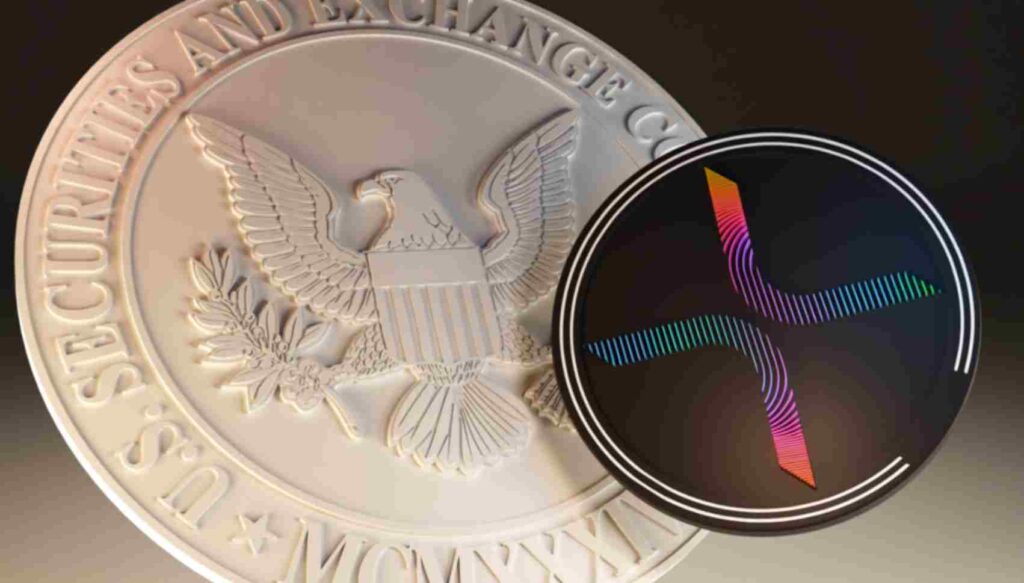
At its core, the bill does something deceptively simple: it draws a clear line between the SEC and the CFTC. Digital assets that function as commodities — including tokens like XRP, Solana, Litecoin, Chainlink, Hedera, and Dogecoin — would fall under CFTC jurisdiction. The SEC would retain authority over assets that resemble traditional securities, particularly those involving fundraising, token issuances, and registration-related disclosures.
The bill also creates a formal registration framework for digital commodity exchanges, brokers, and dealers, requiring them to register with the CFTC and comply with core principles around trade monitoring, record keeping, customer asset protection, and conflict-of-interest management. Crucially, it prohibits exchanges from commingling their assets with customer funds — a protection that would have prevented disasters like the FTX collapse.
Decentralised finance activities such as validating and staking are excluded from the bill’s registration requirements, though they remain subject to anti-fraud and anti-manipulation rules. The legislation also amends the Bank Holding Company Act to allow qualifying banks to conduct digital commodity activities, opening a direct channel between traditional banking infrastructure and the crypto ecosystem.
The bill is now before the Senate, where it faces its final hurdle. The Senate Banking Committee released a competing 278-page draft in January 2026, and negotiations have intensified over a key sticking point: whether crypto platforms should be allowed to offer interest or yield on stablecoin holdings. Banks argue this could siphon deposits and destabilise traditional lending. The crypto industry insists the GENIUS Act, which regulates stablecoins, deliberately left this door open. The White House has convened multiple meetings to broker a compromise, and Senator Bernie Moreno has outlined an ambitious target of clearing Congress by April 2026.
What the CLARITY Act Means for XRP Adoption
If the CLARITY Act passes in its current form, XRP would be formally codified as a digital commodity under federal law — not a security. This distinction matters enormously. It would put XRP on the same regulatory footing as Bitcoin and Ethereum, removing the single largest barrier that has prevented banks, asset managers, and payment providers from integrating it into their operations.
The practical consequences would unfold in stages. The immediate effect would be a wave of institutional re-engagement. Spot XRP ETFs launched in late 2025 and absorbed over $1.3 billion in their first 50 trading days, but many large allocators have remained cautious without statutory clarity. A passed CLARITY Act would give compliance departments at major financial institutions the green light they have been waiting for.
Beyond ETF inflows, the deeper opportunity lies in Ripple’s core business: cross-border payments and liquidity management. Ripple has spent nearly $3 billion on acquisitions since 2023, expanding into custody, prime brokerage, and treasury management. The company’s On-Demand Liquidity service uses XRP as a bridge currency to settle international transactions in seconds rather than days. If US banks can legally hold and transact in XRP under a clear federal framework — and if Ripple secures the Federal Reserve master account it is pursuing — the token shifts from a speculative asset to functional financial infrastructure.
What Could XRP Be Worth If the CLARITY Act Passes?
XRP currently trades around $1.40, weighed down by broader market weakness and lingering uncertainty despite the Ripple-SEC lawsuit ending in August 2025. But if the CLARITY Act passes — and Ripple CEO Brad Garlinghouse now puts the odds at 90% by April — analysts believe the token is dramatically underpriced relative to what regulatory clarity would unlock.
The base case centres on $5 to $10. Standard Chartered’s Geoffrey Kendrick has a 2026 target of $8, implying over 300% upside from current levels. His thesis rests on two catalysts converging: the CLARITY Act formally classifying XRP as a digital commodity, and spot XRP ETFs — which have already absorbed over $1.3 billion since launching in late 2025 — attracting significantly larger institutional allocations once compliance teams have statutory certainty to work with.
Some analysts argue $10 is actually the floor, not the ceiling. The reasoning is mechanical rather than speculative. If Ripple achieves integration with US banking networks — settling cross-border payments, managing treasury liquidity, connecting to the Federal Reserve — then XRP stops being a retail trading token and becomes functional financial infrastructure. For banks to move billions through XRP without creating excessive volatility and slippage, the token’s market capitalisation needs to be substantially larger than it is today. At $10, XRP’s market cap would sit around $580 billion — large, but not unreasonable for an asset underpinning institutional payment flows.
The more bullish projections go further. Analysts modelling full Tier-1 bank adoption and domestic payment rail integration suggest $15 to $30 is achievable if both the CLARITY Act and Ripple’s Federal Reserve master account application come through by late 2026. The most extreme scenarios — above $100 — assume XRP becomes the primary liquidity layer for the entire US banking system, though this remains highly speculative.
The critical variable is timing. Every month of Senate delay is a month institutional capital stays on the sidelines.
However, sceptics point to declining monthly transaction volumes on the XRP Ledger over the past two years and growing competition from stablecoins — including Ripple’s own RLUSD — as well as upgrading legacy systems like SWIFT. In an environment where even Nvidia is restructuring its $100 billion commitments in favour of discipline over exuberance, the Motley Fool and Nasdaq analysts have cautioned that “catalyst exhaustion” following the lawsuit resolution could lead to a period of consolidation rather than the explosive rally many expect.
Why Altcoins Would Rally Too
The CLARITY Act’s impact extends far beyond XRP. By creating a defined classification framework, the bill would resolve the regulatory status of dozens of tokens that have spent years in legal limbo. Assets like Solana, Chainlink, Litecoin, Hedera, and Dogecoin would all be formally recognised as digital commodities, eligible for trading on registered exchanges under clear federal rules.
This matters because regulatory uncertainty has been the single greatest suppressor of institutional capital flowing into the altcoin market. Fund managers, pension funds, and corporate treasuries cannot allocate to assets whose legal classification might change overnight based on an SEC enforcement action. The CLARITY Act removes that risk entirely for qualifying tokens.
The downstream effects would be significant. Exchanges could list tokens with confidence, knowing they are operating within a defined legal framework. Custody providers — including banks newly authorised under the Act — could offer storage and settlement services for a broader range of digital assets. ETF issuers could file for new products covering individual altcoins or diversified baskets, dramatically expanding retail and institutional access.
There is also a psychological dimension. Crypto markets are heavily driven by narrative, and a comprehensive US regulatory framework would represent the most powerful bullish signal the industry has ever received. The message would be unmistakable: the United States — already asserting its dominance at the AI Summit in Delhi — has decided that digital assets are a legitimate, permanent part of its financial system. Capital that has been sitting on the sidelines — or flowing to offshore exchanges and jurisdictions with clearer rules, much as record sums have rotated into European equities in search of better value — would have reason to come back onshore.
The timing amplifies the potential impact. With global markets already navigating hawkish Fed signals and diverging regional performance, the CLARITY Act is advancing alongside the already-passed GENIUS Act for stablecoins, creating a twin-pillar regulatory architecture that covers both market structure and payment infrastructure. Together, these bills represent the most comprehensive crypto legislation any major economy has attempted. If both are fully implemented by late 2026, the US altcoin market could enter a period of sustained institutional adoption that looks fundamentally different from the retail-driven speculation of previous cycles.
For investors, the key variable is no longer whether regulation is coming — it is how quickly the final Senate compromises can be reached and whether the April timeline holds. The CLARITY Act will not guarantee that any individual token succeeds. But it will, for the first time, give every qualifying digital asset a fair chance to compete on its merits within a system that institutions trust — the kind of clear regulatory environment that already separates the world’s strongest startup ecosystems from the rest.
This article is for informational purposes only and does not constitute financial advice. Cryptocurrency investments carry significant risk, including the potential loss of all capital invested. Always conduct your own research before making investment decisions.
The post XRP to $10? What the CLARITY Act Means for Ripple And Other Altcoins appeared first on European Business & Finance Magazine.