World Cup 2026 Will Drive $10.5 Billion in Ads — But It Doesn’t Move Markets Like It Used To

Mar 20, 2026 - 01:00
 0
World Cup 2026 Will Drive $10.5 Billion in Ads — But It Doesn’t Move Markets Like It Used To
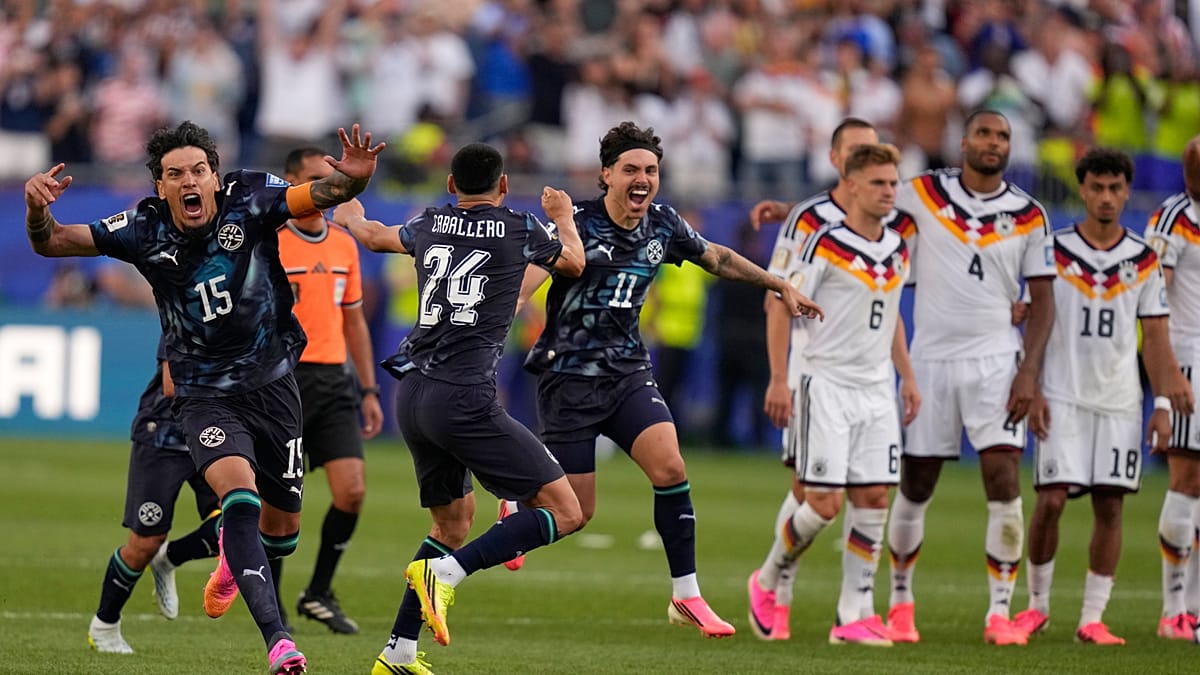
19 March 2026 – The 2026 FIFA men’s World Cup will be the biggest in the tournament’s history, hosted across Canada, Mexico, and the United States with more matches than ever before.

Yet, despite large audiences, rising rights fees, and expanding sponsorship packages, the World Cup’s measurable contribution to ad growth appears to be weakening, finds WARC Media in its latest global advertising trends study.

While the event is expected to inject $10.5bn into the ad market, advertisers are no longer competing within a single commercial surface but are having to engage with fans across diverse touchpoints beyond traditional broadcast rights.

Alex Brownsell, Head of Content, WARC Media, said: “This World Cup is no longer just about live matches—brands will engage with fans across touchpoints before, during and after matches have concluded. Media plans will include platforms that benefit from the conversation about the World Cup without the burden of bidding for rights – from creator content to podcasts, turning conversations around the games into powerful opportunities for connection and impact.”

WARC Media’s Global Ad Trends: FIFA World Cup 2026 report examines how the World Cup has become a high-visibility event whose commercial impact is increasingly fragmented.

Diminished advertising impact 

The 2026 FIFA World Cup promises record-breaking global audiences and a $40.9 billion boost to global GDP, yet its direct impact on ad spend growth is diminishing. WARC Media forecasts show a modest $10.5 billion uplift into the global ad market during the quarter the event takes place, marking a 1.1% incremental gain versus the Qatar World Cup in 2022. In contrast, the 2018 World Cup in Russia drove a $12.6bn (+2.8%) ad market boost.

Annual advertising spend growth during World Cup years is inconsistent, driven more by broader economic cycles than tournament cycles. Even for host markets, the tournament does not guarantee market-level acceleration or outperformance.

In the US – where soccer competes with popular domestic sports – the World Cup’s effect on ad investment is modest and inconsistent. In most positive years, the impact has been between 0.4-1% of total ad spend.

Annual ad spend for Mexico, and a similar pattern is visible in Canada, shows no consistent pattern of acceleration in World Cup years. WARC Media’s forecast of approximately +4% for Mexico, is positive, but not exceptional for a host market.

Shifting audience consumption

Linear TV audiences are increasingly in decline as multiplatform consumption rises with expanded digital viewing. Qatar 2022 reached 2.87 billion people for at least one minute, yet linear reach fell 11.9% versus 2018. Multiplatform consumption rose as digital viewing expanded, particularly in China and India.

Audience fragmentation will be further highlighted during this upcoming tournament as attention shifts beyond the games to the conversations around games. TikTok has become a FIFA partner, and will show behind-the-scenes footage; YouTube, also a preferred platform, will stream live matches from media partners; while platforms such as Netflix are looking to monetise the conversation around the games through video podcasts.

While tournaments drive TV and OOH revenue, premium pricing often displaces regular advertisers, with gains reflecting spend redistribution rather than market expansion.

Football remains the world’s most popular sport, with 51% of global respondents identifying as fans. During Qatar 2022 viewing levels were highest in Africa, Latin America, and MENA, with engagement far above global averages, while Europe’s largest audiences are concentrated in the UK and Germany.


In the US, 37% of Americans expect their interest in football to increase over the next 18 months, supporting positive momentum ahead of the 2026 World Cup.

Category opportunities beckon from late-night kick-off times 

With many FIFA World Cup 2026 matches airing outside peak viewing hours in Europe, the Middle East, and Asia, live broadcast advertising opportunities may be limited. In WesternEurope, less than half (42.3%) of games will take place during daytime hours, dropping to just over a third (34.6%) in China.

However, this late-night schedule may yield new opportunities for non-rights holders to capitalise on curated World Cup content with highlights and commentary like podcasts, social media, and publishing.


It also presents unique opportunities for brands in restricted categories such as quick-service food delivery in the UK, where high fat sugar and salt ads are now subject to restrictions on pre-9pm airing.

WARC Media subscribers can read the report in full. A WARC podcast on the findings outlined in the report will be available from 31 March.


Global Ad Trends, part of WARC Media, is a quarterly report which draws on WARC’s dataset of advertising and media intelligence to take a holistic view on current industry developments.

The post World Cup 2026 Will Drive $10.5 Billion in Ads — But It Doesn’t Move Markets Like It Used To appeared first on European Business & Finance Magazine.