

















Why the US Is Launching a $12bn Critical Minerals Stockpile to Counter China
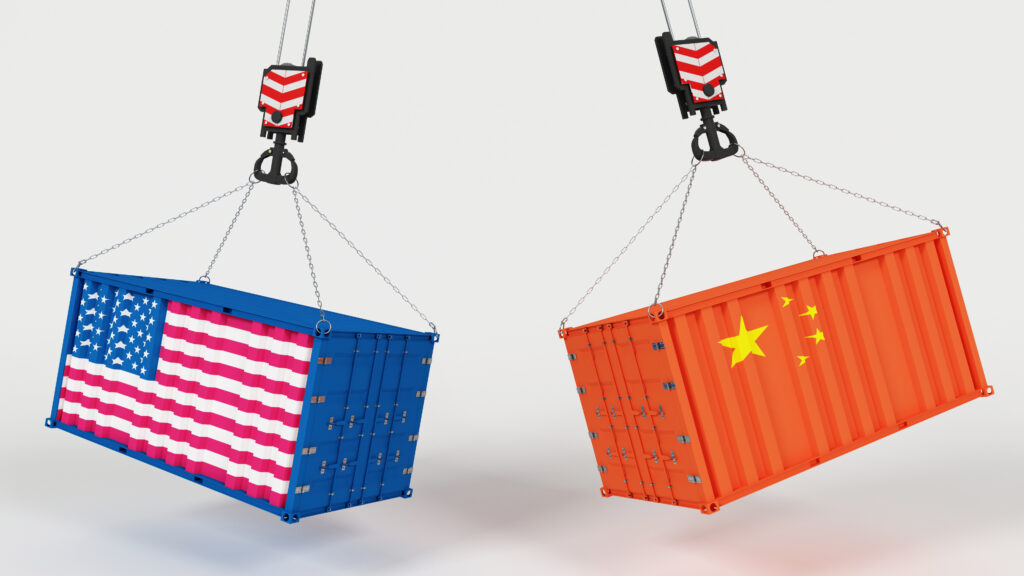
The Trump administration has unveiled Project Vault, a public-private critical minerals stockpile designed to shield US manufacturers from supply shocks as Washington accelerates efforts to reduce dependence on Chinese-controlled materials.
President Donald Trump on Monday unveiled the most ambitious American intervention in critical minerals markets since the Cold War, launching Project Vault with $12 billion in initial capital to shield manufacturers from supply disruptions and price manipulation in sectors where China has established near-monopoly control. The initiative targets materials such as rare earths, gallium and cobalt — key inputs for electric vehicles, electronics and defence systems — where China dominates global processing.
The initiative marries $1.67 billion in private capital with a record-breaking $10 billion, 15-year loan from the US Export-Import Bank — more than double the institution’s next-largest transaction in its history. The Ex-Im board approved the financing Monday morning, hours before Trump announced the programme at the White House alongside General Motors chief executive Mary Barra and mining entrepreneur Robert Friedland.
“For years, American businesses have risked running out of critical minerals during market disruptions,” Trump declared, framing the stockpile as essential protection for national security. The president emphasized US taxpayers would profit from interest on the loan, characterizing the venture as both strategic necessity and sound investment.
The stockpile represents Washington’s latest attempt to offset what policymakers characterize as Chinese price manipulation for lithium, nickel, rare earths and other critical minerals vital for electric vehicles, advanced semiconductors, and high-tech weaponry. The model mirrors the Strategic Petroleum Reserve established after the 1973 Arab oil embargo, but focuses on materials rather than crude.
Administration officials describe the mechanism as resembling a Costco membership allowing bulk purchasing at scale. Participating manufacturers commit to buying set quantities at fixed prices with agreements to repurchase equivalent amounts at identical costs in the future, creating a structure designed to dampen market volatility and provide 60-day emergency supplies.
The initiative attracted participation from more than a dozen companies including General Motors, Stellantis, Boeing, Corning, GE Vernova, and Alphabet’s Google. Three commodities trading firms — Hartree Partners, Traxys North America, and Mercuria Energy Group — will handle raw materials procurement to fill the stockpile.
Senior administration officials told reporters Project Vault was oversubscribed, citing investor confidence in participating manufacturers’ credit quality, their long-term purchase commitments, and the backing of the US export-credit agency. Companies can draw down allotted materials provided they replenish them, with full access permitted during major supply disruptions.
The urgency driving Project Vault reflects China’s tightening grip on critical minerals supply chains. Beijing controls approximately 70 percent of global rare earth mining and about 91 percent of separation and refining operations, according to International Energy Agency data. China’s dominance extends beyond rare earths to encompass 80 percent of global silicon production, up from 30 percent in 2012.
For battery metals essential to electrification, China maintains near-monopoly positions across multiple supply chain stages. The country controls 95 percent of precursor cathode materials and lithium iron phosphate production, with shares exceeding 80 percent in most key battery manufacturing segments. Geographic concentration in refining operations has intensified since 2020, with approximately 90 percent of supply growth concentrated in single dominant suppliers.
China’s strategic approach evolved from flooding global markets with cheap products in the 2000s to more calculated resource conservation and industry consolidation. Beijing reduced value-added tax rebates for rare earth exports and introduced quota systems, transforming overproduction into calculated leverage. The country simultaneously invested approximately $57 billion in critical mineral sectors across emerging economies between 2000 and 2021, with over 80 percent targeting copper, cobalt, and nickel projects.
The geopolitical dimensions crystallized in April 2025 when China issued Announcement 18, implementing sweeping export controls on medium and heavy rare earths including terbium, dysprosium, samarium, and yttrium, plus related oxides, alloys, compounds, and permanent magnet technologies. The restrictions initially caused export volumes to collapse, forcing carmakers in the United States and Europe to cut production or temporarily shutter factories. European rare earth prices reached six times Chinese domestic levels even after trade volumes partially recovered.
The concentration of critical minerals processing creates cascading vulnerabilities across Western economies. When China tightened lithium-ion battery supply chain controls in October 2025, the measures covered battery cells, cathode precursors, anode materials, lithium iron phosphate cathode materials, and production equipment across multiple stages. The expanded scope threatened to reinforce Chinese dominance and potentially generate major revenue and job losses for producers worldwide.
Diversification efforts have proved frustratingly slow despite intensifying concerns. Between 2020 and 2024, the average market share of top three refining nations for key energy minerals rose from 82 percent to 86 percent as approximately 90 percent of supply growth originated from single dominant suppliers. Looking toward 2035, announced projects suggest the top three suppliers’ share will decline only marginally to 82 percent — effectively returning to 2020 levels after a decade and a half.
Chinese overcapacity systematically undermines Western mining economics. A China-generated lithium glut led North Carolina-based Albemarle to pause US expansion plans in 2024, while nickel witnessed historic price surges following Russia’s Ukraine invasion, exposing manufacturers to massive volatility in key raw material inputs that wreaked havoc on balance sheets. The capacity to generate such market disruptions — whether through oversupply or restriction — represents potent economic leverage.
The strategic vulnerability extends beyond commercial considerations into national security domains. Rare earth permanent magnets prove essential for F-35 fighter jets, precision-guided munitions, and advanced radar systems. Cobalt remains critical for military communications equipment and night vision devices. Chinese export restrictions could theoretically deny Western defense industries access to materials underpinning military technological advantages developed over decades.
Project Vault represents the centerpiece of broader American efforts to rebuild domestic critical minerals capacity after decades of market-driven offshoring. The Trump administration’s One Big Beautiful Bill Act allocates $7.5 billion for critical minerals including $2 billion to expand national stockpiles by 2027, $5 billion for supply chain investments, and $500 million for a Pentagon credit programme encouraging private projects.
The Pentagon has deployed over $4.5 billion in capital commitments across six critical minerals deals in the past five months alone. The Defense Department purchased $400 million in preferred stock in MP Materials, owner of Mountain Pass mine in California — the country’s only operational rare earths facility. The Pentagon also entered a $1.4 billion joint partnership and invested $150 million in Atlantic Alumina Company to preserve America’s last alumina refinery and establish the first large-scale gallium production facility.
These direct equity stakes represent a dramatic departure from Reagan-era market orthodoxy that refused subsidies even for defense-critical minerals. Between 1993 and 2005, the Defense Department sold off more than 75 percent of national rare earth stockpiles during a period when Western policymakers viewed resource security as obsolete Cold War thinking. The current intervention echoes approaches more typically associated with Chinese industrial policy than Republican administrations.
Parallel legislative efforts reinforce the executive action. A bipartisan group introduced the SECURE Minerals Act in January proposing a $2.5 billion Strategic Resilience Reserve managed by a seven-member board resembling Federal Reserve governance. The legislation, co-sponsored by Senators Jeanne Shaheen and Todd Young plus Representatives Rob Wittman and John Moolenaar, would prioritize domestic projects, recycled materials, and partnerships leveraging Development Finance Corporation authorities.
The ambition of Project Vault confronts substantial execution barriers. Building refining capacity requires overcoming technical, environmental, and regulatory obstacles that favor established players — advantages China cultivated through 25,000 rare earths patents filed between 1950 and 2018, nearly tripling the 10,000 filed within the United States. China’s processing supremacy reflects decades of coordinated industrial policy rather than market-driven development.
Environmental regulations compound challenges. In the 1980s, the Nuclear Regulatory Commission reclassified substances containing over 0.05 percent thorium or uranium as “nuclear source material,” imposing stringent requirements on heavy rare earth elements often found alongside radioactive materials. These policy decisions inadvertently transferred rare earth processing capabilities to China, exemplified by General Motors’ 1995 sale of Magnequench division — once the world’s premier rare earth magnets producer and trusted Army supplier — to investors including Chinese firms.
Market psychology amplifies volatility beyond fundamental supply-demand dynamics. Traders and manufacturers adjust purchasing patterns based on perceived political risks, creating self-fulfilling disruptions. China’s state reserve management provides tools to influence global pricing independent of production decisions, with strategic releases dampening prices when domestic manufacturers need cheaper inputs while reserve accumulation supports margins for Chinese producers.
The stockpile’s effectiveness depends substantially on achieving sufficient scale and diversity. With 60-day emergency supplies as the stated target, the $12 billion allocation must cover numerous minerals across substantial volume requirements. The initiative will need to balance breadth across critical materials against depth in any single commodity to provide meaningful protection from targeted Chinese restrictions.
Project Vault’s announcement coincides with a critical minerals ministerial conference bringing officials from at least 40 countries to Washington to discuss market alternatives countering Beijing. Commerce Secretary Howard Lutnick and Interior Secretary Doug Burgum are scheduled to headline a Tuesday summit addressing partnerships the administration seeks to advance diversification efforts.
Similar initiatives are emerging across allied nations. Australia is developing its own critical minerals reserve, while Group of Seven finance ministers discuss parallel stockpiling arrangements. The Minerals Security Partnership authorized by recent legislation directs the State Department to coordinate with allies on mining, processing, and recycling while maintaining databases of critical mineral projects to inform private sector investment.
China responded cautiously to the American announcement. Foreign Ministry spokesperson Liu Pengyu stated Beijing’s position on keeping global industrial and supply chains safe and stable “has not changed,” emphasizing that “all parties have the responsibility to do so.” The measured response contrasts with more aggressive rhetoric during 2025 trade tensions, potentially reflecting Chinese recognition that overly punitive export restrictions risk accelerating Western diversification efforts that could erode long-term strategic advantages.
The minerals competition increasingly resembles Cold War strategic resource rivalries but operates within globalized supply chains that complicate binary friend-foe distinctions. Countries like Australia possess substantial rare earth deposits but depend on Chinese processing capacity. Myanmar ranks as the world’s third-largest rare earth producer yet operates through unregulated small-scale miners linked to armed militias, with virtually all production flowing to China for processing.
Whether Project Vault represents the beginning of effective supply chain diversification or proves merely symbolic intervention depends substantially on sustained political commitment across presidential administrations, continued private sector participation through volatile market cycles, and successful navigation of environmental and regulatory challenges that contributed to original offshoring. The $12 billion represents either transformative industrial policy revival or expensive theater in a competition where China holds decisive structural advantages built systematically over three decades.
Project Vault Structure and Scope
China’s Stranglehold on Critical Supply Chains
Supply Chain Vulnerabilities and Economic Risks
US Counter-Strategy and Industrial Policy Shift
Implementation Challenges and Market Dynamics
Geopolitical Context and Allied Coordination
Extended Reading
- Bloomberg: Trump Launches $12 Billion Minerals Stockpile to Counter China
- International Energy Agency: With new export controls on critical minerals, supply concentration risks become reality
- E&E News by POLITICO: Trump unveils $12B mineral stockpile amid US-China race
- Axios: Bipartisan plan in Congress aims to create U.S. reserve for critical minerals
- Mining.com: Trump launches $12B minerals vault to cut China reliance
The post Why the US Is Launching a $12bn Critical Minerals Stockpile to Counter China appeared first on European Business & Finance Magazine.