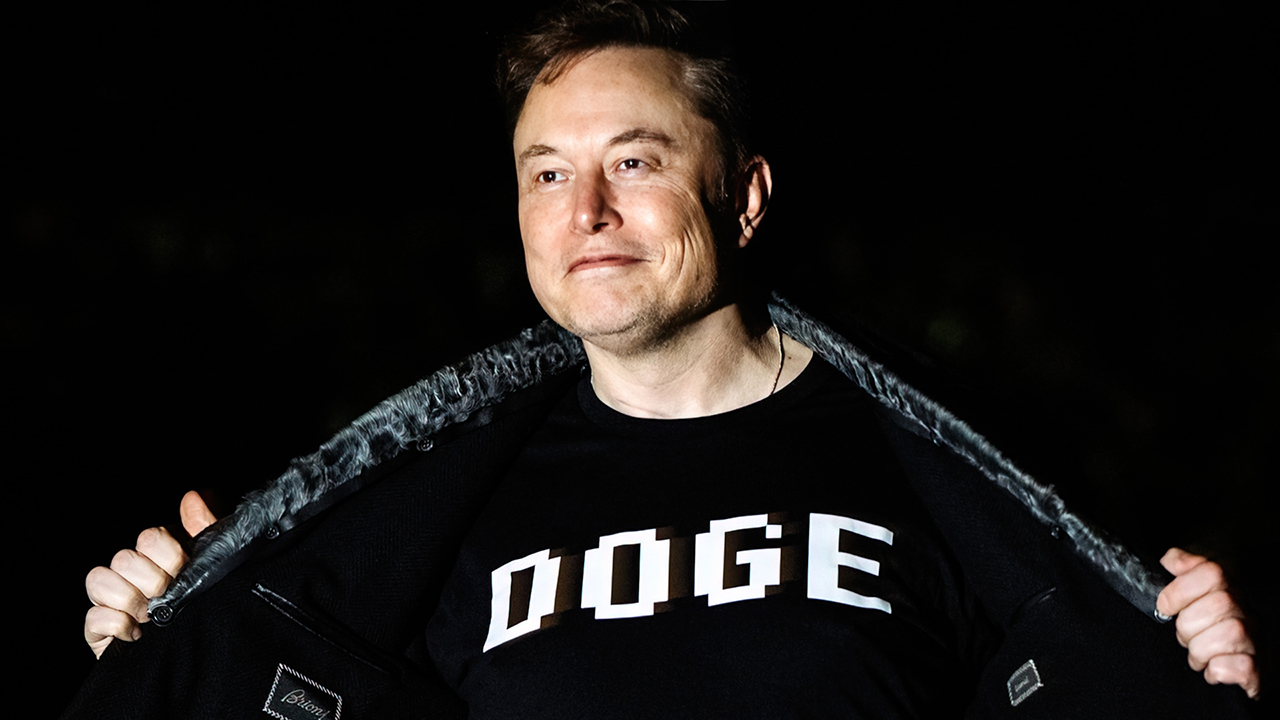






























Which Startups Should You Watch in 2026? Companies VCs Are Fighting Over

The companies VCs are fighting over — and why early investors could see massive returns.
Q: Which startups should I watch in 2026?
A: The most promising companies span fintech, climate tech, AI infrastructure, healthcare and enterprise software. From Revolut’s $75 billion valuation to Mistral AI’s challenge to American dominance in large language models, these 50 startups and scaleups have attracted significant venture capital and are positioned to reshape their industries. Three already reached unicorn status in early 2026.
As 2026 unfolds, a new generation of companies is redefining industries through technological innovation, novel business models and aggressive global expansion. While AI dominates venture capital headlines, the broader landscape encompasses fintech, climate technology, healthcare and logistics — each addressing fundamental problems with scalable solutions. European observers will find particular interest in the growing number of continental champions challenging Silicon Valley, as Europe’s startup ecosystem matures into a genuine innovation powerhouse.
Fintech
Revolut (UK) leads as Europe’s most valuable startup at $75 billion, having evolved from a challenger bank into a financial super-app serving over 30 million customers across business banking, cryptocurrency trading and global transfers. Airwallex (Singapore) enables businesses to collect, convert and pay across borders without traditional banking friction. Stripe (US) continues innovating in payment infrastructure spanning treasury management, corporate cards and embedded finance. Capchase (US) lets high-growth SaaS companies access future subscription revenue immediately — a new asset class addressing the gap between customer acquisition costs and revenue recognition. Klarna (Sweden), the buy-now-pay-later pioneer, continues innovating with AI-powered shopping assistants and banking services despite regulatory headwinds.
Climate Tech and Energy
Northvolt (Sweden) has raised $13.8 billion to build a circular European battery supply chain, reducing dependence on Asian manufacturers while emphasising clean energy and recycling. CarbonCapture (US) is scaling modular direct air capture systems as corporations seek credible offset solutions. Helion Energy (US) has secured Microsoft as an anchor customer for fusion-generated electricity by 2028. Sylvera (UK) uses satellite data and machine learning to verify carbon credit quality, bringing transparency to a historically opaque market. These companies sit at the intersection of climate policy and industrial strategy — a space where AI investment and energy transition are increasingly converging.
AI and Enterprise Software
Mistral AI (France) continues challenging American AI dominance through open-source models and enterprise solutions, backed by Nvidia and ASML. The company represents Europe’s broader push toward sovereign AI, with the European Commission investing in AI gigafactories and sovereign cloud platforms. Dataiku (France) enables enterprises to build and deploy predictive analytics at scale, integrating with all clouds and legacy systems across 700 enterprise customers. Celonis (Germany) uses process mining to reveal how businesses actually operate, identifying bottlenecks invisible through traditional analysis. Legora (Sweden), a legal AI startup, achieved unicorn status at $1.8 billion after raising $150 million, serving over 400 law firms across 40 markets. Suno (US) allows users to create original music through AI, raising fundamental questions about authorship and copyright.
Healthcare, E-Commerce and Consumer
Oura (Finland) pioneered wearable health tracking with its ring monitoring sleep, heart rate and body temperature, selling over one million units. Benchling (US) powers biotechnology R&D for the world’s most innovative companies. Fable (US) applies AI and computational biology to accelerate drug discovery. In e-commerce, SHEIN (China) has disrupted fast fashion through ultra-efficient supply chains connecting manufacturers directly to consumers, though it faces growing scrutiny over labour practices and environmental impact. Liquid Death (US) grew revenues from $110 million to $263 million in a single year by pairing rock-and-roll branding with sustainability messaging. Printify (Latvia) enables entrepreneurs to launch branded merchandise without inventory risk. Saie (US) achieved 140% year-over-year retail growth through radical transparency in clean beauty.
Logistics, Education and Creator Economy
Shiprocket (India) democratises sophisticated logistics for small and medium businesses, fuelling India’s e-commerce growth. Bearing AI (US) uses artificial intelligence to track ocean-bound cargo — historically a remarkably opaque process. Flexport (US) continues modernising freight forwarding through technology that brings transparency to global shipping. In education, Preply (US) connects 50,000 tutors with over one million students globally, while Duolingo (US) continues innovating with AI-powered tutoring. Gumroad (US) empowers digital creators to monetise directly, and Tailwind (US) serves over one million brands with AI-assisted social media management. Airalo (Singapore) offers eSIM data across 200+ countries to over 10 million users.
What Unites These Companies
Several themes connect these 50 companies despite their industry differences. They combine technology with deep domain expertise rather than simply applying generic AI to traditional problems. Most exhibit global ambitions from inception, scaling across borders faster than previous startup generations. And they increasingly prioritise sustainable unit economics over the growth-at-all-costs mentality that characterised 2020–2021 — a shift that reflects changing expectations from European venture capital investors who now demand clearer paths to profitability.
Many benefit from platform dynamics, building infrastructure others use to create network effects and vendor lock-in. Whether in payment processing, cloud infrastructure or creator tools, platform businesses capture disproportionate value.
The European dimension is increasingly significant. Continental venture funds now match or exceed American peers in sector expertise. European startups increasingly retain headquarters locally rather than relocating to Silicon Valley, confident they can scale globally from European bases. This maturation has produced a shift from funding sprints toward acquisition-driven growth, with well-capitalised scale-ups buying capabilities and customer bases rather than chasing ever-larger funding rounds.
Challenges remain significant. Rising interest rates have increased capital costs. Regulatory complexity — particularly for fintech, healthcare and AI — slows international expansion. Geopolitical tensions force difficult choices about market access across US-China-Europe axes. And the EU’s persistent venture capital gap — with average fund sizes roughly half those in the US — continues to constrain how quickly European startups can scale.
Some of these companies will become the next generation of technology giants. Others will be acquired or fail despite strong starts. What unites them is their founders’ conviction that existing solutions are inadequate and that technology enables fundamentally better approaches. As Europe’s tech strategy evolves from regulatory caution toward active industrial investment, these companies embody the creative destruction reshaping industries, employment and economic value.
Frequently Asked Questions
Which European startups are most likely to become the next tech giants? Revolut ($75 billion valuation), Mistral AI and Klarna are the strongest contenders. Revolut has the scale and product breadth to rival traditional banks. Mistral AI occupies the strategic position of Europe’s leading large language model developer at a time when governments are actively investing in AI sovereignty. Klarna has already demonstrated the ability to bundle multiple financial products into a single consumer platform.
Why are European startups staying in Europe instead of moving to Silicon Valley? The funding environment has matured significantly. Continental venture funds have grown in size and sophistication, local talent pools have deepened, and regulatory frameworks like the EU AI Act provide predictability that some founders now view as an advantage over the more volatile US policy environment. Remote work has also reduced the pressure to relocate for networking purposes.
What sectors are attracting the most venture capital in 2026? AI infrastructure leads, followed by climate technology, fintech and specialised enterprise software. Investors are rotating toward practical applications of emerging technologies rather than speculative bets. Climate tech is drawing particular interest as corporate decarbonisation commitments create guaranteed demand, while fintech continues attracting capital as digital-first financial services expand globally.
The post Which Startups Should You Watch in 2026? Companies VCs Are Fighting Over appeared first on European Business & Finance Magazine.