





















Weekend Read: How Sweden’s Padel Mania Ended in Bankruptcies, Debt and Empty Courts
EBM WEEKEND READ:
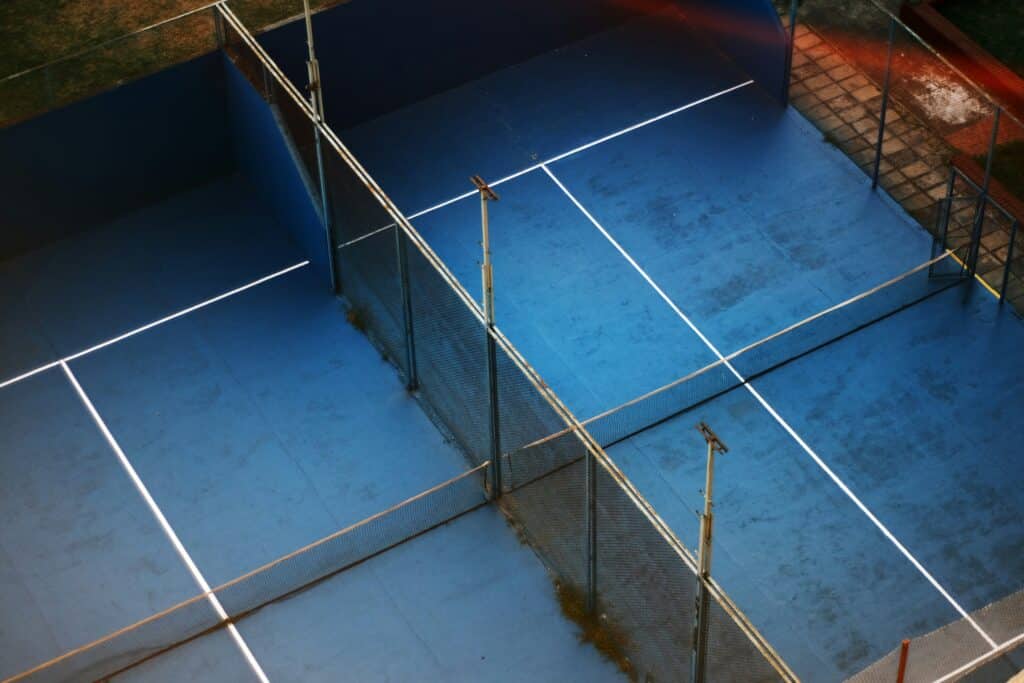
MAY 9th-Between 2019 and 2022, Sweden built more padel courts than any country outside Spain — climbing from a few hundred to over 4,200 courts in 36 months, with Uppsala alone going from 14 to nearly 100 in a single year. By the end of 2024, more than 100 facilities had closed, 90 padel companies had filed for bankruptcy, and Triton-backed We Are Padel had shut 50 of its 63 Swedish clubs. The aggregate capital destroyed is now estimated by industry sources at close to €500 million. The interesting question is not what went wrong in Sweden. It is why the UK and German pipelines are repeating the mistake.
Triton and Coeli Private Equity, the two largest institutional backers of the Swedish boom, treated padel as an industrial real-estate arbitrage — cheap suburban square footage, a low-friction sport, and a pandemic-era demand spike that looked structural. It wasn’t. The LTA’s UK pipeline is now projecting 1,300 to 1,400 courts by end of 2026 from 1,004 in mid-2025, with 413 built in 2024 alone. The capital backing those builds has the same DNA as the Swedish capital that disappeared.
Padel did not fall out of fashion in Sweden. According to the International Padel Federation, more than 600,000 Swedes still played the sport in early 2024 — a participation rate that, on a per-capita basis, remains higher than any country in Europe except Spain. The bust was not a demand collapse. It was a supply collapse, triggered by a financing model that mistook a participation boom for an infrastructure thesis.
Join The European Business Briefing New subscribers this quarter are entered into a draw to win a Rolex Submariner. Join 40,000+ founders, investors and executives who read EBM every day. Subscribe
The Swedish Numbers Tell a Capital-Allocation Story, Not a Sports Story
The Swedish operator playbook between 2020 and 2022 was simple. Lease a suburban warehouse on the outskirts of Stockholm, Gothenburg or Malmö, drop in four to eight courts, charge €30 to €40 per court-hour, and assume that a city of 200,000 could absorb 80 to 100 courts indefinitely. The maths penciled when electricity in southern Sweden cost what it cost in 2019. By winter 2022, southern Swedish electricity prices were running roughly five times their pre-2020 levels. Heating and lighting a 1,500-square-metre indoor padel hall through a Nordic winter became, structurally, uneconomic.
That was the trigger. The underlying weakness was that almost none of these facilities had any defensible competitive position. They were warehouses with nets in them, sitting next to identical warehouses with nets in them, all chasing the same off-peak booking. When We Are Padel’s owner recorded a 716 million Swedish kronor writedown — roughly €65 million — and PDL United required a €24 million rescue before going bankrupt anyway, the Swedish private equity community did the maths and walked. Some of the halls are now Willys discount supermarkets. Others store solar panels and tyres.
What the Survivors Got Right
The Swedish facilities that came through the bust were not the cheapest, the largest, or the best-financed. They were the ones built in the right postcodes.
Three structural moves separated the survivors from the casualties. First, location: the operators who placed courts in dense urban centres — Stockholm’s Östermalm, central Gothenburg, the Vasastan district — kept their utilisation rates above 70% through the worst of the energy crisis. Suburban operators, even ten kilometres from a city centre, did not. Second, programming: the survivors built proper coaching academies, structured leagues, and corporate league nights, turning a court booking into a recurring social commitment rather than a discretionary leisure spend. Third, hospitality: padel halls that integrated café, bar and event space — what the European leisure-real-estate sector now calls a Third Space asset — held their footfall when bare-court operators lost theirs.
This is not a padel insight. It is the same lesson the British high-street gym sector learned in 2008, the same one boutique fitness learned in 2020, and the same one the European boutique hotel market has spent fifteen years internalising. Discretionary leisure is not real estate. It is community infrastructure with real-estate characteristics, and the capital structure has to reflect that.
The UK Pipeline Is Repeating Sweden’s First Mistake
The UK padel market in May 2026 looks structurally identical to the Swedish market in early 2022. Court numbers tripling year-on-year. Institutional capital flooding in. Industrial-estate sites being converted at speed because the planning is easier. The Lawn Tennis Association now recommending noise surveys for any court within 50 metres of residential property — a sign that the cheap-conversion model is already running into its political limit.
The energy story is also coming. UK industrial electricity prices are not at Swedish 2022 levels yet, but standing charges and non-commodity costs have risen sharply since 2024, and any operator running an indoor hall as a 24/7 lit and heated facility is exposed to exactly the same cost-curve trap that broke We Are Padel.
What the UK has, that Sweden did not, is a slightly slower build cadence and a much earlier read on the failure mode. Operators that recognise this — that the asset is a community membership business with a court attached, not a real-estate yield play with bookings attached — will survive the inevitable supply correction. Operators that don’t will be selling halls to discount grocers in 2028.
Padel Is Investable. The Current Pipeline Is Not
None of the above is an argument against padel. Deloitte’s 2023 analysis put the global padel ecosystem at €2 billion and projected €4 billion-plus by 2026, with courts doubling to 85,000 worldwide. The International Padel Federation now counts 35 million players in over 150 countries. Spain alone has more than 17,000 courts. The sport is not a fad.
The investable thesis, however, is narrower than the marketing decks claim. Premium urban locations with integrated hospitality, structured league programming and a defensible local membership base will compound. Suburban big-box halls dependent on transient bookings, low-margin pricing and cheap electricity will not survive the next downcycle in any market that has the Swedish features: high indoor cooling/heating loads, rising power prices, and capital that mistook participation for permanence.
For European investors looking at the German DACH pipeline, the French market, or the latest UK and Irish builds, the rule that emerges from the Swedish wreckage is straightforward. Underwrite location, community and programming. Do not underwrite the warehouse.
The €500 million Sweden lost paid for that lesson. The market that learns it cheapest wins the next cycle.
Related Analysis
- How European Boutique Fitness Survived 2020 — And What Padel Operators Should Learn
- The Energy Cost Trap Now Hitting UK Indoor Leisure Operators
- Why “Third Space” Real Estate Is Outperforming Pure-Play Leisure Assets in Europe
The post Weekend Read: How Sweden’s Padel Mania Ended in Bankruptcies, Debt and Empty Courts appeared first on European Business Magazine.