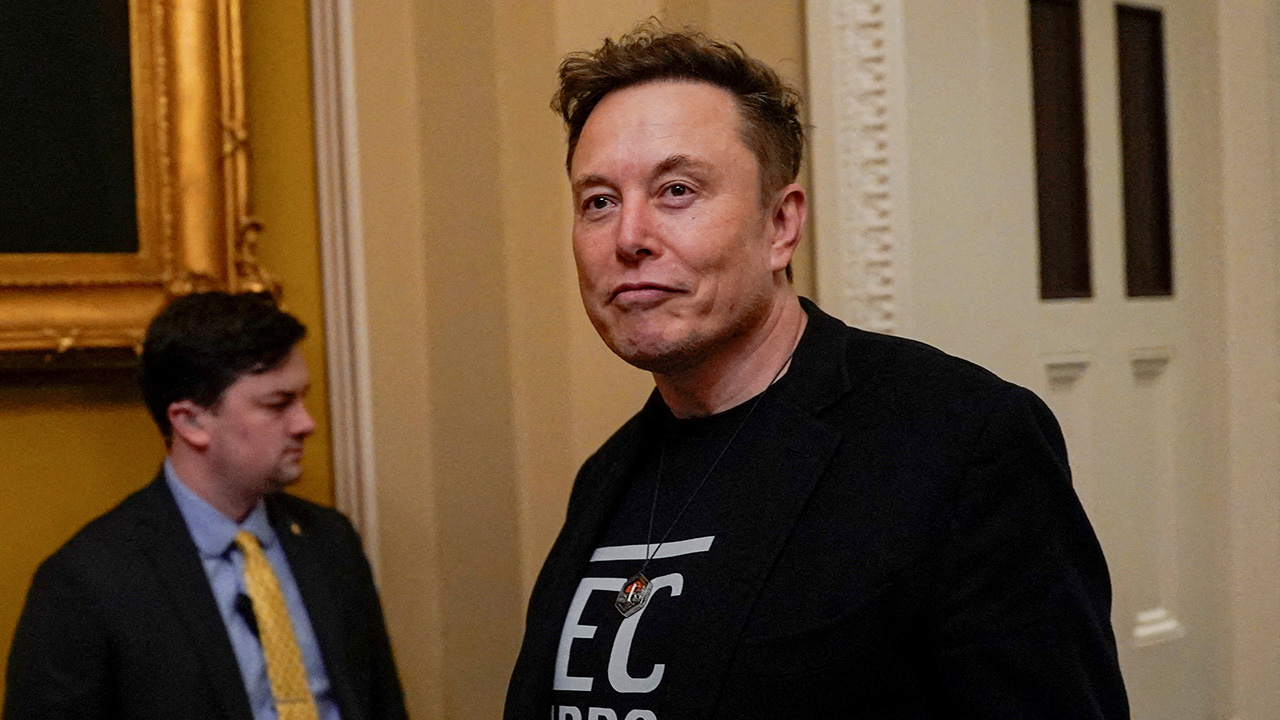



























WEEKEND READ: Boris Becker: The Wimbledon Champion’s $50 Million Fall From Grace


EBM WEEKEND READ-NICK STAUNTON Editor-in-Chief
He won six Grand Slams and earned more than $50 million. By 2017 he was bankrupt, and by 2022 he was in prison. This is the actual story of what happened — not the headlines, the mechanics.
The Boy Who Won Wimbledon at Seventeen
In 1985, a seventeen-year-old German unknown walked onto Centre Court and won Wimbledon. Boris Becker remains, to this day, the youngest male champion in the tournament’s history. He won it again the following year, and a third time in 1989. Across his career he collected six Grand Slam singles titles, an Olympic gold medal, and spent twelve weeks as the world’s top-ranked player. He was, by any sporting measure, one of the most successful players of his generation.

He was also, for a period, one of the wealthiest. Across his playing career and the broadcasting work that followed — commentary, punditry, brand endorsements — Becker earned more than $50 million. That is the baseline fact that makes everything that followed so difficult to explain through bad luck alone. This was not a story of insufficient earnings. It was a story of what happened to substantial earnings once they arrived, and a useful companion piece to how other high-earning individuals have seen fortunes evaporate through a combination of leverage and poor financial discipline.
How the Money Actually Disappeared
Becker himself has offered a consistent explanation across the years: divorce settlements, child maintenance payments, and what he and his lawyers described as “expensive lifestyle commitments.” The specifics are illuminating. At one point Becker was paying £22,000 a month in rent for a house in Wimbledon — roughly £264,000 a year on accommodation alone, for a property he didn’t even own.
The debt accumulation followed a familiar pattern for high earners who treat income as permanent rather than cyclical, a dynamic that shows up repeatedly across business failures far beyond sport. A €4.6 million loan from a German bank in 2013. A further $1.6 million borrowed from a British businessman in 2014. By the time creditors began calling in what they were owed, Becker’s total debts stood at approximately £50 million — almost exactly matching his lifetime earnings. The money had not been invested, preserved or compounded. It had been spent, borrowed against, and spent again.
The Bankruptcy
In June 2017, Becker was declared bankrupt in the UK courts following a petition from one of his creditors — a bank seeking to recover approximately €3.5 million. Bankruptcy, properly handled, is a recognised and legally protected mechanism, not dissimilar in principle to the insolvency protections that allow distressed companies to restructure rather than simply collapse. It allows an individual who genuinely cannot meet their debts to have assets fairly distributed among creditors while receiving a measure of protection and, eventually, a fresh start. The UK’s framework is specifically designed to balance fairness to creditors with a path back to solvency for the debtor.
What turns a bankruptcy into a criminal matter is not the inability to pay. It is what an individual does once the legal process begins — specifically, whether they cooperate honestly with the court-appointed trustees whose job is to identify and fairly distribute the bankrupt person’s assets.
Why He Actually Went to Prison — The Real Reasons
This is the part that gets lost in headline shorthand. Becker did not go to prison for being bankrupt. Going bankrupt is not a crime in the United Kingdom. He went to prison for what he did during the bankruptcy process itself.
In April 2022, a jury at London’s Southwark Crown Court convicted Becker on four specific charges under the UK’s Insolvency Act 1986. Each charge addressed a distinct act of concealment or dishonesty during the period after his bankruptcy was declared.
First, Becker was found to have transferred hundreds of thousands of pounds out of his business account and into other accounts — including accounts belonging to his ex-wife Barbara and his estranged wife Sharlely “Lilly” Becker — after his bankruptcy had already been declared. Moving money out of reach of creditors after a bankruptcy order is precisely the kind of act the Insolvency Act exists to criminalise. It transforms a financial misfortune into a deliberate attempt to defeat the legal process designed to fairly distribute what remains.
Second and third, Becker was convicted on two separate counts of failing to disclose his estate — specifically, failing to declare a property he owned in Germany to the bankruptcy trustees, and concealing an €825,000 bank loan along with shares he held in a technology company. Full disclosure of all assets is the foundational obligation of anyone going through bankruptcy. The entire system depends on the bankrupt individual telling the truth about what they own, so that trustees can fairly assess what is available to creditors. Becker did not disclose these assets. They were uncovered independently.
Fourth, Becker was convicted of removing property — a charge that, combined with the others, painted a picture for the jury of someone who, in the words of prosecutor Rebecca Chalkley at his sentencing, had acted “deliberately and dishonestly.”
Notably, the jury acquitted Becker on twenty other counts, including charges that he had failed to hand over physical trophies — two Wimbledon titles and his Olympic gold medal — to the bankruptcy trustees. The jury drew a distinction between sentimental sporting memorabilia, which the trustees were unlikely to be able to liquidate for significant value in any case, and the deliberate financial concealment that formed the core of the prosecution’s case. That distinction matters. This was never really a story about Becker hiding trophies. It was a story about hidden bank loans, undisclosed property and money moved to family members’ accounts after a court had already ordered transparency.
The Sentencing
Judge Deborah Taylor sentenced Becker to two and a half years in prison — out of a maximum possible sentence of seven years under the Act. Her reasoning at sentencing is worth dwelling on, because it explains why the punishment landed where it did rather than at either extreme.
Taylor noted that Becker had shown “no remorse” throughout the proceedings, telling him directly: “While I accept your humiliation as part of the proceedings, there has been no humility.” She also identified a specific aggravating factor: Becker had previously received a suspended two-year sentence in Germany in 2002 for tax evasion and attempted tax evasion. This was not, in other words, an isolated lapse in financial judgment. It was a second instance of a pattern — concealment of financial obligations from the relevant authorities — separated by two decades and two different legal jurisdictions.
Becker’s defence had argued for leniency, noting that the money in question had gone toward child support, rent and legal and business expenses rather than what his barrister Jonathan Laidlaw characterised as a “lavish lifestyle,” and that Becker had suffered significant public humiliation with no meaningful future earnings potential remaining. The court was not persuaded that this context justified a non-custodial sentence given the deliberate nature of the concealment.
Becker ultimately served eight months of the two-and-a-half-year term before being deported from the UK in December 2022, his German citizenship offering no protection from the consequences of crimes committed against a British legal process.
What This Story Actually Teaches

The Becker case offers a clean, almost textbook illustration of a distinction that matters considerably in business and financial life: the difference between failure and fraud. Going bankrupt — even spectacularly, even after earning $50 million — is not, on its own, a moral or legal failing in the eyes of the law. People misjudge investments, overcommit to lifestyle costs, divorce expensively, and lose fortunes. The legal system has a mechanism for exactly that scenario, and it is designed to give people a fresh start.
What the law does not tolerate, and what ended Becker’s liberty rather than merely his wealth, is dishonesty once that legal process begins. Moving assets to family members to keep them from creditors. Failing to disclose property and loans. These are not failures of judgment. They are deliberate decisions made by someone who, even after losing his fortune, chose concealment over compliance.
Becker’s case offers no story about a great athlete becoming a fraudster overnight. It is a story about how the consequences of one bad decision — going bankrupt without fully cooperating with the people legally tasked with sorting it out — compound far beyond the original financial mistake. The bankruptcy cost him his money. The concealment cost him his freedom.
Becker, now rebuilding his life in Germany with partner Lilian de Carvalho Monteiro, received a discharge of his bankruptcy in May 2024, clearing his debts at last. He remains banned from re-entering the United Kingdom. Whatever rebuilding follows, it will happen, by his own choice, somewhere else.
Related reads:
- Saab: How Britain’s Carmaker Became a €27bn Defence Giant
- SpaceX Plots $20bn Bond Deal After Record IPO
- Dollar Rallies as Investors Bet on AI Boom and Fed Hikes
The post WEEKEND READ: Boris Becker: The Wimbledon Champion’s $50 Million Fall From Grace appeared first on European Business Magazine.