

















Trump Raises Global Tariffs to 15% in Wake of Supreme Court Loss — Here’s What It Means

Quick Answer: President Trump on Saturday raised his newly imposed global tariff fr 10% to 15%, the maximum permitted under Section 122 of the Trade Act of 1974. The move came less than 24 hours after the Supreme Court ruled 6-3 that his sweeping IEEPA-based tariffs were illegal. The 15% rate takes effect immediately but expires after 150 days unless Congress acts, leaving trade deals with the EU, UK, and dozens of other nations in legal limbo.
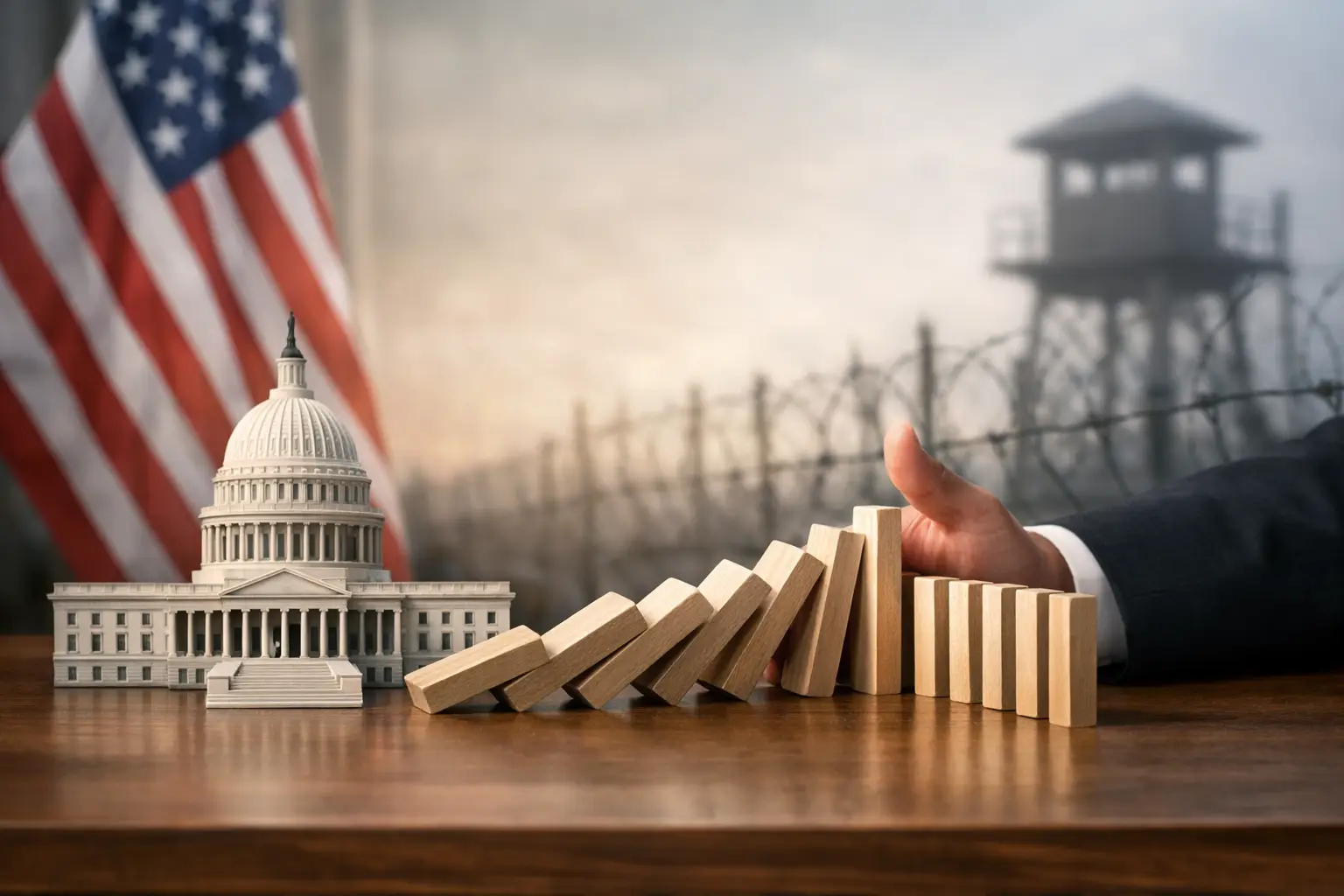
It took less than 24 hours for President Trump to exhaust the legal ceiling of the only tariff authority he had left. On Friday, the Supreme Court struck down his signature trade policy in a 6-3 ruling that declared the International Emergency Economic Powers Act does not authorise presidential tariffs. By Friday evening, Trump had signed an executive order imposing a replacement 10% global tariff under Section 122 of the Trade Act of 1974, effective 24 February. By Saturday afternoon, he had raised it to 15%.
The increase was announced via Truth Social, where Trump wrote that he would be raising the worldwide tariff to the “fully allowed, and legally tested, 15% level.” He offered no new executive order or formal proclamation — simply a social media post declaring the change effective immediately.
Section 122 has never previously been used to impose tariffs. It allows duties of up to 15% for a maximum of 150 days to address “large and serious” balance-of-payments deficits, with any extension requiring congressional approval. The administration cited America’s $901 billion trade deficit in 2025 as justification.
What Stays, What Changes
The new 15% rate does not apply across the board. The White House confirmed exemptions for critical minerals, metals used in currency and bullion, energy products, natural resources and fertilisers that cannot be domestically sourced, and certain agricultural products including beef, tomatoes, and oranges. Goods already covered by Section 232 national security tariffs — steel, aluminium, copper, lumber, automobiles, auto parts, and semiconductors — are also exempt, since those duties remain in full force following the Supreme Court’s ruling.
For many countries, the 15% flat rate is actually lower than what they faced under the old IEEPA regime. Brazil, previously hit with duties as high as 50%, now faces only 15% plus sector-specific tariffs. Canada, Mexico, India, and South Africa similarly see reduced rates. China is the exception: its IEEPA tariffs have been replaced by the 15% duty, but a 25% Section 301 tariff remains, bringing its effective rate to around 35%.
Trade Deals in Limbo
The escalation to 15% has thrown existing trade agreements into confusion. The EU had negotiated a deal last summer accepting a 15% tariff on most goods in exchange for eliminating duties on US industrial goods entering Europe. That agreement was built on IEEPA authority now ruled illegal by the Supreme Court. While the new Section 122 rate happens to match the negotiated figure, the legal basis is entirely different — and temporary.
The European Parliament’s trade committee convenes Monday to reassess ratification. France’s trade minister Nicolas Forissier called for a “united approach” from EU members. The deal had already been frozen once after Trump’s threats regarding Greenland, and some lawmakers may now see no reason to ratify an agreement whose legal framework has been invalidated.
The UK faces a different problem. London had negotiated a 10% rate — described as a diplomatic win for Keir Starmer. Trump’s decision to raise the baseline to 15% erased that advantage overnight. As one analyst put it, the increase amounts to a rebuke to nations that had accepted deals at lower rates.
US Trade Representative Jamieson Greer insisted that countries with negotiated rates above 15% must still honour their agreements. Indonesia’s chief negotiator confirmed its deal remains in force. The result is an asymmetric system where some nations pay more than the baseline under deals they signed voluntarily, while others benefit from rates well below what they previously faced.
The 150-Day Clock
The most consequential number in this story is not 15% — it is 150. That is how many days Section 122 tariffs can remain in force without congressional approval. The clock started when the executive order took effect, meaning these duties expire in late July 2026.
The administration has signalled it does not intend to rely on Section 122 alone. Greer announced that the USTR will open Section 301 investigations into “most major trading partners” on an accelerated timeframe, targeting discriminatory practices against US technology companies and pharmaceutical pricing policies. Existing Section 232 investigations could be expanded to cover additional sectors and product categories.
Treasury Secretary Scott Bessent told the Economic Club of Dallas that the combination of alternative authorities would deliver “virtually unchanged tariff revenue in 2026.” Whether that projection survives contact with legal challenges, procedural requirements, and a Congress that has shown little appetite for codifying Trump’s tariff agenda remains very much an open question.
Meanwhile, the refund issue looms. The Supreme Court ruled IEEPA tariffs were collected without legal authority, potentially entitling importers to between $100 billion and $175 billion in refunds. Trump suggested the administration does not plan to issue them voluntarily, setting the stage for protracted litigation that will further complicate an already fractured trade landscape.
The trade war has not ended. It has simply been forced onto narrower, more contested legal ground — with a hard deadline that grows closer by the day.
The post Trump Raises Global Tariffs to 15% in Wake of Supreme Court Loss — Here’s What It Means appeared first on European Business & Finance Magazine.