















The $1.7 Trillion Engine That Actually Funds Manchester City
EBM Newsdesk Analysis
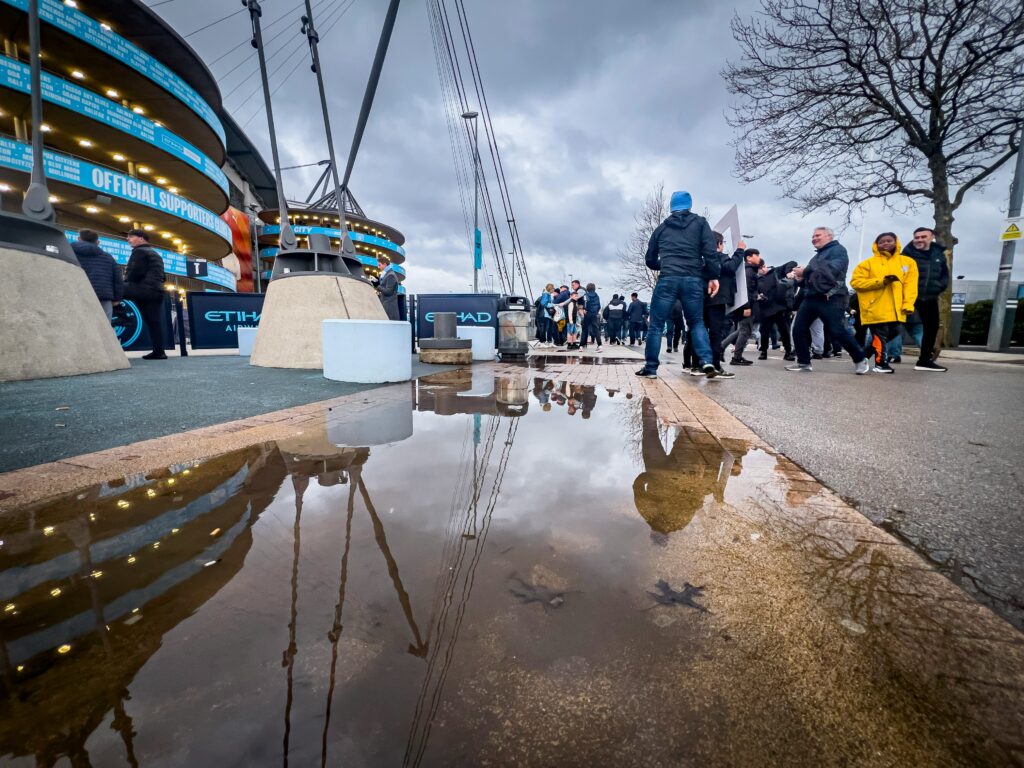
Manchester City Football Club is now valued at $4.99 billion by Forbes, making it the fifth-most valuable football club in the world — but that valuation is essentially irrelevant to understanding the financial machinery behind the Etihad Stadium. The club’s majority owner, Sheikh Mansour bin Zayed Al Nahyan, holds the title of UAE Vice President and Deputy Prime Minister, but his real power rests in his chairmanships of the Mubadala Investment Company and the Emirates Investment Authority, alongside board membership of the Abu Dhabi Investment Authority. Together those institutions sit at the centre of an Abu Dhabi sovereign wealth ecosystem managing approximately $1.7 trillion, with the combined Gulf “Oil Five” controlling roughly 25% of the world’s $15 trillion in sovereign wealth assets. Manchester City was bought in 2008 for £210 million. That figure represents roughly one-eight-thousandth of the capital architecture behind it.
The deeper read is that Manchester City has never been a football investment in the conventional sense. It is a soft-power asset deployed by a sovereign wealth ecosystem so large that the Premier League’s entire commercial revenue base is a rounding error against its annual investable surplus. Understanding that distinction is essential to understanding why no European football club competing under conventional ownership economics can credibly out-spend Manchester City over a sustained period.
Who Sheikh Mansour Actually Is
Sheikh Mansour was born in 1970, the fifth son of the UAE’s founding president Sheikh Zayed bin Sultan Al Nahyan and the half-brother of the current UAE President, Mohamed bin Zayed Al Nahyan. He holds a degree in International Affairs from the United Arab Emirates University and has served as UAE Deputy Prime Minister since 2009 and Vice President since 2023.
His commercial portfolio runs in three layers. First, sovereign vehicles: he chairs both the Emirates Investment Authority (the federal UAE sovereign fund) and the Mubadala Investment Company, which manages around $330 billion in assets and has emerged as one of the most aggressive deployers of Gulf capital into frontier technology — particularly artificial intelligence, where Mubadala’s investment thesis now sits at the centre of the global AI infrastructure race. Second, state energy: he chairs the Abu Dhabi National Oil Company (ADNOC) and the Abu Dhabi Supreme Petroleum Council, the bodies that sit on top of the UAE’s hydrocarbon production. Third, his own private investment vehicle: the Abu Dhabi United Group (ADUG), independently estimated at over £17 billion in assets, through which he holds 81% of City Football Group.
That third layer is what owns Manchester City. The first two layers explain why losing money on football is irrelevant.
The $1.7 Trillion Capital Stack
Abu Dhabi’s sovereign wealth architecture is the largest concentration of state-owned investment capital in any single city on earth. According to research firm Global SWF, the emirate’s sovereign funds manage approximately $1.7 trillion as of late 2024, distributed across five primary institutions plus a recently established sixth.
The Abu Dhabi Investment Authority (ADIA) sits at the apex. Founded in 1976, it manages roughly $1.057 trillion — a sum larger than the GDP of all but 17 countries on earth. ADIA was created to invest the emirate’s excess oil reserves and operates with deliberate opacity; it does not publicly disclose its asset breakdown. Its mandate is generational rather than annual: it exists to convert today’s hydrocarbon revenues into sustainable wealth for future generations of Abu Dhabi’s ruling structure. Mubadala adds approximately $330 billion. ADQ — established in 2018 to focus on critical infrastructure and global supply chains — adds another $263 billion. Lunate Capital, a $105 billion alternatives manager set up in 2024, adds further capacity. L’imad Holding, launched as Abu Dhabi’s fourth investment pillar in 2026, will add more.
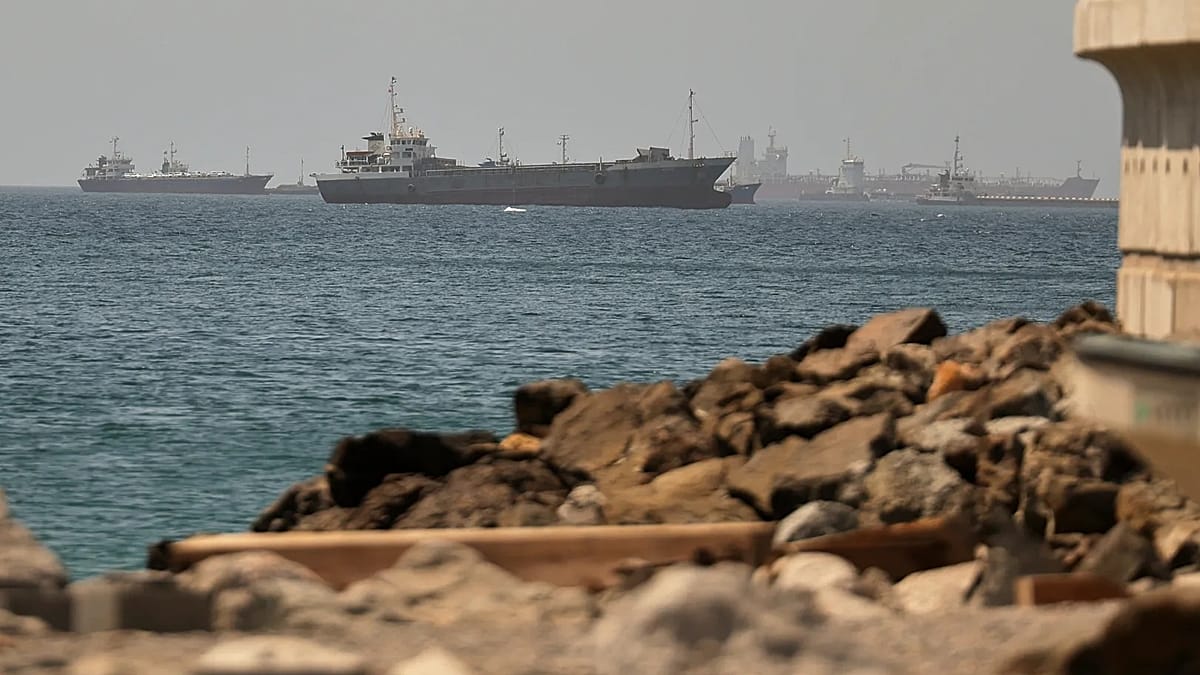
The same hydrocarbon revenues that built this capital stack also explain why the geopolitics of Gulf oil infrastructure remain inseparable from European business strategy — every barrel that flows through the region’s pipelines feeds capital pools that ultimately reach European boardrooms, sports leagues and AI labs.
In the first three quarters of 2024 alone, ADIA, Mubadala and ADQ collectively invested $36 billion across global markets. That single nine-month deployment was approximately 170 times what Sheikh Mansour paid for Manchester City. The capital is generated faster than it can be deployed. The famous line that “the oil fund makes more in seconds than most clubs make in a year” is essentially correct in spirit if not in specific numbers — ADIA’s typical annual returns alone are estimated to run into the tens of billions of dollars. Spread across the seconds in a year, that calculation does indeed produce figures that make Premier League wage bills look like petty cash. Whether the precise figure is $100,000 per four seconds or some other variant is mostly beside the point. The order of magnitude is what matters.
How the Money Reaches Manchester
Sheikh Mansour does not pay Manchester City’s bills directly out of ADIA. The legal structure is more careful than that. ADUG — his private investment vehicle, formally separate from the sovereign funds — owns the controlling stake in City Football Group, which in turn owns Manchester City Football Club. Capital flows from ADUG into CFG, and from CFG into the club, in the form of equity injections and shareholder loans.
The economic reality, however, is that ADUG’s capital base is inseparable from the broader Abu Dhabi sovereign ecosystem. Sheikh Mansour’s personal fortune does not exist in the Western sense of a personally-managed portfolio. His wealth is embedded in a sovereign capital structure that blends private, royal and national interests, a feature shared with most senior members of the Al Nahyan family. The boundary between his personal balance sheet and the emirate’s is functionally porous, even where it is legally defined. The Abu Dhabi royal family’s combined wealth has been estimated at approximately $300 billion.
That is why the Premier League’s Financial Fair Play and Profitability and Sustainability Rules have produced years of friction with Manchester City specifically. Conventional ownership models constrain spending against revenue. Sovereign-adjacent ownership models do not. The 115 charges against the club currently working through Premier League proceedings — relating to alleged sponsorship inflation and inaccurate financial reporting between 2009 and 2018 — sit at exactly that fault line. Manchester City rejects all charges and the case continues. But the underlying tension is structural rather than merely procedural.
City Football Group as a Network Asset
The piece of the architecture most outside observers underestimate is City Football Group itself. Founded in 2013, CFG was the brainchild of CEO Ferran Soriano. It owns or holds substantial stakes in twelve clubs across Europe, Asia, Australia, the Americas and Africa: Manchester City, New York City FC, Melbourne City, Yokohama F. Marinos, Montevideo City Torque, Mumbai City, Girona, Lommel, Sichuan Jiuniu, Troyes, Palermo, and ESTAC.
CFG was independently valued at roughly $5.9 billion by Forbes in 2023 and has likely appreciated since. US private equity firm Silver Lake holds approximately 18% of CFG; Sheikh Mansour’s ADUG holds the controlling 81% stake. The remaining shares were previously held by China Media Capital before Silver Lake bought out most of that position.
The strategic logic of CFG is what separates Manchester City from any conventional Premier League rival. The network functions as a global player development pipeline, a commercial scale platform, a data and analytics infrastructure, and a brand projection vehicle for Abu Dhabi simultaneously. Players move between clubs without entering the open transfer market. Commercial sponsorships are negotiated at network rather than club level. Coaching and analytical resources are pooled. Nobody else in football operates at that integrated level.
The Real Question
For European football’s regulatory architecture, the question Manchester City poses is not whether the club has broken specific Financial Fair Play rules during specific seasons. It is whether the regulatory framework itself can hold against ownership models that draw on capital pools larger than most national economies. The Premier League’s Financial Fair Play and Profitability and Sustainability Rules were designed for the era of media tycoons and Russian oligarchs. They were not designed for sovereign-adjacent capital flowing from a $1.7 trillion investment ecosystem managed across multiple opaque institutions.
That is the real wealth behind Manchester City. It is not a football investment. It is a soft-power platform funded by an oil-built capital architecture that the club itself plays only a small part in. The football is the visible product. The structural advantage is everything underneath.
Related Analysis
- Why Sovereign Wealth Funds Are Reshaping Premier League Football Economics
- Inside Saudi Arabia’s PIF and the Newcastle United Acquisition Strategy
- How the Forgotten Saudi Oil Pipeline Became the Most Critical Energy Artery on the Planet
The post The $1.7 Trillion Engine That Actually Funds Manchester City appeared first on European Business Magazine.