












Strike on World’s Largest LNG Facility Sends Gas Up 30% and Oil to $114
Quick Answer: European gas prices surged 30% to their highest level since the conflict began, while Brent crude hit $114 per barrel in early London trading on Thursday after Iranian missile strikes inflicted “extensive further damage” on Qatar’s Ras Laffan Industrial City — the world’s largest LNG export facility. Stocks fell sharply, with the Stoxx Europe 600 down 1.1%, as yields on UK, German and US government debt all rose simultaneously. President Trump has threatened a massive strike on Iranian gasfields if Tehran continues targeting Qatari facilities.
Gas Prices Surge 30% and Oil Hits $114 as Ras Laffan Strike Breaks the Global Energy Market
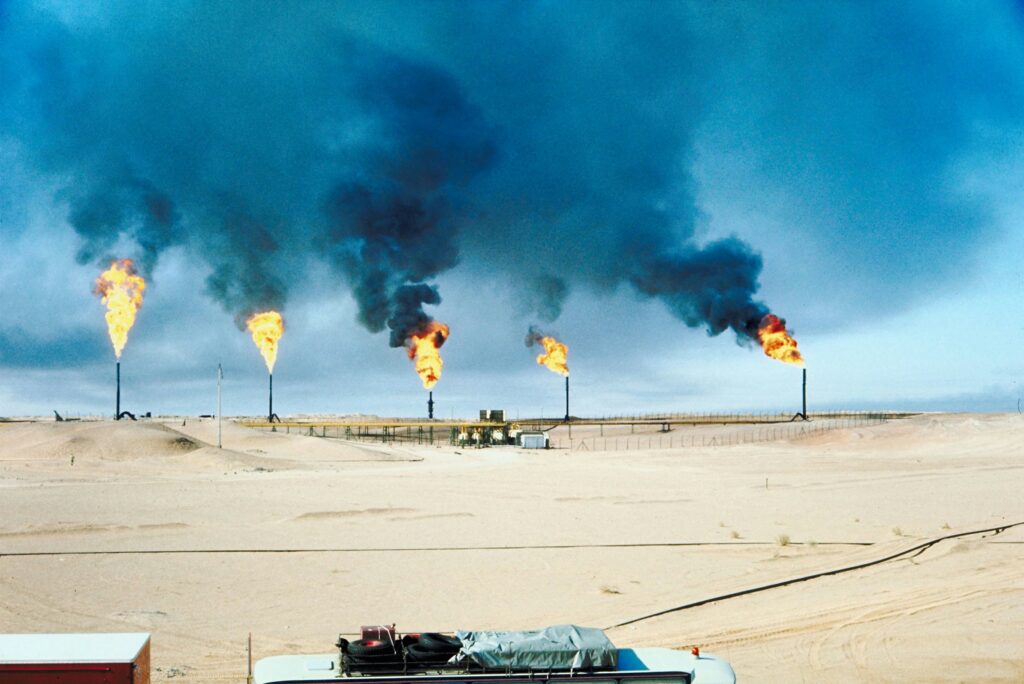
The conflict that began as a military strike on Iranian nuclear facilities has now reached the infrastructure that underpins global energy supply. Iranian missile strikes inflicted “extensive damage” on Ras Laffan Industrial City — the world’s largest LNG export facility — with QatarEnergy confirming that several LNG facilities had been attacked, causing sizeable fires and extensive further damage.
The market response was immediate and brutal. International benchmark Brent crude futures rose 8% to $116.20 per barrel, while European gas prices surged sharply — compounding a crisis that has been building since the conflict began on 28 February. The Stoxx Europe 600 fell 1.1% as higher energy costs fed directly into equity valuations, and yields on UK, German and US government debt all rose simultaneously — the classic triple pressure of an energy shock transmitting into broader financial conditions.
This is not a sentiment shock. It is a structural one.
What Ras Laffan Actually Means
The Ras Laffan complex, located 80km northeast of Doha, produces approximately 20% of global LNG supply, playing a central role in balancing both Asian and European energy markets. Qatar had already suspended LNG production on 2 March following earlier Iranian drone strikes. Thursday’s attacks represent a second, deeper blow to infrastructure that was already offline and attempting damage assessment.
Qatar accounts for 93% of all LNG traffic through the Strait of Hormuz and has no alternative export route — unlike Saudi Arabia, which can redirect crude through its east-west pipeline to Red Sea terminals. The combination of production damage and an effectively closed Strait means Qatari LNG is not simply disrupted — it is landlocked. There is no rerouting option. There is no bypass. The gas either moves through Hormuz or it does not move.
Qatar’s Foreign Ministry declared the Iranian embassy’s military and security attachés persona non grata, demanding they leave within 24 hours — a diplomatic rupture that signals Doha’s patience with Tehran has reached its limit and that the Gulf states are moving toward a harder posture regardless of Washington’s timeline.
The European Exposure
Since the start of the Ukraine war and the destruction of the Nord Stream pipelines, the EU has become a net importer of LNG — and rising prices are now hitting European markets significantly, with the smallest economies facing demand destruction as the cost of gas becomes unabsorbable at current price levels.
The Ras Laffan attack removes one of the key assumptions that had kept gas prices below their theoretical ceiling — the assumption that Qatar’s production damage was temporary and repairable within weeks. Analysts now estimate a minimum four-week disruption even under an optimistic scenario, with Ras Laffan requiring at least two weeks to restart once cleared, followed by an additional two weeks to return to full production capacity.
The ECB’s rate decision calculus has just become materially more complicated. An energy shock of this magnitude — arriving on top of the Hormuz closure and the Russia sanctions windfall that is simultaneously strengthening the Kremlin — leaves European policymakers with no clean macro response available.
Trump’s Warning and What Comes Next
President Trump has threatened a massive strike on Iranian gasfields if Tehran continues targeting Qatari facilities — an escalation warning that markets will be watching carefully for follow-through. The logic is straightforward: Iran has calculated that attacking Gulf energy infrastructure creates pressure on Washington from its own allies. Trump’s response is to make clear that further escalation carries military consequences for Iran’s own energy sector.
Whether that threat deters further Iranian strikes depends entirely on Tehran’s assessment of its own exposure — and a regime that has already absorbed the killing of its supreme leader and the systematic destruction of its military infrastructure has demonstrated a higher pain tolerance than conventional deterrence theory would predict.
Private credit markets already showing stress above 2008 default levels now face an additional energy shock transmitted through corporate borrowing costs and revenue compression. The financial system’s exposure to a sustained high-energy-price environment has not been stress-tested at this duration or intensity.
The gas market has not finished repricing. The equity market has not fully absorbed what a prolonged Ras Laffan outage means for European industrial competitiveness. And the diplomatic architecture capable of ending the conflict — ceasefire terms, security guarantees, reconstruction frameworks — does not yet exist in any meaningful form.
The world’s energy system has never been more exposed. Thursday’s trading session confirmed it.
The post Strike on World’s Largest LNG Facility Sends Gas Up 30% and Oil to $114 appeared first on European Business & Finance Magazine.