





























Lagarde Plans to Leave the ECB Early. Why It Is Political And Who Comes Next
Quick Answer: ECB President Christine Lagarde plans to leave before her eight-year term expires in October 2027, according to a Financial Times report. She intends to depart ahead of France’s April 2027 presidential election so that Emmanuel Macron and German Chancellor Friedrich Merz can jointly select her successor — before a potential far-right French government complicates the process.
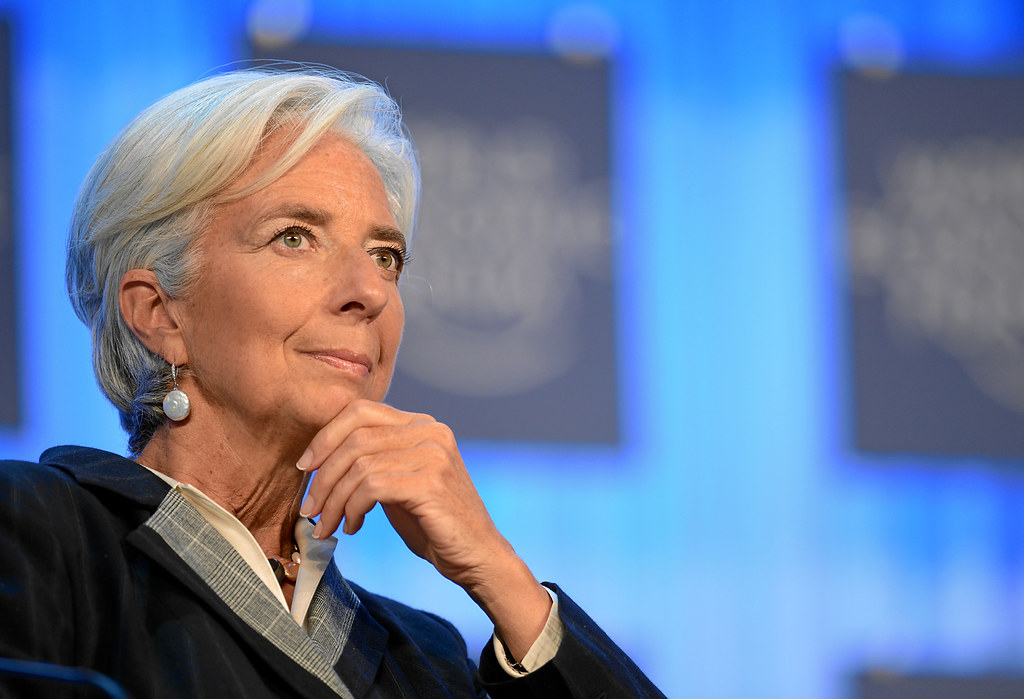
Christine Lagarde is preparing to walk away from the most powerful job in European finance — and the timing is entirely deliberate.
The European Central Bank president is expected to step down before her mandate expires in October 2027, according to the Financial Times, citing a person familiar with her thinking. Lagarde has not set a firm departure date, but she wants to leave before the French presidential election in April 2027 — a race that Marine Le Pen could win.
The calculation is straightforward. If Lagarde stays until her term ends, the incoming French president — potentially from the far right — would have a direct say in appointing her successor. By leaving early, she ensures that Emmanuel Macron, who cannot run for a third term, and German Chancellor Friedrich Merz are the ones shaping the decision. In European politics, the ECB presidency has always required the backing of both Paris and Berlin. Lagarde wants to keep it that way.
The ECB responded cautiously, saying Lagarde remains “totally focused on her mission” and has not taken any formal decision. But the language was notably weaker than last year, when the bank said she was “determined to complete her term.” That shift in tone has not gone unnoticed.
The move also follows a pattern. Bank of France Governor François Villeroy de Galhau announced last week that he would step down in June — more than a year before his term expires — allowing Macron to name his replacement before leaving office. Two early departures from France’s most senior monetary officials within days of each other looks less like coincidence and more like coordinated succession planning.
There are no formal candidates yet, but two names dominate early speculation. Klaas Knot, the former Dutch central bank chief, is viewed as a consensus builder who has evolved from an inflation hawk into a more moderate figure — a profile that appeals to Berlin. Pablo Hernández de Cos, the former Bank of Spain governor who now leads the Bank for International Settlements, is respected as a team player with deep technical credibility. ECB board member Isabel Schnabel has expressed interest, though EU rules may prevent her from serving since board members hold non-renewable terms.
Markets barely reacted to the news. Bond yields and the euro were largely unchanged, reflecting the view that a leadership transition at the ECB is unlikely to shift monetary policy significantly. Inflation is at target, interest rates are in neutral territory and the eurozone economy is growing at potential — a rare combination that some analysts have described as a central banker’s ideal departure point.
Lagarde took over the ECB in November 2019, having previously served as managing director of the International Monetary Fund and as France’s finance minister. She navigated the institution through the pandemic, an unprecedented inflation surge and the fastest rate-hiking cycle in ECB history. She has also told Bloomberg that she originally accepted the post expecting to serve roughly five years — a detail that adds context to the timing.
The real story here is not Lagarde’s departure. It is what it reveals about how seriously Europe’s political establishment is treating the risk of far-right influence over its core financial institutions. The ECB presidency is too important to leave to electoral chance. Lagarde appears to agree — and she is acting accordingly.
The post Lagarde Plans to Leave the ECB Early. Why It Is Political And Who Comes Next appeared first on European Business & Finance Magazine.