

















K. Pierrakakis from the Eurogroup: “We must return to a path of sustainable economic growth and dynamism”
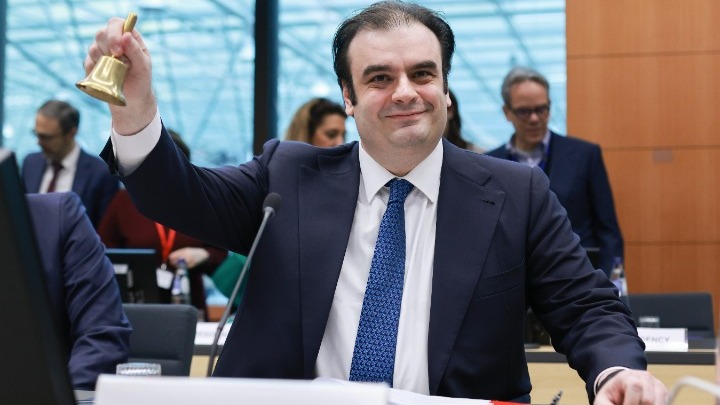
“This was a special Eurogroup meeting for me, as it was the first time I chaired the session since my election in December. I look forward to working with my colleagues to implement our common priorities and to address the challenges ahead of us,” said the President of the Eurogroup, Kyriakos Pierrakakis, from the Council podium, after the end of the meeting.
During the press conference, Mr Pierrakakis referred to the agenda of the issues discussed, starting from the “historic moment”, as he said, when he had the honor to receive from the Minister of Finance of Bulgaria “one of those sets of coins that were made available in Bulgaria”, as from 1 January it is the newest member of the euro area.
The President of the Eurogroup also referred to today’s discussion of the ministers on the governance of the euro area, saying that “the focus is on the competitiveness, resilience and macroeconomic and financial stability of the euro area. Our deputies and our experts will start working with the aim of completing the recommendations for agreement at the next meeting in February.”
As he said, “we are in an extremely volatile geopolitical context,” “where dialogue remains essential and unity and coordination are key. The global economy is facing many challenges. Resilience alone is not enough for the future. We must return to a path of sustainable economic growth and dynamism. The Eurogroup is committed to doing its part. A strong starting point will be agreement on a robust set of priorities when we review the euro area recommendations next month and, most importantly, to ensure that we implement them.”
At the same time, Mr Pierrakakis announced the election of the Governor of the Croatian National Bank, Boris Vujčić, for the upcoming vacant position of Vice-President of the ECB.
Finally, Pierre Gramegna, Director of the European Stability Mechanism, at the beginning of his speech after the end of the meeting, congratulated Mr Pierrakakis on the first Eurogroup, stressing that “I found that he chaired it excellently, with productive and constructive discussions. I think you set a very positive tone for your term,” he stressed, addressing the President of the Eurogroup.
“Dialogue is key” on the tariff front, stressed the President of the Eurogroup, Kyriakos Pierrakakis
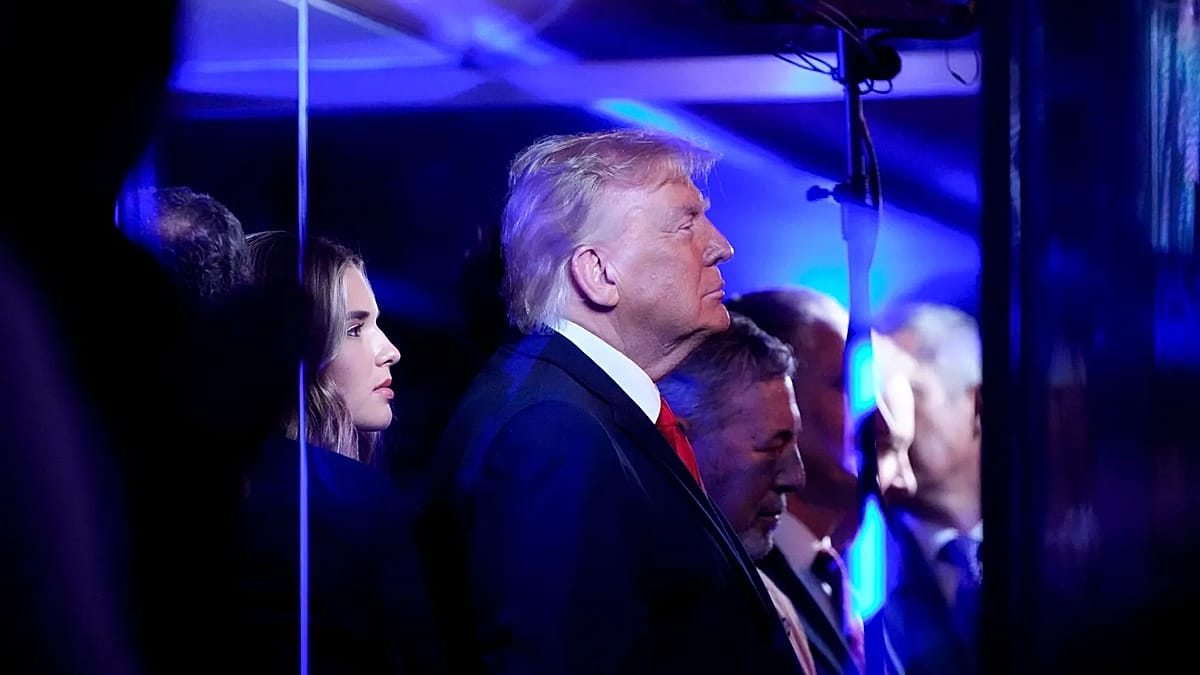
“Dialogue is key,” stressed the President of the Eurogroup, Kyriakos Pierrakakis, shortly after the conclusion of the Eurogroup meeting of the finance ministers of the euro area today in Brussels. His statements were made in the shadow of Donald Trump’s threats to impose additional tariffs, from 1 February on six EU countries, as part of the pressure exerted by Washington in relation to Greenland.
Kyriakos Pierrakakis explained that although Greenland and the threats of additional tariffs from Donald Trump were not officially on the agenda of today’s Eurogroup, the discussion inevitably took place under the weight of recent developments. As he said, for Europe, territorial integrity and sovereignty are not merely political positions, but fundamental principles of international law – principles that are essential not only for the EU member states, but for the international community as a whole. In this context, “dialogue remains the key,” as a basic de-escalation tool, according to him, while “the imposition of tariffs would undermine transatlantic relations as a whole and would lead to a dangerous downward spiral.”
The President of the Eurogroup stressed that Europe is called upon to manage these challenges “united, in a coordinated way and with a commitment to defend its sovereignty” and in this context particular importance is attached to the extraordinary European Council to be convened next Thursday, 22 January, to assess the situation.
For his part, Commissioner for Economic Affairs, Valdis Dombrovskis, stated that the European Union is seeking to clarify its next steps, placing emphasis on engagement with the United States and on the search for constructive solutions. He noted that political consultations are underway, with the economically best option being the achievement of an agreement, especially given that the EU–US trade relationship is the largest in the world and much is at stake for both sides. As he said, “we want to avoid negative scenarios,” but “we are ready to react” in case it is not possible to find constructive agreements.
At the same time, Dombrovskis described as “unacceptable” the threats against the territorial integrity and sovereignty of Greenland, noting that while the EU seeks constructive cooperation with the US, it nevertheless remains ready to react. Asked whether there is the political will for retaliation on the part of the EU, should this become necessary, he replied that “all tools are on the table,” reiterating that the EU prefers dialogue, but keeps open the possibility of using other means.
In this first Eurogroup meeting under his presidency, Kyriakos Pierrakakis underlined the convergence of the euro area countries on key priorities, such as the Investment Union, the completion of the Single Market and the digital euro. As he noted, the critical issue now is the achievement of tangible results, within particularly tight timeframes. He also stressed the need for ministers to learn more from one another and to exchange policy ideas. At the same time, he expressed his intention to meet bilaterally with the finance ministers of the euro area in the coming months, in order to exchange views on the policy priorities of the Eurogroup.
Mr Pierrakakis also announced that the finance ministers of the euro area today chose the Governor of the National Bank of Croatia, Boris Vujčić, to succeed the Spaniard Luis de Guindos as Vice-President of the European Central Bank (ECB) from 1 June 2026. In addition to Croatia, five other euro area member states had proposed candidates for the position (Portugal, Latvia, Estonia, Finland and Lithuania).
The finance ministers also welcomed Bulgaria’s accession to the euro area, in the country’s first official participation in a Eurogroup meeting. The euro area now consists of 21 member states. (19/01/26)