























Joint Declaration adopted at the EU-Western Balkans summit
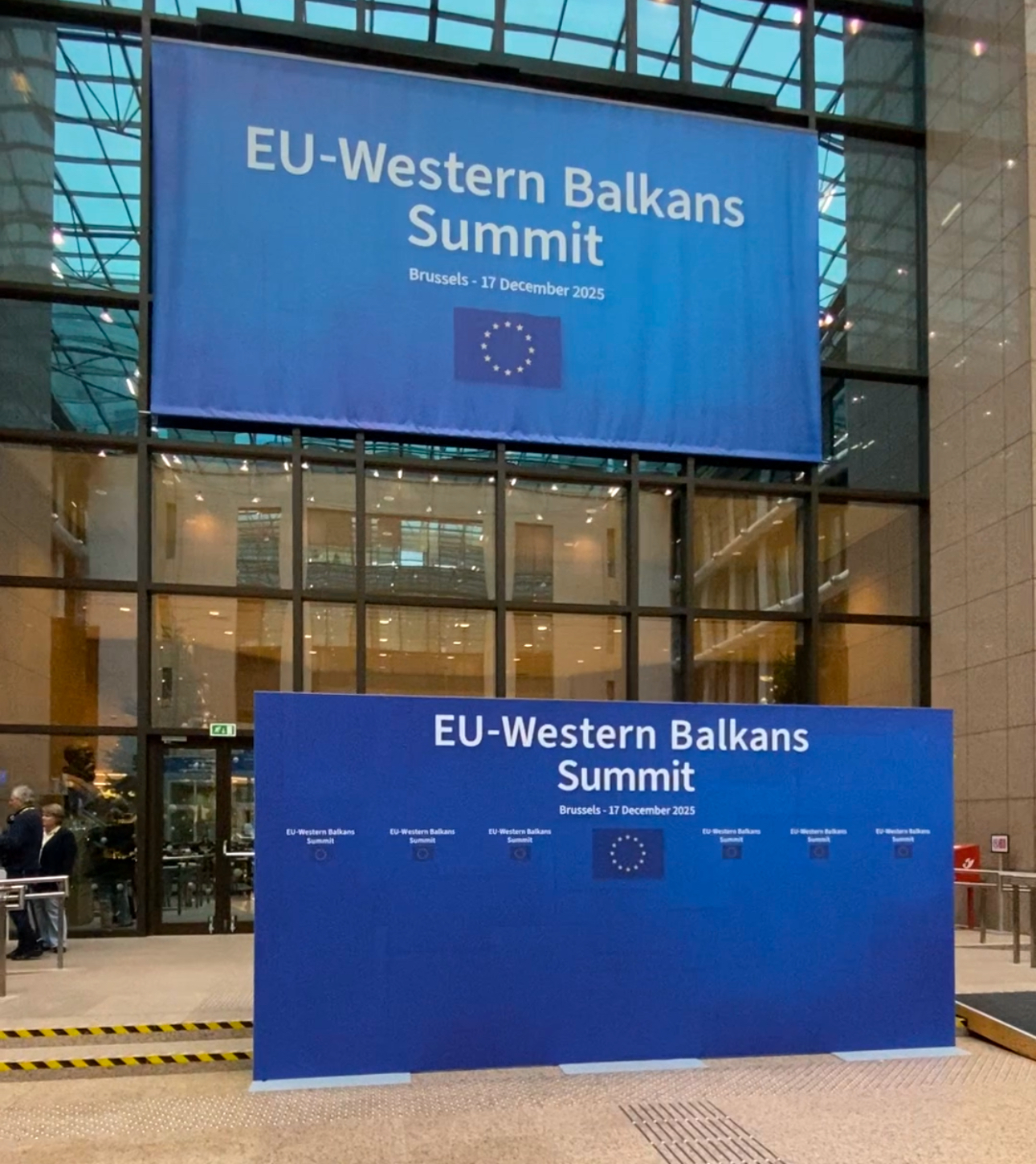
BRUSSELS – The European Union confirms its full and unequivocal commitment to the membership perspective of the Western Balkans in the European Union, noting that the future of the Western Balkans is in the Union, and that enlargement is a real opportunity that should be seized, according to the Declaration adopted this evening at the EU–Western Balkans summit, which is being held in Brussels. The document states that the leaders of the European Union (EU) and its member states, in consultation with partners from the Western Balkans, concluded that today’s summit demonstrates the strength of relations and the benefits it brings to citizens, but also that Russia’s aggression against Ukraine and growing geopolitical challenges highlight the need for ever stronger ties between the EU and the Western Balkans. As stated, the Summit is the most important opportunity of the year to reconfirm the strategic partnership between the European Union and the Western Balkans. The Brussels Declaration welcomes the new dynamism and progress achieved since the last summit and adds that accelerating the accession process, based on credible reforms by partners, fair and rigorous conditions and the principle of own merits, is in the mutual interest.
The document states that the lack of normalization of relations between Pristina and Belgrade continues to hinder both partners on their European path and that all agreements reached in the dialogue must be implemented, especially the Agreement on the path to normalization and its Annex. “Support under the Western Balkans Reform and Growth Facility is conditional on the constructive engagement of partners with measurable progress and tangible results in the normalization of their relations,” the Declaration states. It is stated that enlargement is a geostrategic investment in peace, security, stability and prosperity, as stated in the Granada Declaration, and that the emergencies of our time require sustainable momentum, and that the countries aspiring to membership must step up their reform efforts, while on the other hand the EU must strengthen its internal foundations and reforms. “The EU welcomes the commitment of partners from the Western Balkans to support European values and principles, in accordance with international law, the primacy of democracy, fundamental rights and values and the rule of law, and expects them to demonstrate this in words and deeds by taking responsibility and implementing the necessary reforms, especially in the area of fundamental principles. Freedom of expression, independent and pluralistic media, gender equality and a strong role for civil society are key to ensuring a functioning democracy. The EU calls on partners to guarantee the rights and equal treatment of members of minorities,” the text of the Declaration states.
It also states that inclusive regional cooperation, reconciliation and good-neighbourly relations remain key to building a common future, as well as to implementing international agreements in good faith and with tangible results, including the Prespa Agreement with Greece and the Treaty of Friendship, Good-Neighbourliness and Cooperation with Bulgaria. It is added that determined further efforts are still needed in order to foster reconciliation and regional stability, as well as to find and implement definitive, inclusive and binding solutions to regional and bilateral disputes and issues of partners rooted in the legacy of the past, in accordance with international law and established principles, including the Agreement on Succession Issues, as well as the remaining cases of missing persons and issues of war crimes. “We are united in our unwavering support and solidarity with Ukraine as it defends its sovereignty and territorial integrity against Russia, the unprovoked and unlawful aggressor in war. We reiterate our support for a comprehensive, just and lasting peace in Ukraine, based on the UN Charter and international law. We will continue to invest in multilateralism and work with partners to uphold international law,” the document states. It is reiterated that alignment with the EU’s Common Foreign and Security Policy, including the implementation of EU restrictive measures, remains a strong expression of the partners’ strategic choice, while at the same time praising those partners from the Western Balkans who are already fully aligned and calling on those who have not yet done so to follow that example. “We remain committed to bringing the partners from the Western Balkans closer to the EU already during the enlargement process. Gradual integration, implemented in a reversible, merit-based way, is underway in several policy areas, thereby delivering concrete benefits to citizens in advance and preparing the ground for accession. Further proposals on gradual integration should be considered, with appropriate alignment with the EU acquis. Progress in economic integration should fully preserve the integrity of the EU single market and a level playing field for all,” it is stated. The EU also welcomes progress in the gradual integration of partners from the Western Balkans into the EU single market, including the implementation of the “Single Market Road” initiatives, the extension of green lanes between the EU and the Western Balkans and the financing of the modernization and harmonization of border crossings, the successful accession of several partners to the Single Euro Payments Area (SEPA), the joining or replication of digital initiatives such as Digital Innovation Hubs, WiFi4WB and the EU Digital Identity Wallet, and the reduction of data roaming costs between the EU and partners from the Western Balkans as of 1 October 2023. It is emphasized that the Growth Plan will accelerate socio-economic convergence between the Western Balkans and the EU, provided that partners implement EU-related reforms, and it is stressed that the Common Regional Market is a catalyst for deeper integration and a springboard to the EU single market.
The EU also welcomes and will continue to support the strengthening of connectivity, including energy, transport and digital connectivity within the region and with the EU. The EU continues to support ongoing efforts to diversify energy supply sources and routes. One of the common challenges remains migration management, noting that although progress has been made, further actions by partners from the Western Balkans are needed in terms of combating human trafficking and stronger border management. The document also emphasizes that joint efforts must continue in the fight against corruption, drug trafficking and all forms of serious and organized crime, as well as in preventing and countering terrorism and violent extremism in accordance with the new Joint Action Plan that was recently signed. It concludes that continued mutual efforts in strategic communication are important, including on the benefits of enlargement and gradual integration, as well as the need to build trust, understanding and cross-societal consensus. “We count on our partners from the Western Balkans to convey to their public that the EU remains the region’s closest partner, main donor, investor and trading partner and to demonstrate their commitment to EU values and reforms in words and deeds. We look forward to the next EU–Western Balkans summit in Montenegro in June 2026,” the text states, adding that Serbia did not align itself with the Declaration. (17 December)