












International Energy Agency Forced To Launch Record Emergency Oil Reserve
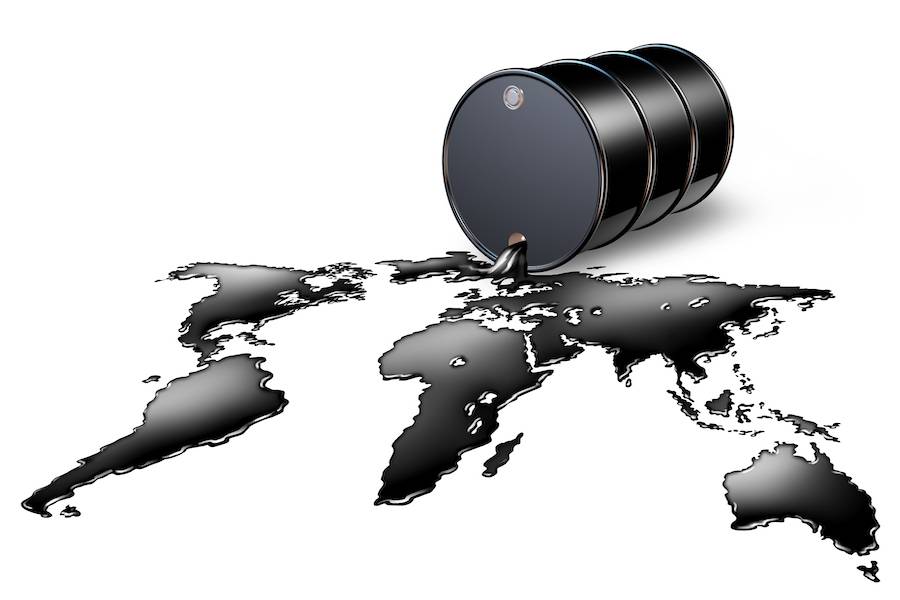
The International Energy Agency has authorised the largest emergency release of strategic oil reserves in its history, mobilising member countries to flood the market with supply in a bid to counter the devastating disruption caused by the Iran war.
The move represents the most significant coordinated intervention in global energy markets since the IEA’s founding in the wake of the 1973 oil crisis — a moment that, not coincidentally, is the last time the world faced a supply shock of remotely comparable scale.
What Has Been Authorised
The IEA’s emergency mechanism allows member countries — which collectively hold approximately 1.2 billion barrels in strategic petroleum reserves — to release volumes onto the market in response to a severe supply disruption. The scale of the current release has not been confirmed in full, but early indications point to a coordinated drawdown significantly exceeding previous interventions, including the 60 million barrel release triggered by Russia’s invasion of Ukraine in 2022.
The United States, which holds the world’s largest strategic reserve in the Strategic Petroleum Reserve, is expected to contribute the largest single-country volume. European members, Japan, South Korea and Australia are all participating in the coordinated release.
The stated objective is twofold: to physically replace a portion of the supply that has been cut off by the effective closure of the Strait of Hormuz, and to send a psychological signal to markets that coordinated sovereign intervention stands behind the global economy.
Will It Be Enough?
The honest answer is: probably not on its own — but that is not quite the right question.
The Iran war has disrupted approximately 20 per cent of global oil supply — the largest single supply shock in recorded history. Strategic reserves, however large, were not designed to replace that volume indefinitely. They were designed to buy time — to keep economies functioning while diplomatic or military resolution is pursued, and to prevent the kind of panic-driven price spiral that causes demand destruction and recession.
On that narrower measure, the intervention has a chance of working. Brent crude has been swinging as much as $10 in a single session, reflecting a market driven as much by fear as by physical supply and demand. A credible, large-scale reserve release removes some of that fear premium — not all of it, but enough to reduce volatility and give central banks slightly more room to manoeuvre.
The Central Bank Dimension
The timing of the IEA’s intervention is not accidental. Central banks across the G7 are meeting next week facing a stagflation scenario that leaves them with no clean policy options. Any softening of energy prices — even modest and temporary — widens their room to respond to weakening growth without simultaneously inflaming inflation.
For the Bank of England, the Fed and the ECB, the reserve release is not a solution. It is a pressure valve. And right now, even a partial release of pressure matters.
The Limits of the Lever
The IEA’s record intervention is significant. It is not a resolution. The Strait of Hormuz remains closed. Saudi Aramco’s CEO has described the situation as the worst crisis the industry has ever faced. Iran’s Revolutionary Guard continues to threaten vessels attempting the passage.
Strategic reserves can bridge weeks, perhaps months. They cannot bridge an indefinite conflict. The IEA has deployed its most powerful peacetime tool. What happens next depends entirely on whether the diplomats and generals can close the gap before the reserves run out.
The post International Energy Agency Forced To Launch Record Emergency Oil Reserve appeared first on European Business & Finance Magazine.