













WEEKEND READ: Clarkson’s Farm: The Most Unlikely Business Story in British Agriculture
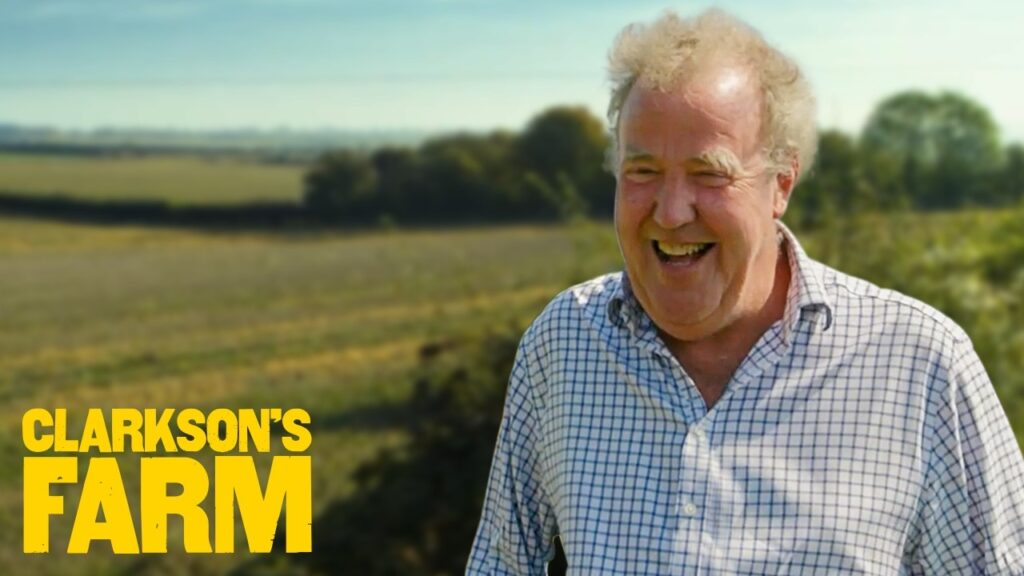
EBM Weekend Read — By Nick Stanton, Editor-in-Chief
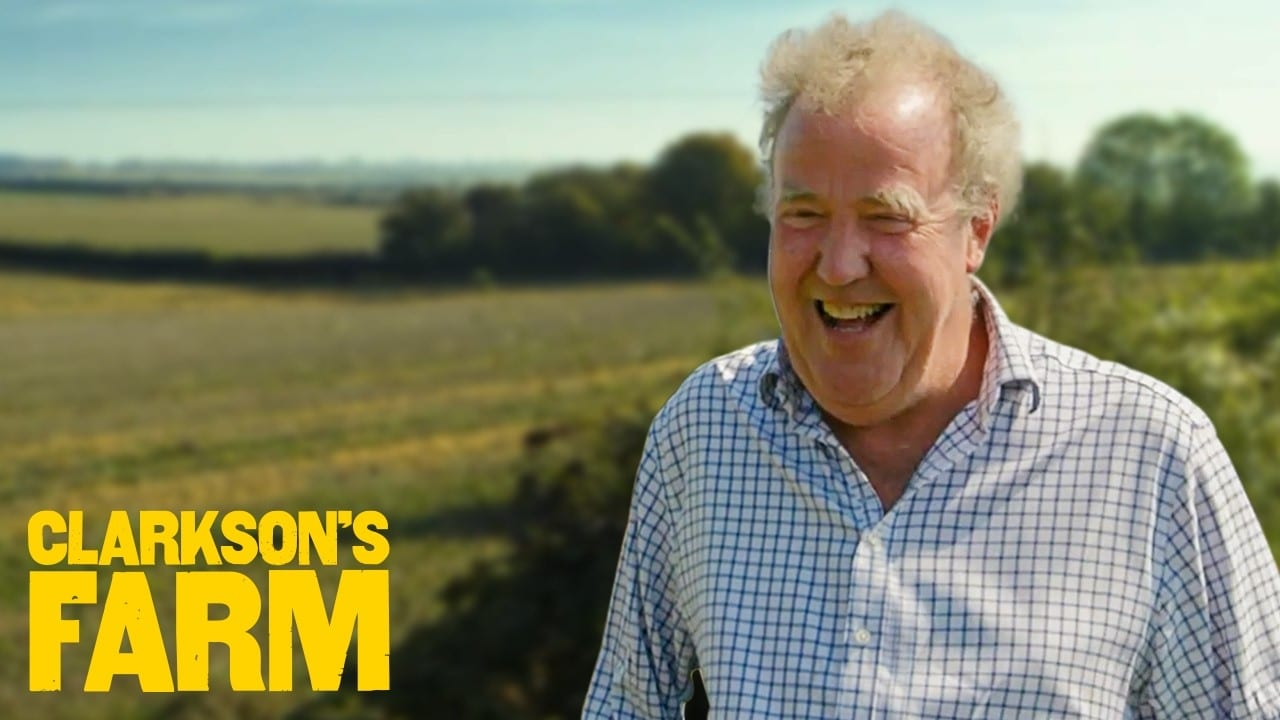
Jeremy Clarkson paid over £1 million for a 1,000-acre farm in the Cotswolds in 2008. In his first year of actually trying to run it, he made a profit of £144. Not £144,000. Not £144 per acre. £144 in total. It is, by any conventional measure, one of the worst returns on a seven-figure investment in the history of British agriculture.
It is also, by any unconventional measure, the foundation of one of the most shrewdly constructed personal brands and business empires in modern British media. The farm nearly broke him commercially. Filming the failure made him rich.
The Amazon Deal That Changed Everything
Clarkson had been quietly farming — or attempting to farm — Diddly Squat for over a decade before Amazon came knocking. The timing was not accidental. He had just departed Top Gear under circumstances that dominated British media for months, and his move to Amazon’s The Grand Tour had already demonstrated that his audience would follow him to a streaming platform without hesitation.
Clarkson’s Farm launched on Amazon Prime Video in June 2021. Within weeks it had become the most-watched original series on Prime Video in the United Kingdom. The format was deceptively simple — a man who genuinely did not know how to farm, attempting to farm, with a farm manager called Kaleb Cooper who did, and a cast of local characters who provided the kind of grounded, unglamorous reality that no scriptwriter could manufacture.
Amazon reportedly paid in the region of €200 million for three series. The precise figure has never been confirmed, but what is beyond dispute is the commercial logic: Clarkson’s Farm delivered the kind of culturally embedded, broadly appealing content that streaming platforms cannot manufacture on demand but will pay extraordinary sums to acquire when it appears organically.
The deal transformed the economics of Diddly Squat entirely. The farm was no longer a farming business with a media side project. It was a media business with a farm at its centre.
The Asset Appreciation Nobody Predicted
The financial transformation of Clarkson’s farm assets between 2021 and 2025 is the kind of numbers that make agricultural economists sit up straight. Farm assets grew from £44,000 to £1.34 million in a single year following the show’s debut. The property itself is now estimated at £12.5 million. His overall net worth reached £65 million by 2025 according to published estimates.
This matters beyond the personal wealth story. It illustrates something fundamental about how media attention converts into real asset value — a dynamic that is reshaping land and property economics in rural Britain in ways that conventional agricultural valuation models were never designed to capture.
As we explored in our analysis of how European business is navigating the intersection of brand value and real asset appreciation, the Clarkson model is not unique in principle — it is the same compounding dynamic that drives athlete brand valuations and media company premiums. What makes it unusual is the setting. Nobody had applied it to a working farm before.
The Shop, the Restaurant and the Planning Battle
Diddly Squat farm shop opened in 2020, initially selling produce from the farm. It became a destination. Queues of visitors drove local planning authorities to distraction and triggered one of the most public planning disputes in recent British memory, with West Oxfordshire District Council issuing enforcement notices and Clarkson — characteristically — documenting every bureaucratic obstacle on camera and in his Sunday Times column simultaneously.
The restaurant, The Clarkson Arms, has faced its own planning journey. But the commercial architecture emerging around Diddly Squat is instructive regardless of individual planning outcomes. The farm shop generates footfall that has nothing to do with agricultural commodity prices. It generates footfall because people want to visit a place they have watched on television — a phenomenon that is closer to theme park economics than agricultural retail.
This is the genuine commercial innovation buried inside what most people treat as an entertainment story. Clarkson has demonstrated that a working farm can become a destination brand, with visitor revenue streams, merchandise, licensing and media rights that are entirely decoupled from the underlying volatility of commodity markets. Wheat prices collapsed in 2023. Diddly Squat’s brand value did not.
As we reported in our analysis of the business model behind elite sport’s shift from commodity to brand, the same structural transition is underway in agriculture — and Clarkson has inadvertently become its most visible case study.
What It Says About British Farming
The wider agricultural context matters here and is largely absent from the entertainment coverage of Clarkson’s Farm. British farming is in structural crisis. The removal of EU direct payment subsidies following Brexit, replaced by the Environmental Land Management scheme, has fundamentally altered the economics of arable farming for tens of thousands of operators who do not have a television deal to fall back on.
Average farm incomes across England were down significantly in 2023 and 2024. Input costs — fertiliser, energy, machinery — remain elevated relative to output prices. The inheritance tax changes announced in the 2024 Autumn Budget, which removed the Agricultural Property Relief exemption for farms worth over £1 million, triggered protests across the country and focused public attention on the financial fragility of farm businesses that, on paper, appear asset-rich but generate minimal cash returns.
Clarkson has been among the most vocal critics of both the subsidy transition and the inheritance tax changes. His platform gives those arguments a reach that the National Farmers Union can only dream of. As we reported in our analysis of how European regulatory frameworks are reshaping the agricultural investment landscape, the tension between environmental policy ambition and farm business viability is playing out across the continent — not just in the Cotswolds.
The Honesty Premium
The Instagram reel that circulated widely this week — noting the £144 first-year profit, the €200 million Amazon deal and the £12.5 million property valuation — captures the arithmetic of Clarkson’s farm transformation neatly. But it slightly misses the mechanism.
The money did not follow the farming. The money followed the honesty about the farming. Every broken machine, every failed crop, every planning rejection, every argument with Kaleb — filmed, published, shared — built an audience that trusted what it was watching precisely because it was not curated to look successful.
As we explored in our Weekend Read on how Ronaldo, LeBron and Mbappé have built commercial empires on authenticity as much as achievement, the premium on genuine, unmediated content is a structural feature of the current attention economy — not a passing trend. Clarkson understood this intuitively, possibly without fully analysing it, and built a business model around it.
The radical honesty about struggle, shown publicly, builds deeper trust than manufactured success ever could. That is the line from the Instagram reel that most accurately describes what happened at Diddly Squat. It is also, quietly, one of the most important commercial insights in British media in the past decade.
The Numbers Behind the Name
At £65 million net worth, Jeremy Clarkson is wealthy by most measures but not by the standards of the media industry he inhabits. The farm has not made him rich in the way Top Gear made him rich. What it has done is something more durable: it has given him a business with genuine asset backing, recurring revenue streams across media, retail and hospitality, a brand with international recognition and an audience relationship built on trust rather than spectacle.
For British agriculture, watching from the sidelines, the lesson is simultaneously inspiring and irrelevant. Most farmers cannot film their losses and sell them to Amazon. Most farms cannot convert footfall into a destination retail concept. Most agricultural businesses do not have a Sunday Times column to amplify every planning dispute into a national conversation.
But the underlying principle — that brand value, honestly built, compounds independently of commodity prices — is one that the agricultural sector is only beginning to understand. Clarkson stumbled into it accidentally. The smartest operators in British farming are now trying to replicate it deliberately.
The £144 profit was not the beginning of a farming success story. It was the beginning of something considerably more interesting.
Related Analysis
The Athlete as Hedge Fund — How Ronaldo, LeBron and Mbappé Are Building Empires That Will Outlast Their Boots — The same commercial playbook Clarkson has applied to farming has been running in elite sport for a decade. Here is how it works at scale.
The Champions League Is the World’s Most Valuable Sports Business — How European institutions build brand value that decouples commercial returns from underlying operational performance — and what agriculture could learn from it.
EU’s Competitiveness Drive Turns Green Transition on Its Head — The regulatory and subsidy landscape reshaping farm economics across Europe, and why the gap between policy ambition and farm viability is widening.
The post WEEKEND READ: Clarkson’s Farm: The Most Unlikely Business Story in British Agriculture appeared first on European Business Magazine.