



















How Michael Jordan Became Sport’s First Billionaire: The $3.8 Billion Empire Behind the GOAT
Michael Jordan earned roughly $93.7 million across 15 NBA seasons. That figure, staggering for its era, represents barely 2.5% of his current fortune. As of 2025, Forbes estimates Jordan’s net worth at $3.8 billion, making him the wealthiest former professional athlete on the planet and the only billionaire ever produced by the NBA.
The gap between what Jordan earned on the court and what he accumulated afterward tells one of the most compelling business stories in modern history. It is the story of how a basketball player from Wilmington, North Carolina turned athletic fame into a self-compounding financial empire built on royalties, franchise ownership, and calculated bets that paid off spectacularly. He is far from the only athlete to make this leap — a growing number are now building billion-dollar brands beyond sport — but Jordan did it first and did it biggest.
The NBA Contracts: From $550,000 to $33 Million
Jordan entered the league in 1984 as the third overall pick in the draft. On 12 September that year, he signed a seven-year, $6.3 million rookie contract with the Chicago Bulls, earning a base salary of roughly $550,000 in his first season alongside a $250,000 signing bonus. For context, the average NBA salary at the time sat around $300,000, so Jordan was immediately above the median, but nowhere close to the stratosphere he would later occupy.
His salary grew modestly through the late 1980s, never exceeding $4 million a season during the first three-peat championship run from 1991 to 1993. In today’s terms, Jordan was dramatically underpaid relative to his impact. But the NBA’s salary structure was different then, and Jordan’s real payday was building elsewhere. To understand just how far player compensation has come since those early deals, look at the evolution of NBA contracts from Jordan to Jokic.
After his first retirement and return to basketball, the Bulls offered Jordan a one-year deal worth $30.14 million for the 1996–97 season. The salary exceeded the entire team’s salary cap that year. The following season, he earned $33.14 million, a figure that remained the single highest annual NBA salary for nearly two decades until Stephen Curry and LeBron James finally surpassed it in the 2017–18 season.
When Jordan returned again with the Washington Wizards in 2001, he signed a two-year deal for just $2.03 million and pledged his entire first-year salary to victims of the September 11 attacks. His total NBA career earnings came to approximately $93.7 million. That sounds enormous until you realise it represents roughly the same amount he now earns from Nike every eight months.
The Nike Deal That Changed Everything
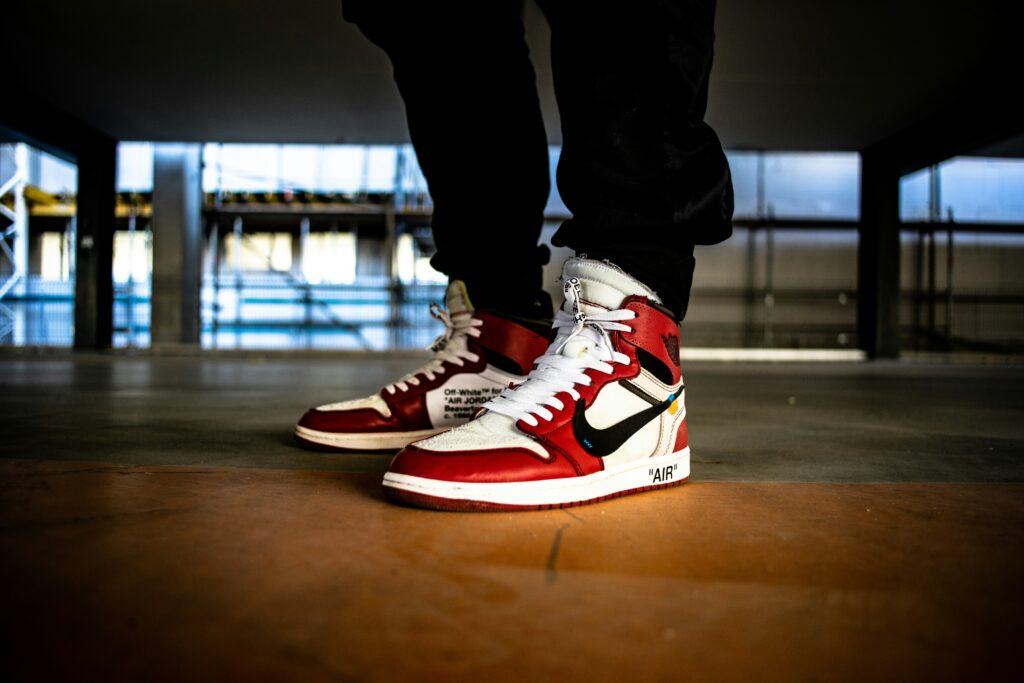
In 1984, Nike was a distant third in basketball footwear behind Converse and Adidas. The company needed a breakthrough, and a charismatic rookie from North Carolina was the gamble they took. Nike offered Jordan a five-year deal worth $2.5 million with a critical addition that would reshape sports business: a royalty percentage on every pair of Air Jordans sold.
Nobody in sport had negotiated royalty participation on product sales before. Standard endorsement deals at the time were flat-fee arrangements. Jordan’s agent, David Falk, pushed for the equity-style structure, and Nike, desperate for basketball relevance, agreed. It remains the definitive example of why royalty deals beat salary when the underlying business has genuine growth potential.
Nike projected $3 million in first-year Air Jordan sales. Actual sales exceeded $126 million. The royalty structure meant Jordan’s compensation scaled directly with success rather than remaining capped. That single negotiation decision accounts for more of Jordan’s current wealth than any other factor.
By 1997, Nike launched Jordan Brand as an independent sub-brand within the company, making Jordan the first athlete with his own division inside a major corporation. Today, Jordan Brand generates approximately $7.3 billion in annual revenue according to Nike’s fiscal 2025 reporting, though this was down 16% year-on-year. Jordan reportedly receives around 5% in royalties, translating to approximately $150 million annually. His total lifetime earnings from the Nike partnership are estimated to exceed $1.3 billion. For a deeper look at how a single sneaker line became a cultural and financial powerhouse, see our breakdown of how Jordan Brand grew into a $7 billion business.
The Charlotte Hornets: Turning $275 Million into $3 Billion
Jordan’s transition from athlete to owner began formally in 2010 when he purchased a majority stake in the Charlotte Bobcats (later renamed the Hornets) for approximately $275 million. At the time, the franchise was one of the least valuable in the NBA.
By 2014, Jordan had increased his ownership stake to roughly 89.5%, and the appreciation in team value crossed the threshold that made him a billionaire — the first player in NBA history to achieve that status. Forbes designated him as such, marking a watershed moment in the relationship between athletes and wealth. Jordan’s timing was impeccable, riding a wave that has seen NBA franchise values explode from millions to billions across the league.
Jordan sold a minority portion of his stake in 2019 when the team’s valuation reached $1.5 billion. Then, in 2023, he completed the sale of his majority ownership at a valuation of approximately $3 billion, generating a return of more than 10 times his original investment over 13 years. He retains a minority stake in the franchise.
The Hornets deal alone represents one of the most profitable sports ownership plays in history. It demonstrated that Jordan’s competitive instinct extended well beyond the court and into the boardroom.
The Investment Portfolio and Business Ventures
Beyond Nike and the Hornets, Jordan has built a diversified portfolio of business interests managed through his family office, Jump Management, led by longtime adviser Curtis Polk and based in Florida.
23XI Racing (NASCAR)
In 2020, Jordan co-founded 23XI Racing with NASCAR driver Denny Hamlin. The team competes in the NASCAR Cup Series and has expanded from one car to three charters. Tyler Reddick won the 2024 regular season championship for the team, its first major title. In late 2024, Jordan and 23XI filed an antitrust lawsuit against NASCAR over charter agreements, which was settled in December 2025. We covered the full story of how Jordan’s 23XI Racing is disrupting NASCAR from the inside.
DraftKings
Jordan became a special adviser and investor in DraftKings in 2020, acquiring an equity stake in the sports betting platform during its growth phase. While the details of his holdings are private, the investment aligned with the broader legalisation of sports gambling across the United States.
Cincoro Tequila
Jordan co-founded Cincoro Tequila in 2019 alongside a group of fellow NBA team owners. The premium tequila brand targets the luxury spirits market and fits the pattern of Jordan investing in categories adjacent to his lifestyle brand. It joins a crowded field — and as we explored in our look at celebrity spirits brands, very few of them actually succeed long-term.
Other Holdings
Jordan’s business footprint extends further. He co-owns an automotive group with Nissan dealerships, owns the exclusive Grove XXIII golf course in Hobe Sound, Florida, holds a minority stake in the Miami Marlins baseball franchise, has invested in fintech company Vanilla and esports outfit AXiomatic Gaming, and most recently invested in Courtside Ventures, a VC fund focused on sports, lifestyle, and gaming that is raising $100 million for its fourth fund.
His endorsement portfolio beyond Nike has historically included Gatorade, Hanes (a partnership spanning more than 30 years), McDonald’s, Coca-Cola, and Upper Deck. Combined, these deals have generated over $2 billion in pretax earnings throughout his career.
What Is Michael Jordan Doing Now?
Having sold his Hornets majority stake in 2023, Jordan has pivoted his focus toward his investment portfolio, 23XI Racing, and media. In May 2025, he was announced as a special contributor for the NBA on NBC commentary team, marking a new chapter in his public-facing career as the league returned to the network.
Jordan Brand continues to expand beyond basketball. The brand now outfits Paris Saint-Germain in football and is reportedly targeting the Brazilian national team for the 2026 World Cup. In 2025, the “40 Years of Greatness” campaign marked the 40th anniversary of Air Jordan with a year-long series of product launches, activations, and storytelling initiatives.
Through Jump Management, Jordan continues to make selective investments that align with his brand values. His approach is notably different from peers like Serena Williams, who has diversified across more than 90 venture investments. Jordan concentrates his capital in fewer, higher-conviction bets where his personal brand adds operational value. He’s part of a broader trend of former athletes reshaping the venture capital landscape, but his concentrated, brand-first strategy remains uniquely his own.
The Wealth Breakdown: Where the $3.8 Billion Comes From
Jordan’s fortune can be roughly attributed to the following sources. His Nike and Jordan Brand royalties account for an estimated $1.3 billion in cumulative earnings. The Charlotte Hornets appreciation and sale generated approximately $2.7 billion in value from an initial $275 million investment. His total NBA career salaries came to $93.7 million. Endorsement earnings beyond Nike are estimated at over $500 million. His current investments in DraftKings, 23XI Racing, Cincoro, real estate, and various venture plays make up the remainder.
What makes Jordan’s wealth story remarkable is how little of it came from playing basketball. His career earnings represent roughly 2.5% of his total fortune. The other 97.5% was built through business decisions made after the final buzzer sounded.
The Lesson Behind the Billions
Jordan’s financial legacy offers a clear blueprint. Celebrity creates attention, but ownership captures value. By negotiating royalty participation instead of accepting a flat endorsement fee in 1984, Jordan created a wealth engine that has compounded for four decades. By purchasing the Hornets and holding through years of appreciation, he turned $275 million into $3 billion. By treating his personal brand as an asset class rather than a perishable commodity, he ensured that retirement from sport was the beginning of his financial story rather than the end of it.
At 62, Michael Jordan is no longer the man soaring through the air at the United Center. He is something arguably more impressive: a case study in how to convert cultural capital into permanent, generational wealth. And at $3.8 billion and counting, the scoreboard is still running.
The post How Michael Jordan Became Sport’s First Billionaire: The $3.8 Billion Empire Behind the GOAT appeared first on European Business & Finance Magazine.