





















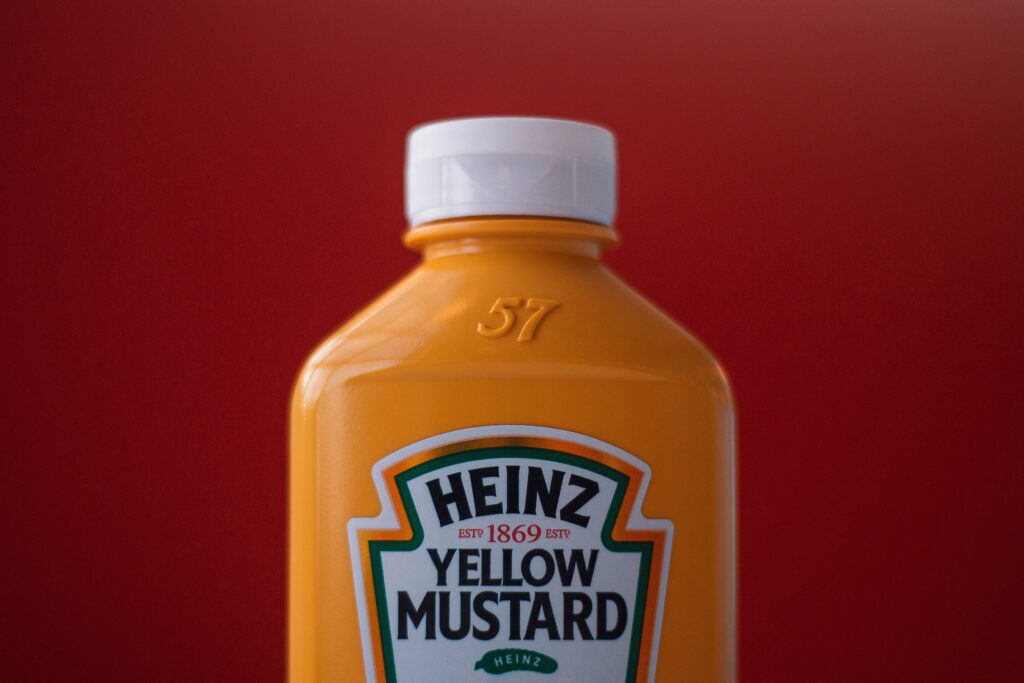
Heinz Ketchup and Hellmann’s Almost Became One — Why the Deal Collapsed Is the Real Story
Quick Answer: Kraft Heinz and Unilever held talks in recent months over a merger of Unilever’s food business and Kraft Heinz’s condiments division that would have created an entity worth tens of billions of dollars. The discussions have now ended without a deal. The failed negotiation reveals the scale of the structural crisis facing packaged food giants as health-conscious consumers turn away from legacy brands — and signals that both companies face difficult strategic choices ahead.
Kraft Heinz–Unilever Merger Talks Collapse — Exposing a Deeper Crisis in Big Food
Two of the world’s most recognisable food brands came close to ending up under the same roof. Heinz ketchup and Hellmann’s mayonnaise — condiment staples found in kitchens across Europe and North America — were at the centre of merger discussions between Kraft Heinz and Unilever that would have created a new food entity worth tens of billions of dollars. Those talks, which took place over recent months, have now ended without an agreement.
The structure being explored was a targeted carve-out and combination rather than a full corporate merger — a deliberate contrast to Kraft Heinz’s failed hostile $143 billion takeover bid for the entirety of Unilever in 2017, which was rebuffed almost immediately. That the talks happened at all is as significant as the fact that they failed. It signals that both companies are actively searching for structural solutions to a problem that is proving resistant to conventional management fixes.
What’s Actually Wrong With Big Food
The pressure on both companies flows from the same source. Both Unilever and Kraft Heinz are grappling with sluggish volume growth in the packaged food industry as health-conscious consumers shift spending away from legacy brands toward fresher, less processed alternatives. The shift is structural rather than cyclical — it does not reverse when economic conditions improve, because it is driven by changing consumer values rather than price sensitivity.
Kraft Heinz decided in February to drop plans for a break-up and instead invest $600 million in a turnaround under CEO Steve Cahillane, who took charge in January. Cahillane’s arrival from Kellanova — where he oversaw that company’s successful sale to Mars — had raised expectations of transformative deal activity. The Unilever talks appear to have been part of that ambition. Their failure means Kraft Heinz must now execute its turnaround through internal investment rather than portfolio restructuring, a harder and slower path.
Unilever’s position is equally complex. Over the past decade the company has been methodically retreating from food toward higher-margin beauty and personal care. It has carved out its spreads, tea and ice cream divisions. What remains in food is anchored by Hellmann’s and Knorr, which together account for around 75% of the division. Jefferies analysts value a standalone Unilever food business at $36-37 billion, representing an enterprise value-to-EBITDA multiple of 9.5 times. New chief executive Fernando Fernández has not ruled out disposing of the entire food business — a statement that would have been unthinkable from a Unilever CEO five years ago.
Why the Deal Fell Apart
The complexity of the carve-out and mounting regulatory hurdles proved insurmountable for both companies. Creating a standalone food entity from divisions embedded within two separate global conglomerates — each with their own supply chains, distribution networks, shared service arrangements and regulatory relationships — is an enormously complicated undertaking even before competition authorities in the EU, US and UK become involved.
The EU’s evolving merger framework would have scrutinised a combined entity controlling dominant positions in condiments and mayonnaise across European markets with particular attention. At a combined valuation in the tens of billions, the regulatory exposure was substantial on both sides of the Atlantic.
What It Means for European Markets
For European investors tracking consumer staples, the failure of the talks sharpens an already uncomfortable question: what is the right structure for legacy food brands in an era of health-conscious consumption, GLP-1 weight loss drugs reducing appetite broadly, and private-label alternatives taking shelf space in every major European supermarket?
The industry is moving toward a model where high-growth categories like snacking and beauty are separated from mature, cash-cow categories like condiments and canned goods. The logic of that separation is sound. The execution, as the Kraft Heinz-Unilever episode demonstrates, is far harder than it appears on a strategy slide.
Both companies now face their restructuring challenges separately rather than together. The broader consolidation pressure in European consumer goods has not diminished — it has simply found no resolution in this particular transaction. The next attempt at a deal of this scale in packaged food is a question of when, not whether.
Hellmann’s and Heinz remain on different shelves. For now.
The post Heinz Ketchup and Hellmann’s Almost Became One — Why the Deal Collapsed Is the Real Story appeared first on European Business & Finance Magazine.