




























From Milan to Liguria: 10 of the most promising Italian startups shaping the next tech cycle

Italy is often associated with its rich cultural heritage, strong industrial foundations, and globally recognised design and manufacturing sectors. From Milan’s role as a financial and business centre to the country’s deep-rooted expertise in engineering, construction, and logistics, Italy has long combined tradition with technical know-how. In recent years, this foundation has increasingly been paired with a new generation of technology-driven entrepreneurs building scalable companies with international ambition.
That shift is clearly visible in Italy’s startup ecosystem. Supported by growing access to venture capital, stronger links between corporates and startups, and a maturing talent pool, Italian founders are addressing complex challenges across fintech, climate tech, robotics, AI, legal tech, and B2B software. Milan remains the country’s main startup hub, but innovation is also emerging across regions such as Liguria and Lombardy, reflecting a more distributed and diversified ecosystem.
With this in mind, we’ve selected 10 promising Italian startups, all founded from 2023 onwards, and without looking for it, they all have closed funding rounds in 2025 or 2026, signalling strong investor confidence and market momentum.

Founded in 2024 and based in Milan, Brum is a mobility and EdTech startup rethinking how people obtain a Category B driving licence in Italy. The company offers a fully digital alternative to traditional driving schools, allowing learners to manage theory study, quizzes, document uploads, bookings, and progress tracking through a single mobile app. By moving most of the administrative and learning process online, Brum aims to reduce friction, waiting times, and unnecessary complexity in a system that has long been paper-based and location-bound.
The platform combines self-paced digital learning with in-person driving lessons arranged directly from the learner’s location, supported by 24/7 assistance. Having raised €8.5 million in funding, the company is focused on scaling its digital driving school model across Italy, expanding its city coverage, and continuing to automate a traditionally manual, fragmented process.

Founded in 2025 and based in Milan, Cyberwave is a robotics and Physical AI startup developing a control plane that allows organisations to deploy, manage, and scale autonomous robots without vendor lock-in. The platform is designed to act as a unifying layer across different robotic hardware, enabling developers and enterprises to orchestrate mixed robot fleets through a single, standardised interface. By abstracting hardware differences, Cyberwave allows teams to build applications once and deploy them across multiple robot types, reducing complexity and dependency on specific vendors.
Cyberwave supports a simulation-first development approach, letting teams test and train AI models in high-fidelity digital environments before deploying them to physical robots. Once in production, the platform provides fleet orchestration, real-time telemetry, over-the-air updates, and governance features such as role-based access control and safety policies. Founded in 2025, they have secured €7 million in funding to expand their AI-native robotics platform and support large-scale, production-grade deployments of autonomous systems.

Founded in 2025 and based in Liguria, Generative Bionics is a deep-tech company developing humanoid robot platforms designed for real-world industrial and operational environments. The company focuses on building human-centred Physical AI, with robots intended to work alongside people rather than replace them, particularly in contexts where labour shortages and increasing task complexity are becoming structural challenges.
Generative Bionics builds on more than two decades of Physical AI research originating from the Istituto Italiano di Tecnologia (IIT), bringing together a multidisciplinary team of around 80 professionals with extensive experience in robotics, AI, and industrial deployment. To date, the team has developed over 60 humanoid robot prototypes, with a strong emphasis on scalability and real-world applicability. Founded in 2025, the company has secured €70 million in funding to advance its humanoid platforms and support the deployment of Physical AI technologies beyond the lab and into production environments.
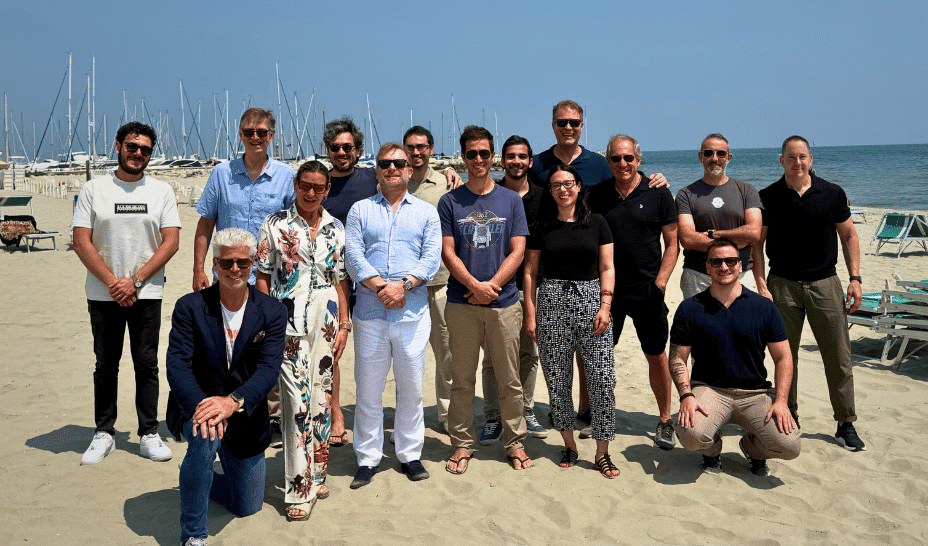
Based in Milan, IdentifAI develops technology that helps organisations and individuals determine whether digital content has been created by humans or generated by artificial intelligence. The company addresses the growing challenge of AI-driven disinformation across images, video, audio, and text, as generative tools become increasingly difficult to distinguish from authentic content.
Their platform combines proprietary AI models with linguistic and stylistic analysis to assess the origin of digital content and support informed decision-making. It’s designed for environments where trust, verification, and accountability are essential, including media, finance, insurance, intelligence, and public-sector use cases. Founded in 2024, they have secured €7.2 million in funding.

Founded in 2023 and also based in Milan, Jet HR is an HR and payroll management platform designed to reduce bureaucracy for Italian companies by bringing hiring, payroll, compliance, and workforce administration into a single digital system. The platform allows businesses to manage payslips, contracts, holidays, attendance, shifts, expenses, and health and safety requirements through guided workflows that are aligned with Italian labour law.
Jet HR is used by more than 1,000 companies across sectors such as technology, manufacturing, hospitality, and marketing, particularly those looking to streamline HR operations without building in-house expertise. Backed by approximately €41.7 million in funding, Jet HR is continuing to expand its product offering and strengthen its position as a core HR infrastructure provider for growing Italian businesses.
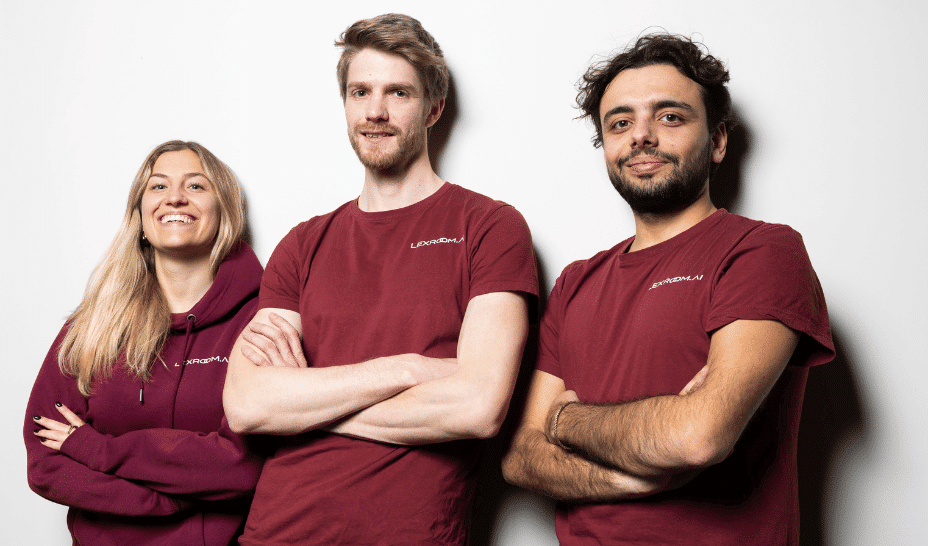
Founded in 2023 and based in Milan, Lexroom.ai is an AI-powered assistant built specifically for legal professionals, supporting research, analysis, and document drafting within a single platform. The product is designed to help lawyers, law firms, and in-house legal teams work more efficiently by providing verified, citable outputs rather than opaque or generic AI-generated responses.
Lexroom places a strong emphasis on reliability and precision, positioning its AI as a tool to support professional judgement rather than replace it. With around €18.5 million in funding, Lexroom is continuing to develop specialised modules in collaboration with law firms and expand adoption among individual professionals, legal teams, and enterprise clients.

Based in Lecco, Limenet is a climate tech company developing a patented technology for permanent carbon dioxide removal by converting CO₂ into calcium bicarbonates stored in seawater. Inspired by natural carbon absorption processes, the company’s approach uses calcium carbonate, seawater, and renewable energy to transform captured CO₂ into a stable aqueous solution with the same pH as the surrounding marine environment. The result is a long-lasting form of carbon storage that integrates into the ocean’s existing carbon cycle without increasing acidity.
In addition to atmospheric carbon removal, the process can locally increase seawater alkalinity, potentially helping counter ocean acidification. The company is currently progressing toward a first-of-a-kind industrial plant with a production capacity of around 1,500 tonnes of carbon-free lime. Founded in 2023, they have secured €13.5 million from a mix of institutional investors and public programmes to support technology development, certification, and the scale-up of their removal capacity.

Founded in 2025 and based in Milan, Pillar is a construction-focused software platform designed to bring finance, site management, and administration into a single system tailored specifically for construction companies. The platform replaces fragmented workflows built around spreadsheets, accounting tools, and disconnected portals by centralising cash flow tracking, invoices, construction site data, and documentation in one interface.
It integrates AI-driven features to automate routine tasks such as extracting data from documents, matching invoices with payments, tracking costs and margins per site, and updating reports through tools like a WhatsApp-based assistant used directly on construction sites. By connecting operational data from the field with financial and administrative processes, the platform helps companies make decisions faster and with fewer errors. To date, Pillar has secured €3.2 million in funding.

Also based in Milan, Qomodo is a payments platform designed for physical merchants that want to improve cash flow while offering flexible payment options to their customers. It allows businesses to get paid immediately, while customers can split payments into interest-free instalments, removing the friction typically associated with delayed payments or traditional Buy Now, Pay Later solutions.
The platform combines several tools in one system, including BNPL, a smart POS, and payment-by-link options via SMS, email, or messaging apps. Integration with existing management software is handled through a small set of APIs, keeping onboarding fast and operational complexity low. Founded in 2023, they have secured €48 million, aiming to make payments more predictable and accessible for both sides of the transaction.

Founded in 2024 and based in Milan, Volta is a B2B SaaS company developing an AI-powered platform designed to unify and automate complex sales and operational processes. The platform connects directly with existing ERP, CRM, and PIM systems, bringing pricing, orders, inventory, customer data, and distribution channels into a single collaborative environment. By centralising orders from email, WhatsApp, PDFs, spreadsheets, portals, and sales agents, Volta helps teams replace fragmented workflows with a shared, real-time operational view.
Beyond consolidation, Volta uses AI to automate repetitive administrative tasks such as order entry, pricing configuration, and catalogue updates, significantly reducing errors and manual workload. On the commercial side, its intelligence layer analyses customer and sales data to identify priority actions, optimise buying and selling strategies, and support sales teams with recommendations and insights directly embedded into their daily workflows. To date, they have raised €11 million, supporting the continued development of their AI-driven approach to modernising B2B commerce operations.
By the way: If you’re a corporate or investor looking for exciting startups in a specific market for a potential investment or acquisition, check out our Startup Sourcing Service!
The post From Milan to Liguria: 10 of the most promising Italian startups shaping the next tech cycle appeared first on EU-Startups.