



























China and Europe Launch SMILE — A Space Mission Aimed at Protecting the Global Economy From Solar Storms
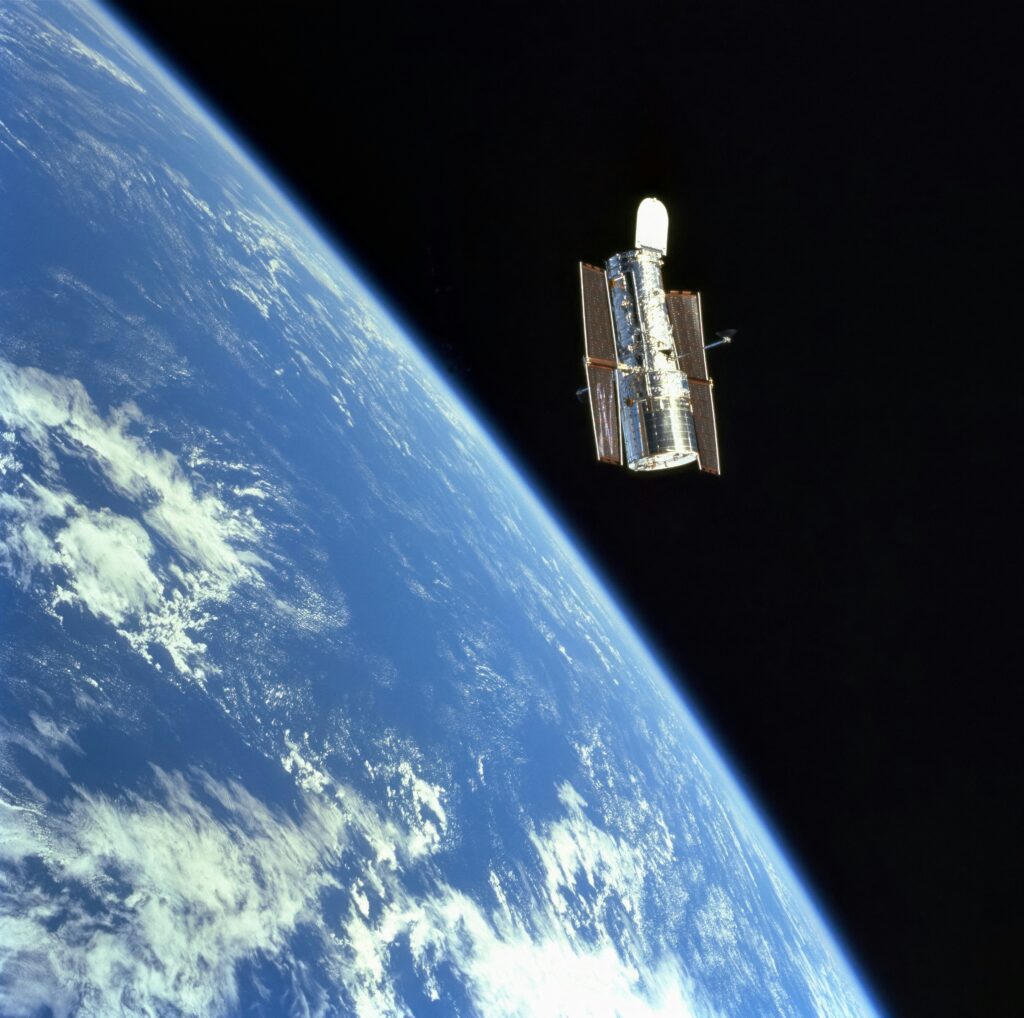
Quick Answer: On April 9, 2026, the European Space Agency and the Chinese Academy of Sciences will launch SMILE — the Solar Wind Magnetosphere Ionosphere Link Explorer — aboard a Vega-C rocket from French Guiana. It is the first mission ever jointly designed, built, launched and operated by ESA and China. The 2,300kg satellite will orbit up to 121,000km above Earth to study how solar wind interacts with the planet’s magnetic shield, with direct implications for protecting satellite infrastructure, financial systems, power grids and communications networks from space weather events.
EBM Analysis: Why a Space Weather Mission Has Serious Economic Consequences
At a moment when geopolitical fault lines are deepening by the week — the Iran war reshaping global energy markets, central banks quietly repositioning away from dollar assets, US-China tensions defining the technology investment landscape — Europe and China are doing something that cuts across every political narrative. They are launching a satellite together.
SMILE has been a decade in the making. Selected in 2015 from 13 competing proposals under a joint ESA-Chinese Academy of Sciences call, the mission entered development in 2016 and has survived technical setbacks, COVID delays, export control complications and the deterioration of Western-Chinese relations that has made scientific collaboration politically uncomfortable. The fact that it is launching at all in April 2026 is itself a statement.
The mission’s scientific objective is to give humanity its first comprehensive, simultaneous view of how Earth’s magnetosphere — the invisible magnetic shield that makes life on this planet possible — responds to solar activity. Four instruments will work in concert: a soft X-ray imager, an ultraviolet aurora imager, a light ion analyser and a magnetometer. The satellite will spend up to 40 hours per orbit observing the interaction between solar wind and Earth’s magnetic boundaries, reaching an altitude of 121,000km above the North Pole. ESA built the payload module through Airbus in Spain. China’s Academy of Sciences built the service module and three of the four instruments. Over 250 European and Chinese scientists form the research consortium.
The business case is straightforward. Space weather — geomagnetic storms triggered by solar flares and coronal mass ejections — is one of the most underpriced systemic risks in the global economy. A sufficiently powerful solar storm can knock out satellite constellations, disable GPS infrastructure, collapse power grids and disrupt the financial transaction networks that Europe’s payments infrastructure and global commerce depend on. The 1989 Quebec blackout — caused by a geomagnetic storm — left six million people without power for nine hours. A Carrington-scale event today, hitting the satellite and power infrastructure that the global economy runs on, would cause damage measured in trillions.
SMILE’s three-year mission will not prevent solar storms. But it will generate the data needed to predict them earlier and with more precision — giving grid operators, satellite managers and financial infrastructure providers the warning time to protect their systems. That has direct economic value. The artificial intelligence tools being built to analyse space weather data could, within a decade, make real-time solar storm prediction as routine as weather forecasting.
The geopolitical dimension is not incidental. This is the first mission that ESA and China have jointly designed, implemented, launched and will jointly operate — a level of integration that goes well beyond instrument-sharing on third-party satellites. ESA Director General Josef Aschbacher and China National Space Administration chief Shan Zhongde met in Paris in January 2026 — their agencies’ first such meeting since 2017 — and discussed future collaboration including possible European involvement in China’s Tianwen-3 Mars sample return mission, scheduled for 2028.
In an era defined by decoupling, SMILE is a reminder that some problems — solar physics, space weather, the protection of shared planetary infrastructure — require the kind of collaboration that geopolitics makes difficult but cannot make entirely impossible.
The Vega-C lifts off from Kourou on April 9 at 08:29 CEST. The global economy it is designed to help protect will barely notice. That is, until the day it needs it.
The post China and Europe Launch SMILE — A Space Mission Aimed at Protecting the Global Economy From Solar Storms appeared first on European Business & Finance Magazine.