


















Arsenal’s £124m Champions League Run — The Final Could Add £200m More
EBM Newsdesk Analysis
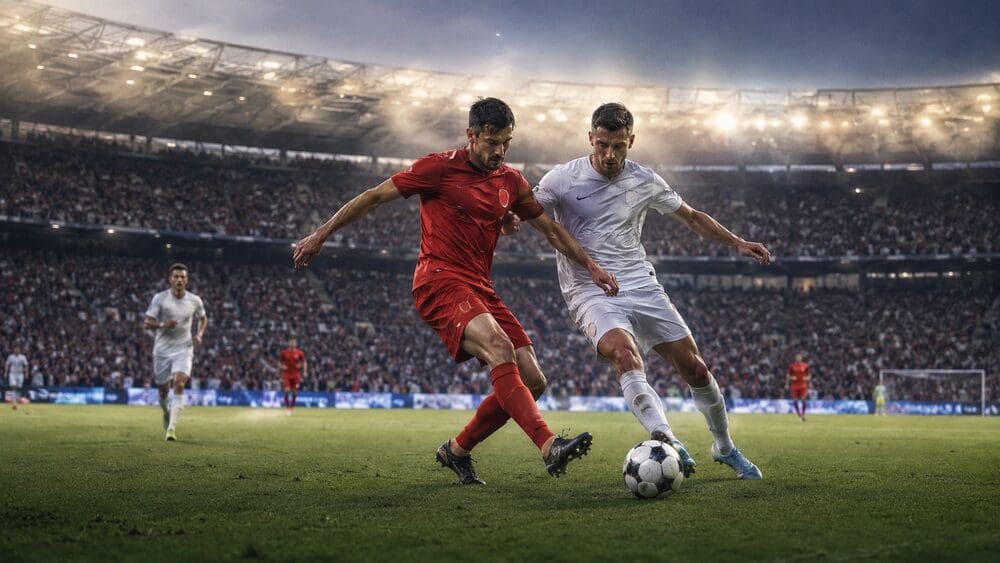
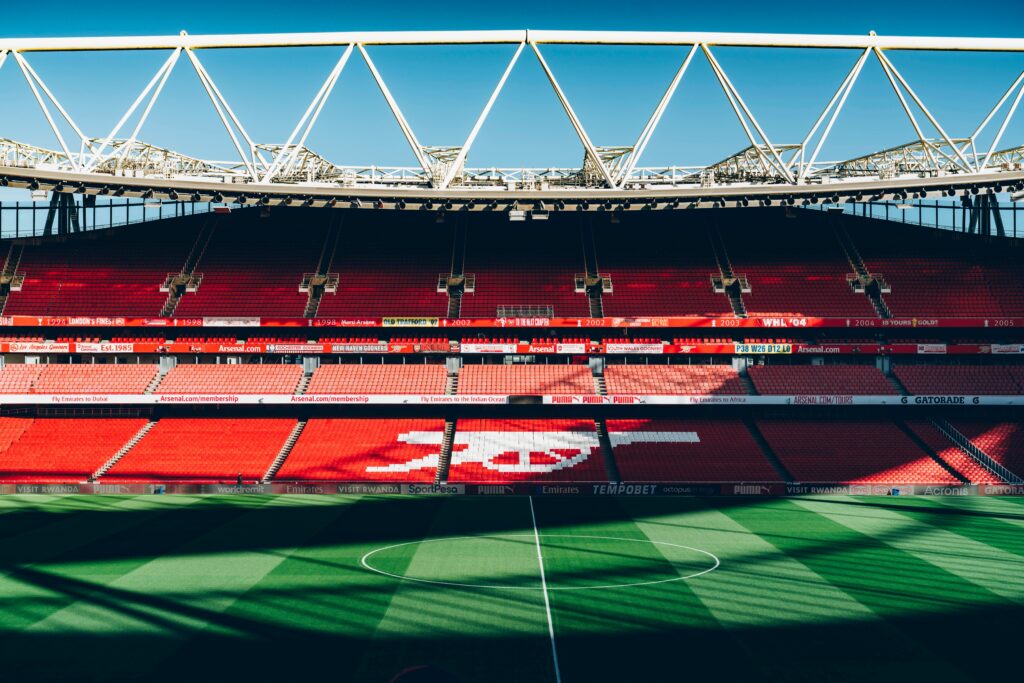
LONDON, May 6 — Arsenal’s 1-0 victory over Atletico Madrid at the Emirates last night sealed a 2-1 aggregate win and a place in the UEFA Champions League final — the club’s first since 2006. The footballing achievement is significant. The financial achievement is larger still. The Gunners have already banked an estimated €143.5 million (£124 million) in UEFA prize money for the 2025/26 campaign — more than Paris Saint-Germain received for actually winning the trophy last season. Victory in the final later this month would lift the total to €150 million (£129.6 million) in UEFA payments alone, before the gate receipts, commercial uplifts, sponsorship triggers, player bonuses and squad-value compounding effects are factored in. Once those are added, Arsenal’s full economic return on the campaign comfortably clears £200 million.
The numbers are unprecedented because UEFA’s revamped Champions League format, introduced for the 2024/25 season, has redistributed prize money in favour of high-performing clubs in larger broadcast markets. Arsenal won all eight of their league phase games, finished top of the 36-team table, and have now navigated three knockout rounds. The combination of perfect group-stage results, a top-of-the-table finish, deep knockout progression, and the UEFA “value pillar” coefficient — which rewards clubs in markets with high broadcast revenues — has produced the largest single-season Champions League payday by any English club in the history of the competition.The campaign that takes Arsenal back to the Champions League final has also produced one of the most lucrative single seasons in English football history.
Where the £124m Has Come From
The Champions League prize pool breaks down into four layers, all of which have rewarded Arsenal heavily this season.
Participation and league-phase fees. Simply qualifying for the league phase guaranteed every participating club a baseline payment of €18.62 million (£15.9 million). Each league-phase win was worth around €2.1 million. Arsenal won all eight of their group games — a unique achievement in the new format — banking the maximum €16.8 million in performance fees, plus position-finishing bonuses tied to topping the 36-team table.
Knockout-round progression bonuses. UEFA pays clubs at every stage. Round of 16 qualification was worth €11 million. Quarter-final progression added €12.5 million. Reaching the semi-finals brought another €15 million. Beating Atletico Madrid last night to reach the final triggered a further €18.5 million — the single largest progression payment in the tournament. Arsenal have now collected at every checkpoint.
The UEFA “value pillar” payment. This is the technical mechanism that has lifted English clubs disproportionately. UEFA distributes a portion of its prize pool based on a combined ranking of (a) the broadcast value of each club’s domestic market and (b) each club’s UEFA coefficient over the past five and ten years. Arsenal’s value-pillar payment is estimated at €37 million (£32 million) by Swiss Ramble, the football finance analyst. The Premier League’s broadcast dominance — combined with Arsenal’s recent Champions League consistency — has compounded into the single largest line item of their European payout.
The win bonus and Super Cup qualification. Should Arsenal beat Bayern Munich or Paris Saint-Germain in the final, a further €6.5 million winners’ bonus is paid. Champions League winners also automatically qualify for the 2026 UEFA Super Cup against the Europa League winner — worth an additional €4 million in participation, with €1 million more for the Super Cup victor. Total potential UEFA payments if Arsenal lift the trophy: €150 million, or £129.6 million.
What the £124m Doesn’t Include
The UEFA payments are only part of the campaign’s financial return.
Gate receipts. The Emirates Stadium has a 60,704 capacity. Champions League tickets at the Emirates carry a significant premium over Premier League prices — particularly for knockout matches, where category one seats have sold for in excess of £200. Conservative estimates put Arsenal’s matchday revenue from the seven home Champions League fixtures (four league phase, three knockout) at £40-50 million for the season. The Champions League final itself is held at a UEFA-allocated venue, so Arsenal does not bank gate receipts from it directly — but the run-to-the-final premium has materially lifted matchday revenue across the campaign.
Commercial and sponsorship triggers. Most modern football kit deals, training-kit sponsorships, and shirt-front partnerships contain Champions League performance-related uplifts. Arsenal’s Emirates shirt sponsorship deal and Adidas kit deal both include bonus structures tied to European progression. Industry estimates suggest a Champions League final appearance unlocks £8-12 million in sponsorship-related uplifts for a top-tier Premier League club. Winning the trophy can lift that figure further. The visibility — Arsenal is now guaranteed broadcast exposure to the global Champions League final audience of an estimated 450 million viewers — also supports renegotiation of forthcoming sponsorship cycles at materially higher rates.
Broadcast revenue uplifts. Premier League TV revenue is partly performance-linked through the “facility fee” structure, which rewards clubs whose matches are selected for broadcast. Champions League runs lift Premier League broadcast attention to a club’s domestic fixtures, increasing the facility-fee component. Arsenal’s deep European run will translate into a higher Premier League broadcast revenue share for the season.
Squad valuation effects. Champions League final participation lifts the market value of every member of the squad. This is not direct cash, but it expands Arsenal’s transfer-market leverage in the summer window. The cohort of players whose values rose materially through the European run — Saka, Odegaard, Saliba, Rice — now command higher fees if sold and command higher valuations on the balance sheet under amortisation accounting.
What the Players and Manager Will Receive
Player bonus structures at Premier League clubs are generally confidential, but the standard architecture at Arsenal is well-understood. There are three layers.
Squad-level performance bonuses. Each player typically receives a bonus pool contribution based on collective trophy and progression milestones — Champions League final qualification, Champions League victory, Premier League finishing position. A Champions League final appearance triggers a meaningful payment for the entire first-team squad. Estimates from comparable English clubs suggest the squad bonus pool for Champions League final qualification at a club of Arsenal’s scale is in the order of £15-25 million, distributed by appearance and contract terms.
Individual contract clauses. Senior players — particularly those signed in the past two seasons — typically have individual bonus clauses for Champions League progression milestones. Bukayo Saka, Martin Odegaard, William Saliba, Declan Rice and Kai Havertz are among those most likely to have material individual triggers. Industry estimates put senior-player Champions League final bonuses at £200,000-£500,000 each, with the winner’s bonus running materially higher.
Manager and staff payments. Mikel Arteta’s contract, renewed in September 2024, is widely reported to include Champions League progression bonuses. The estimated value of his Champions League final appearance bonus is £1-2 million, with a winners’ bonus likely in the £3-5 million range. Senior coaching and analytical staff also share in performance pools.
The total payroll-cost increase for Arsenal across the bonus structure of the campaign is estimated at £25-40 million — significant in absolute terms, but a fraction of the prize money inflow.
What This Means for Arsenal’s Business
For Arsenal Football Club’s business operations, the campaign delivers three structural improvements.
Transfer-market firepower. The £124 million in UEFA payments effectively underwrites the summer transfer window. With Premier League amortisation rules constraining how new signings hit the books, Arsenal can now operate in the £150-200 million net spend range without breaching financial fair play or PSR limits. The competitive squad-rebuild that Mikel Arteta has been pursuing now has the financial backing to accelerate.
FFP / PSR positioning. Champions League prize money flows directly to the bottom line. Arsenal’s PSR position for the three-year cycle ending 2025/26 will be materially stronger as a result — giving the club latitude to spend in 2026/27 that would not have existed under a less successful European campaign.
Brand value compounding. Reaching a Champions League final lifts Arsenal back into the conversation as a top-tier European football club after a near-twenty-year absence. The brand equity benefit is harder to quantify in immediate cash terms, but is significant for the next round of commercial negotiations — particularly the kit deal, the shirt sponsorship and the regional partnership portfolio.
The next test arrives at the final itself. Beating Bayern Munich or Paris Saint-Germain unlocks the final €10.5 million in UEFA payments, plus a winners’ bonus pool for the squad, plus the long-term commercial and brand effects of being European champions. For a club whose European drought has lasted since the Henry-Pires-Vieira era, that final test is worth, in immediate cash terms alone, the better part of another £15 million — and over the medium term, considerably more.
Related Analysis
The post Arsenal’s £124m Champions League Run — The Final Could Add £200m More appeared first on European Business Magazine.