

























Why Macron’s Unprecedented Nuclear Aid Plan Could Reprice Europe’s Defence Stocks
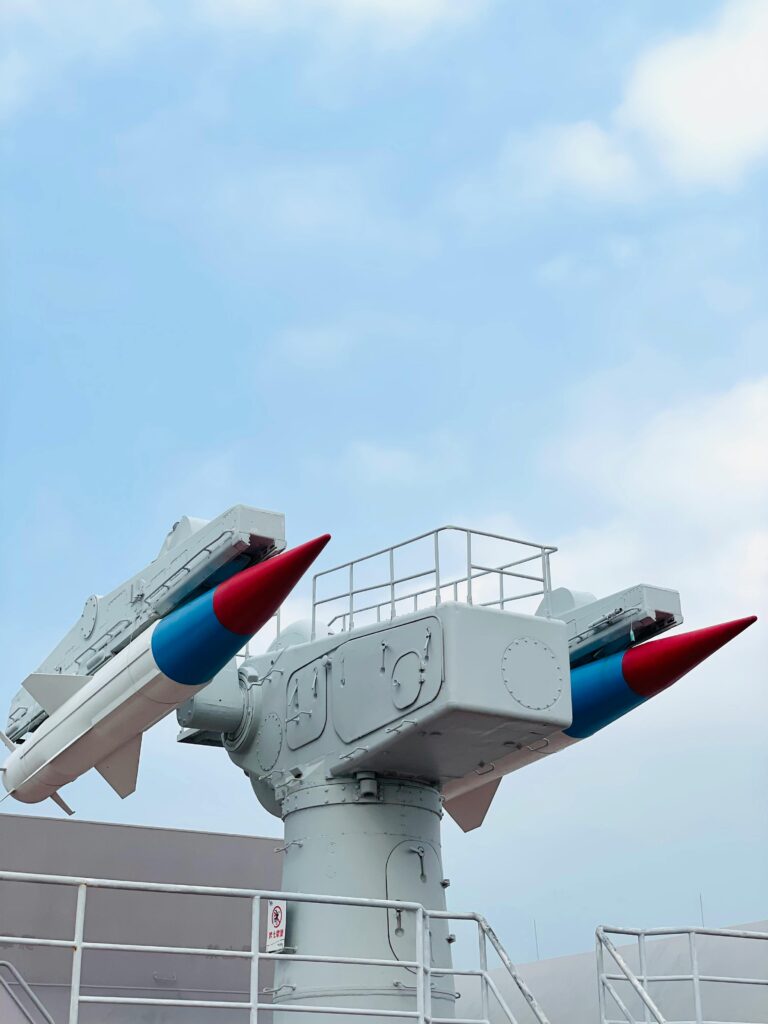
France just redrew the map of European security — and the capital allocation map with it.
Emmanuel Macron’s speech at Île Longue marks a genuine inflection point. The French president has offered, for the first time, to temporarily deploy elements of France’s nuclear deterrent — fighter jets, support infrastructure, potentially submarine-adjacent assets — on allied European territory. He calls it “forward deterrence.” Markets should call it what it is: the single most significant upgrade to Europe’s collective defence posture since NATO’s eastward expansion in the 1990s.
The doctrine brings seven European partners — Germany and Poland chief among them — into deeper cooperation with France’s nuclear apparatus. Not co-ownership of warheads, but participation in exercises, conventional force deployments on support missions, and the kind of signal-sending to adversaries that previously sat exclusively within NATO’s dual-key framework. Paris is essentially building a parallel European deterrence architecture, one that does not depend on whether Washington picks up the phone.
The strategic logic
The timing is not accidental. American security guarantees feel less ironclad than at any point since 1949. The war in Ukraine has exposed European dependence on US munitions, intelligence, and political will — all of which proved more conditional than the treaties implied. Macron is filling a credibility gap. If Europe cannot rely on the American nuclear umbrella with absolute certainty, then France’s force de frappe becomes the continent’s last-resort insurance policy. Forward-deploying elements of that capability tells Moscow — and Washington — that Europe is preparing to stand on its own.
For Germany and Poland, the calculus is straightforward. Both sit on NATO’s eastern frontier. Both have spent the past three years rearming at speed. The chance to exercise alongside French nuclear-capable platforms, and to host deterrence assets in a crisis, closes a gap that conventional spending alone cannot fill. This is not proliferation — it is extended deterrence with a French accent.
What it means for defence equities
The investment implications cut across three layers.
First, the prime contractors building France’s deterrent stand to benefit directly. Macron has pledged to expand the arsenal. That means additional procurement for the air-launched cruise missile programme, submarine construction and maintenance, and the constellation of sensors and command systems that tie the deterrent together. Dassault Aviation, Naval Group, MBDA, and Thales are the obvious recipients. Order books were already stretched; this adds duration and scale.
Second, the interoperability requirement creates demand across borders. If German and Polish conventional forces are going to operate alongside French nuclear platforms, they need compatible communications, hardened logistics, and integrated air defence. That pulls companies like Rheinmetall, KNDS, and Saab deeper into a cross-European defence-industrial web. The political mandate for joint procurement — long discussed, rarely executed — just got materially stronger.
Third, and most importantly for portfolio positioning, the doctrine signals that European defence spending is structurally higher for longer. Forward deterrence is not a one-off announcement. It requires standing infrastructure, regular exercises, pre-positioned equipment, and permanent staff. It embeds defence expenditure into the fiscal baseline in a way that a single year’s budget uplift does not. For investors still debating whether the post-2022 European rearmament cycle has legs, Macron just answered the question.
The risk
Execution risk is real. French domestic politics remain fractious, and sustaining defence investment through budget cycles is harder than announcing it at a naval base. Allied cooperation depends on diplomatic alignment that can shift with elections in Berlin, Warsaw, or Paris itself. And any perception that France is building a rival to NATO rather than a complement could trigger friction with Washington at a moment when transatlantic cohesion still matters.
But the direction of travel is clear. Europe is building its own deterrence infrastructure, and the companies supplying it are entering a multi-decade demand cycle. The forward deterrence doctrine does not just reposition French missiles — it repositions capital.
The post Why Macron’s Unprecedented Nuclear Aid Plan Could Reprice Europe’s Defence Stocks appeared first on European Business & Finance Magazine.