




















Why Iran’s Most Dangerous Weapon in This War Isn’t a Missile. It’s the Yuan
QUICK ANSWER
A senior Iranian official has told CNN that Tehran is considering allowing a limited number of oil tankers through the Strait of Hormuz — but only if cargo is traded in Chinese yuan, not US dollars. The condition, if formalised, would represent the most significant challenge to the petrodollar system in its fifty-two-year history, striking at the financial architecture that underpins American global power rather than at US military assets.
Fourteen days into the war that began with US and Israeli strikes on Iran on 28 February, the strategic picture has shifted in ways that no oil price chart yet reflects. While markets have focused on Brent crude’s surge above $100 a barrel and the humanitarian catastrophe unfolding across the Persian Gulf region, a single sentence attributed to a senior Iranian official on Friday may prove more consequential than any of the preceding military exchanges.
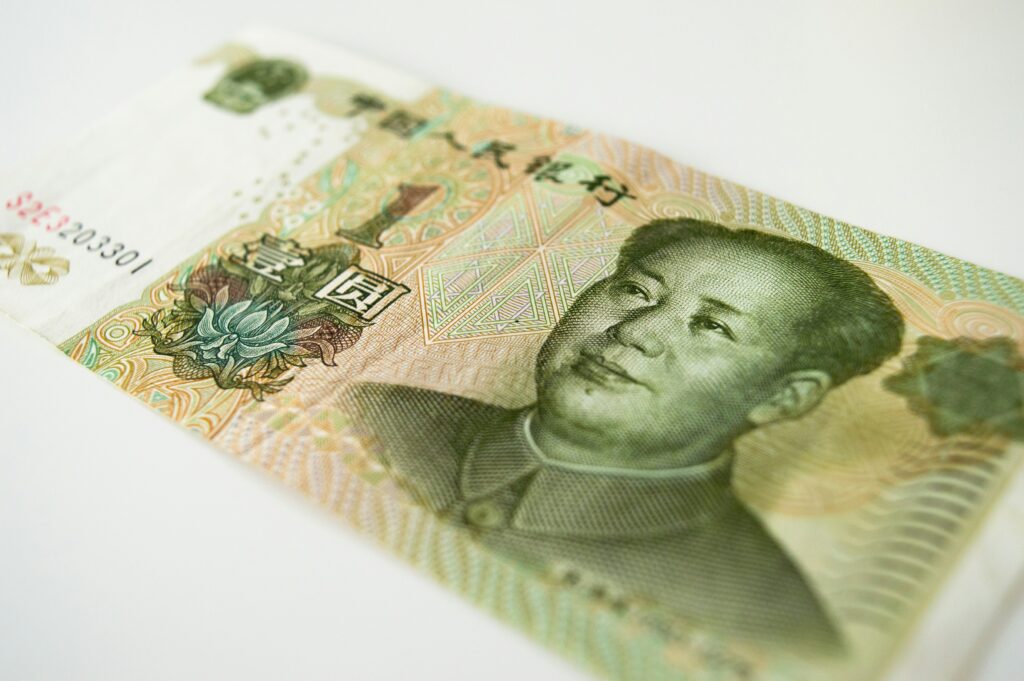
Iran is considering allowing a limited number of oil tankers to pass through the Strait of Hormuz on the condition that the cargo is traded in Chinese yuan, a senior Iranian official told CNN. Yenisafak The official described the potential move as part of Tehran’s plan to manage the controlled reopening of the strategic waterway, which has been effectively closed since March 1 following US-Israeli attacks on Iran. Yenisafak
The financial implications deserve more attention than they have so far received.
The Architecture of American Financial Power
To understand why the yuan condition matters, it is necessary to understand what the petrodollar system actually is. Born from the Nixon shock of 1971 and formalised in 1974, the arrangement under which Saudi Arabia and the broader Gulf agreed to denominate all oil sales in US dollars created a self-reinforcing loop that has governed global finance ever since. Because oil — the world’s most traded commodity — must be purchased in dollars, every nation that imports energy must first acquire dollars. Every central bank holds dollar reserves for precisely this reason. The dollar’s status as the world’s primary reserve currency is not an abstract achievement; it flows directly and mechanically from oil.
Global oil is predominantly traded in US dollars, except for sanctioned Russian oil, which is priced in roubles or yuan. Yenisafak Iran’s proposal would extend that exception to the world’s single most critical maritime chokepoint.
The Strait as a Financial Weapon
The Strait of Hormuz, a major maritime choke point for global energy trade, has experienced ongoing geopolitical and economic disruption since 28 February 2026, following joint military strikes by the United States and Israel on Iran, which included the killing of Iran’s supreme leader Ali Khamenei. Wikipedia
Starting on March 4, 2026, Iranian forces declared the Strait “closed,” threatening and carrying out attacks on ships attempting to transit. USNI News The disruption is not marginal. The conflict disrupted approximately 20% of global oil supplies transiting the Strait of Hormuz, causing prices on the Brent crude oil market to rise from around $70 to over $110 per barrel within days. Wikipedia
At least 16 oil tankers, cargo ships and other vessels have been attacked in and around the Strait of Hormuz, the Arabian Gulf and the Gulf of Oman since the war began two weeks ago, according to the UK’s maritime agency. CNN War-risk insurance through the strait has become effectively prohibitive for most commercial operators.
The United States has responded to the blockade with escalating military pressure. Trump said the US bombed “every military target” on Iran’s Kharg Island and threatened to attack the island’s oil infrastructure if Iran continues to block ships from traversing the strait. CNN
Iran’s response was not another missile strike. It was the yuan condition.
A Bifurcated Oil Market Takes Shape
What makes the Iranian proposal structurally significant is not simply that it challenges the dollar — de-dollarisation rhetoric has circulated for years without materialising into meaningful change. What is different here is the mechanism. Tehran is not merely proposing that some bilateral trade occur in yuan. It is proposing that access to the world’s most critical energy chokepoint be conditional on currency denomination.
The practical consequence, if even partially adopted, would be a bifurcated global oil market: yuan-denominated barrels flowing through Hormuz for those willing to pay in China’s currency, dollar-denominated barrels rerouted at significant additional cost and time for those who are not. The war premium that Western energy importers are already absorbing would become structural rather than temporary.
This is not hypothetical infrastructure. Since 28 February, between 11.7 and 16.5 million barrels of Iranian crude have transited the Strait to China via shadow fleet under IRGC protection while every other nation’s shipping is locked out. China pays in yuan. China’s tankers move freely. X The architecture for a parallel yuan-denominated energy corridor already exists and is already operating.
On March 5, the IRGC announced that Iran would keep the Strait of Hormuz closed only to ships from the US, Israel and their Western allies. On March 13, Turkey’s transport minister said that Iran approved the passage of a Turkish ship through the strait. It was also reported that two Indian-flagged gas carriers and a Saudi oil tanker with one million barrels for India were allowed to pass. Wikipedia
Selective passage is already the reality. The yuan condition would formalise the criteria.
Washington’s Dilemma
The United States faces a set of choices, none of them comfortable. Forcing the Strait open militarily — the option Trump has repeatedly signalled — would require sustained naval operations against an adversary with mines, shore-based missiles, submarines and drone swarms in confined waters. The Congressional Research Service, in a report delivered to Congress on 11 March, noted that while there had been consensus among analysts that the US military has the capacity to counter Iran’s forces and restore the flow of shipping, such an effort would likely take some time — days, weeks, or perhaps months — depending on what forms an Iranian attempt to close the Gulf to shipping might take. USNI News
Every week of delay is a week in which energy-importing nations confront the practical reality of the yuan alternative. India, which received Iranian assurances of safe passage directly from Tehran’s ambassador, is already navigating that calculus. So are Turkey, and the Gulf states now diverting oil through the East-West pipelines to Yanbu and Fujairah — pipelines that cannot absorb the full volume that previously transited Hormuz.
The capacity of these pipelines is unable to match the amount of oil shipped through the strait, with a deficit of about 12 million barrels per day. Wikipedia The arithmetic of energy desperation is working in Iran’s favour.
The Longer Game
It would be analytically premature to conclude that the petrodollar system is imminently at risk of collapse. The dollar remains the world’s primary reserve currency, underpinned by the depth and liquidity of US capital markets, decades of institutional trust, and the absence of any credible single alternative. China has sought for years to expand the use of yuan in oil transactions, but the dollar remains the world’s primary reserve currency. Yenisafak
What the Hormuz crisis does represent, however, is the most operationally specific challenge to dollar energy dominance since the system was established. Previous de-dollarisation discussions were theoretical. This one comes with a chokepoint, a shadow fleet, an operational payment system, and a geopolitical crisis that has already lasted two weeks with no clear resolution in sight.
The bombs are visible. The financial architecture being renegotiated behind them is not.
FAQs
What is the petrodollar system and why does the yuan condition threaten it? The petrodollar system refers to the post-1974 arrangement under which oil is priced and traded globally in US dollars, creating structural global demand for dollar reserves. Iran’s condition that Hormuz passage be paid in yuan would, if adopted by energy importers, redirect a portion of that structural demand away from the dollar and toward China’s currency, weakening one of the foundational pillars of dollar reserve dominance.
Has Iran actually closed the Strait of Hormuz before? Iran has previously threatened closure but never fully implemented it at this scale. The February-March 2026 conflict represents the most severe disruption to Hormuz traffic in the waterway’s modern history, with tanker traffic dropping to near zero following the US-Israeli strikes that began on 28 February.
Could the yuan realistically replace the dollar in global oil trade? Not quickly, and not fully. China’s CIPS payment system has expanded significantly, and yuan-denominated oil trades already occur with Russian and Iranian crude. However, the dollar’s reserve currency status is reinforced by capital market depth, liquidity, and institutional inertia that no single crisis is likely to dissolve. The more likely near-term outcome is a fragmented market with parallel pricing systems rather than a clean currency transition.
The post Why Iran’s Most Dangerous Weapon in This War Isn’t a Missile. It’s the Yuan appeared first on European Business & Finance Magazine.