





















Why Greece Could Become Europe’s Most Important Gas Hub
Quick Answer: As the EU phases out Russian gas by 2027, Greece is leveraging its geography, two operational LNG terminals, and deepening ties with Washington to become the entry point for US liquefied natural gas into southeastern and central Europe. The Vertical Corridor — a pipeline network running from Greek terminals through Bulgaria, Romania, and Moldova to Ukraine — is the infrastructure bet that could make it happen.
For decades, Thrace sat at the southeastern edge of Europe as a geopolitical afterthought — remote, underfunded, and largely ignored by Brussels. Today it is at the centre of a multibillion-euro energy redesign that could reshape how gas flows across the continent.
The catalyst is straightforward. The EU has legislated a full ban on Russian gas: spot LNG imports are already prohibited, long-term LNG contracts end in January 2027, and pipeline gas must cease by September 2027. Before Russia’s full-scale invasion of Ukraine, Moscow supplied roughly 40% of the bloc’s natural gas. By the first half of 2025, that share had fallen to 13%, but still represented over €15 billion in annual payments. Europe needs replacement supply at scale, and it needs infrastructure to deliver it to the countries most exposed — particularly in central and eastern Europe.
Greece’s pitch is that it can be the front door.
Two Terminals, One Corridor
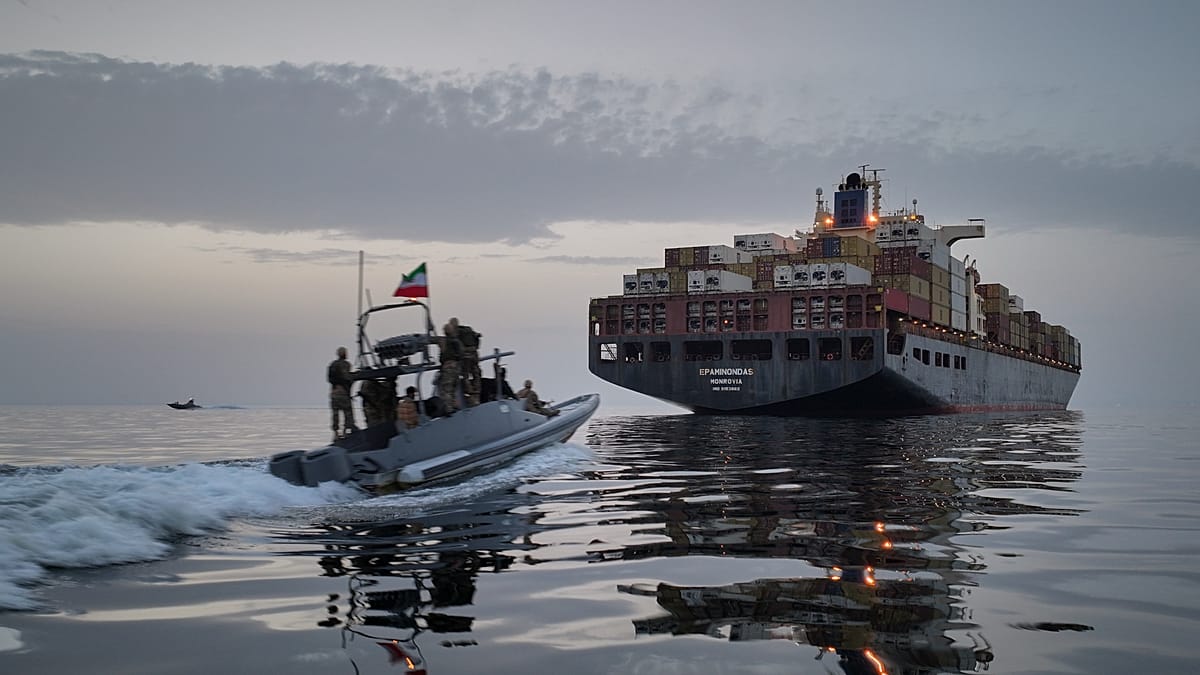
The country operates two LNG receiving facilities. The first is the Revithoussa terminal on a small island west of Athens, originally built in 1999 and expanded in 2018, with a regasification capacity of roughly 5.1 billion cubic metres per year. The second is the Alexandroupolis FSRU — a floating storage and regasification unit that began commercial operations in October 2024 with a maximum capacity of 5.5 billion cubic metres annually, equivalent to 50–55 LNG tanker deliveries per year.
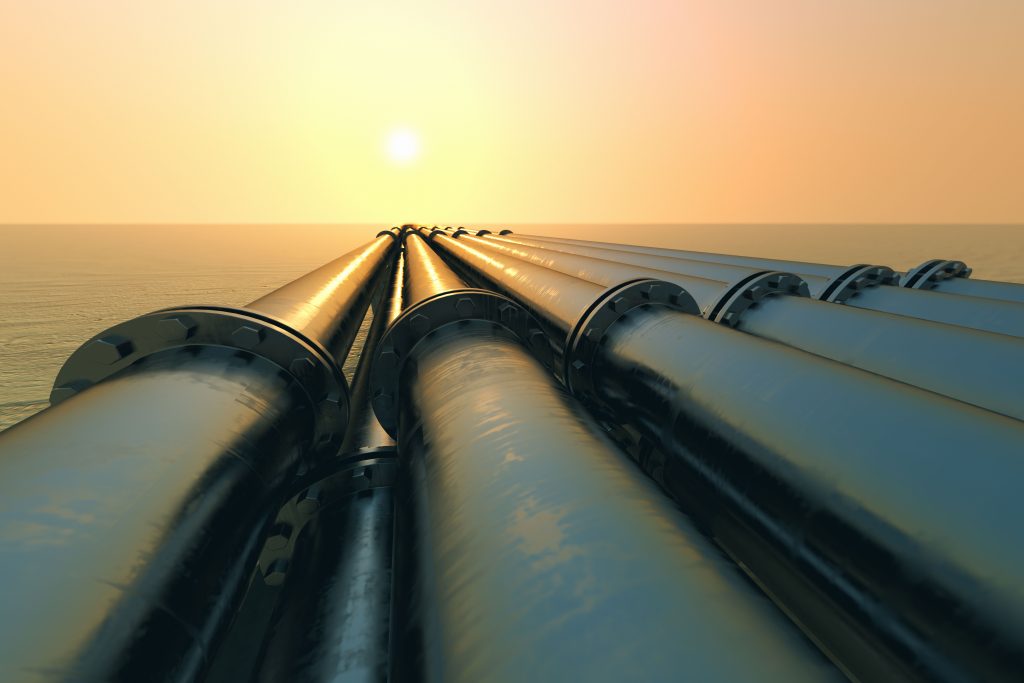
From these two entry points, regasified LNG flows northward through the Vertical Corridor, a cross-border pipeline network connecting Greece with Bulgaria, Romania, Moldova, and Ukraine. The corridor was assembled largely from existing infrastructure after 2022, when Russia cut off gas supplies to Bulgaria after Sofia refused to pay in roubles. Five national transmission operators — Greece’s DESFA, Bulgaria’s Bulgartransgaz, Romania’s Transgaz, Moldova’s VestMoldTransgaz, and Ukraine’s GTSOU — now coordinate capacity along the route, including a dedicated monthly booking product for deliveries from Greek terminals to Ukrainian underground storage facilities.
The same corridor can serve Hungary, Slovakia, and potentially Austria and Italy via the Trans Adriatic Pipeline (TAP), which already carries Caspian gas from Azerbaijan through Greece to southern Europe.
US Money, US Gas
Washington has thrown significant weight behind the project. US LNG now accounts for nearly 60% of the EU’s total LNG imports, and the Turnberry trade deal struck last July included a pledge that the EU would purchase $750 billion in US energy products over three years. Greece’s energy minister Stavros Papastaurou has framed the relationship in explicitly strategic terms, positioning energy security as a cornerstone of transatlantic cooperation.
The financial backing is concrete. EXIM and the US International Development Finance Corporation have both expressed interest in financing a second FSRU at Alexandroupolis. The planned unit, named FSRU Thrace, has received environmental approval from the Greek government and would sit alongside the existing facility. Gastrade, the operator of the Alexandroupolis terminal, is leading the development.
However, the project carries a price tag of approximately €600 million — a sum its management says cannot be raised without European institutional support or US financing. A dedicated meeting organised by the US Department of Energy in Washington in late February brought together energy ministers and industry representatives from central and eastern European countries, alongside a European Commission delegation led by EU energy director general Ditte Juul Jørgensen. Financing for the Vertical Corridor was the top agenda item.
The Risks
Greece’s ambitions are not without complications. The Chatham House think tank has cautioned that long-term dependence on US LNG carries economic and environmental risk. Unlike pipeline gas, US LNG is traded on free-on-board terms, meaning sellers can redirect shipments to the highest bidder anywhere in the world. Greece and its neighbours would remain exposed to global price volatility regardless of how much terminal capacity they build.
European gas demand is also expected to decline as the energy transition accelerates, raising the possibility that new LNG infrastructure becomes underutilised. The Revithoussa terminal historically operated well below capacity even during periods of peak domestic demand.
There is also the question of Brussels. The European Commission has until recently resisted financing new gas infrastructure on the grounds that it conflicts with climate neutrality targets. That stance is softening under pressure from member states and the reality that natural gas will remain part of Europe’s energy mix as a bridge fuel for years to come. The outcome of that debate — expected to crystallise in 2026 — will determine whether projects like FSRU Thrace receive the European co-financing they need to proceed.
For now, Greece holds a geographic advantage that no amount of policy debate can relocate. It sits at the intersection of US supply and central European demand, with infrastructure that already works and expansion plans that have both Washington’s backing and Brussels’ attention. Whether it becomes Europe’s permanent gas gateway — or an expensive bridge to nowhere — depends on decisions being made in the next 12 months.
The post Why Greece Could Become Europe’s Most Important Gas Hub appeared first on European Business & Finance Magazine.