




















When the World Cup Turns Players into Gold
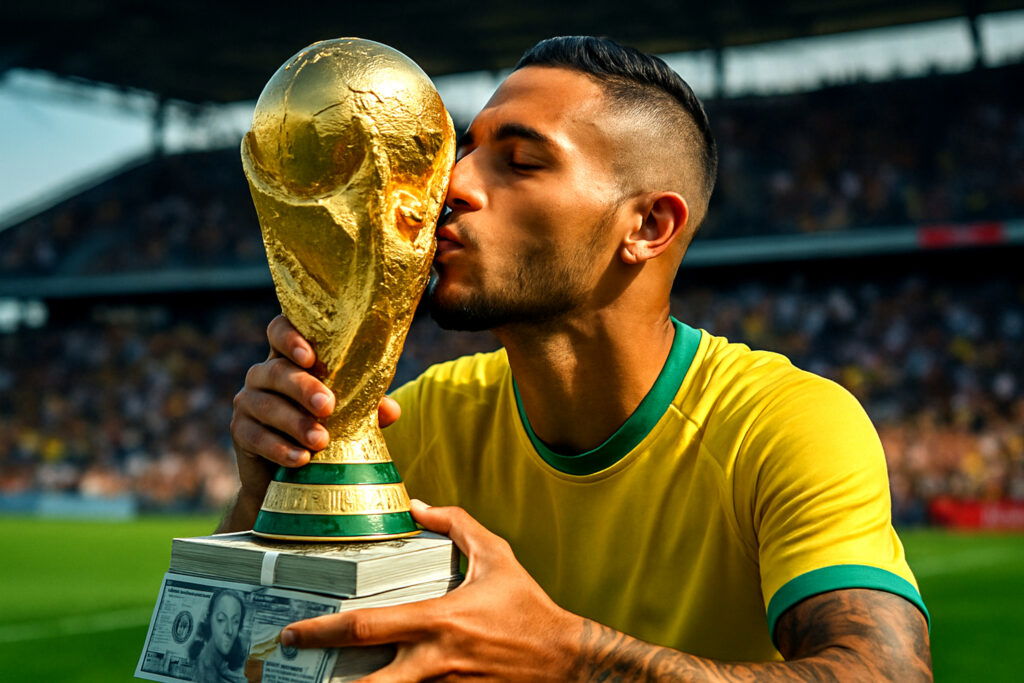
Every World Cup arrives with its usual cargo of drama, heartbreak and late equalisers that ruin perfectly calm evenings. What tends to follow is a spell of frantic club spending, where one good tournament can lift a player from near anonymity to a fee that makes accountants twitch. Some of this is fair reward for genuine talent. Some of it is the football market losing its patience again. The tournament has always acted as a spotlight that clubs cannot ignore, even if they try to remind themselves that four weeks of form is not the same thing as a full season.
The World Cup as a Global Showcase
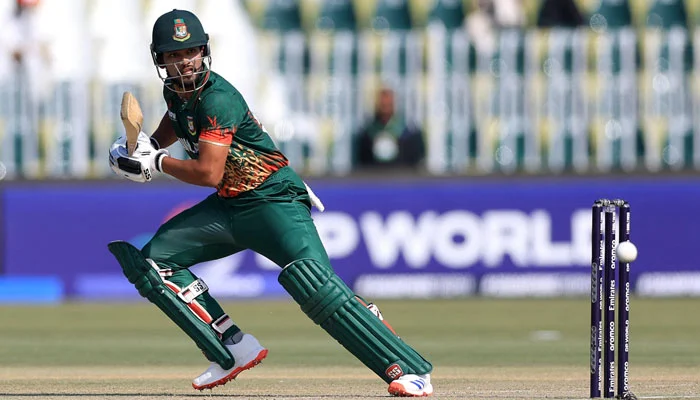
The straightforward truth is that clubs scout worldwide, but nothing matches the visibility of a World Cup. Hundreds of millions watch the same match. A winger who had been quietly improving at a mid-table club can explode into the public eye with one run that leaves three defenders dizzy. Once that happens, clubs feel the pressure to react before rivals move in. It is less about panic and more about the fear of missing out on someone who might become special.
National teams also reveal qualities that club football sometimes keeps hidden. A player might have tactical freedom with his country that he never enjoys domestically. Scouts notice these details, sometimes reading more into them than they should, but it is part of the charm and the chaos.
Inflation of Transfer Fees
A strong World Cup creates momentum around a player. Agents know it. Clubs know it. The prices reflect it. A midfielder who would normally cost a sensible fee suddenly leaps into an entirely different bracket because he scored a long-range goal in the group stage. The market inflates quickly, and clubs with tighter budgets often retreat until the noise dies down.
There are moments when the spike is deserved. Luka Modric and Andrés Iniesta proved that radiant form on the biggest stage often matches long-term quality. Then there are the cases where a club pays heavily for a tournament fairy tale only for reality to settle in by October. The World Cup does not create more talent. It simply intensifies attention.
The Power of Narrative
Football loves a good story. A breakout youngster from an unexpected team tends to attract interest because the narrative is irresistible. Clubs are not immune to this. Supporters respond well to signings with an exciting storyline, and executives enjoy the optimism they generate. The transfer market becomes a place where performances and storytelling merge, sometimes neatly, sometimes awkwardly.
There is also the flip side. A trusted player who has a poor tournament can briefly lose value. Clubs rarely panic at the top end, but the World Cup still shapes perception. A defender exposed by a quick counterattack in front of a global audience tends to attract louder criticism than he would on a cold Sunday league match.
Tactical Trends Revealed
Every tournament introduces or revives tactical ideas. Pressing patterns, build-up structures or set piece routines often influence recruitment. If a national team succeeds with a particular style, clubs start looking for players who fit those patterns. After 2010, possession-heavy midfielders gained even more respect. After 2014, clever hybrid forwards became fashionable. The trend continues because clubs want the next evolution before rivals find it.
This does not make the World Cup a perfect tactical oracle. It is a short tournament with limited preparation time, but it still hints at where the sport is drifting.
The Role of Agents and Club Politics
Agents understand that a World Cup can transform a client’s career. They position players strategically, feeding clubs information at the right moments and nudging deals forward while excitement is still warm. Some clubs resist, relying on long-term scouting data. Others ride the wave because the board wants a statement signing. The internal politics of clubs often shape the final outcome as much as the player’s actual performances.
After the Tournament Glow Fades
By the time the domestic season returns, the dust settles. Some World Cup stars settle comfortably into their new clubs, proving that the hype had substance. Others struggle because the rhythm of league football is relentless compared with the compressed nature of a tournament. Clubs learn to separate the temporary spark from the lasting flame, though sometimes that lesson arrives too late.
TIF Takeaway
The World Cup will always influence transfers because it compresses football into a concentrated, emotional spectacle. It magnifies talent, exposes weaknesses, fuels narratives and pressures clubs into decisions they might not take in calmer conditions. There is charm in the madness though. Part of the joy in football lies in watching a player seize his moment on the world stage, then waiting to see whether that spark carries into the grind of club life.
If nothing else, every tournament reminds us that the transfer market is a place driven as much by human reactions as by spreadsheets.