




























WEEKEND READ: Why The Billion-Pound Pet Economy Isn’t About Animals Anymore — It’s About Loneliness

EBM WEEKEND READ
LONDON MAY 10th-A small dog called Mantou is walking on a treadmill submerged in 32-degree water in a glass-walled studio in Shanghai’s Xuhui district. An oxygen feed circulates above him. Behind a one-way partition, a separate enclosure holds a labrador on a balance ball, recovering — the staff says — from soft-tissue stiffness. After 30 minutes Mantou will be towel-dried, given a paw-pad massage, and led to a temperature-controlled spa pool. His owner, a 34-year-old fund manager who lives alone in central Shanghai, pays 1,980 yuan a month — about $290, or $3,500 a year — for the privilege. There are no children in the membership database. Almost no families either. The clientele, in the gym’s own description, is “young professionals and senior citizens”.
 GOGOGYM bills itself as China’s first dedicated canine fitness centre. It will not be the country’s last. Across the developed world, an industry that politely insists it is about pet health and welfare has quietly become something else: the most efficient consumer business in human society for converting demographic crisis into recurring revenue. The global pet care market was worth roughly $275 billion in 2025 and is on track to double to $568 billion by 2035. Within that, the pet grooming services market alone is forecast to grow from $6.89 billion in 2024 to over $10 billion by 2030. Pet fitness, pet hydrotherapy, pet acupuncture, pet psychiatry — categories that did not exist as identifiable line items a decade ago — are now growing at 12 to 15 per cent a year and represent precisely the same boutique-wellness business model that reshaped human gyms after 2010.
This is not a pet story. It is a loneliness story with a business model attached.
The Numbers Don’t Lie. The Marketing Does.
The headline national figures conceal the real shape of the market. The United States pet grooming services industry was worth around $2 billion in 2024 and grew at a 6.7 per cent compound annual rate. Add pet boarding to the line and the figure rises to $15.5 billion. By any standard, America is the largest pet services market in the world by absolute dollars, supported by an estimated 45.5 per cent of US households owning a dog — roughly 90 million animals.
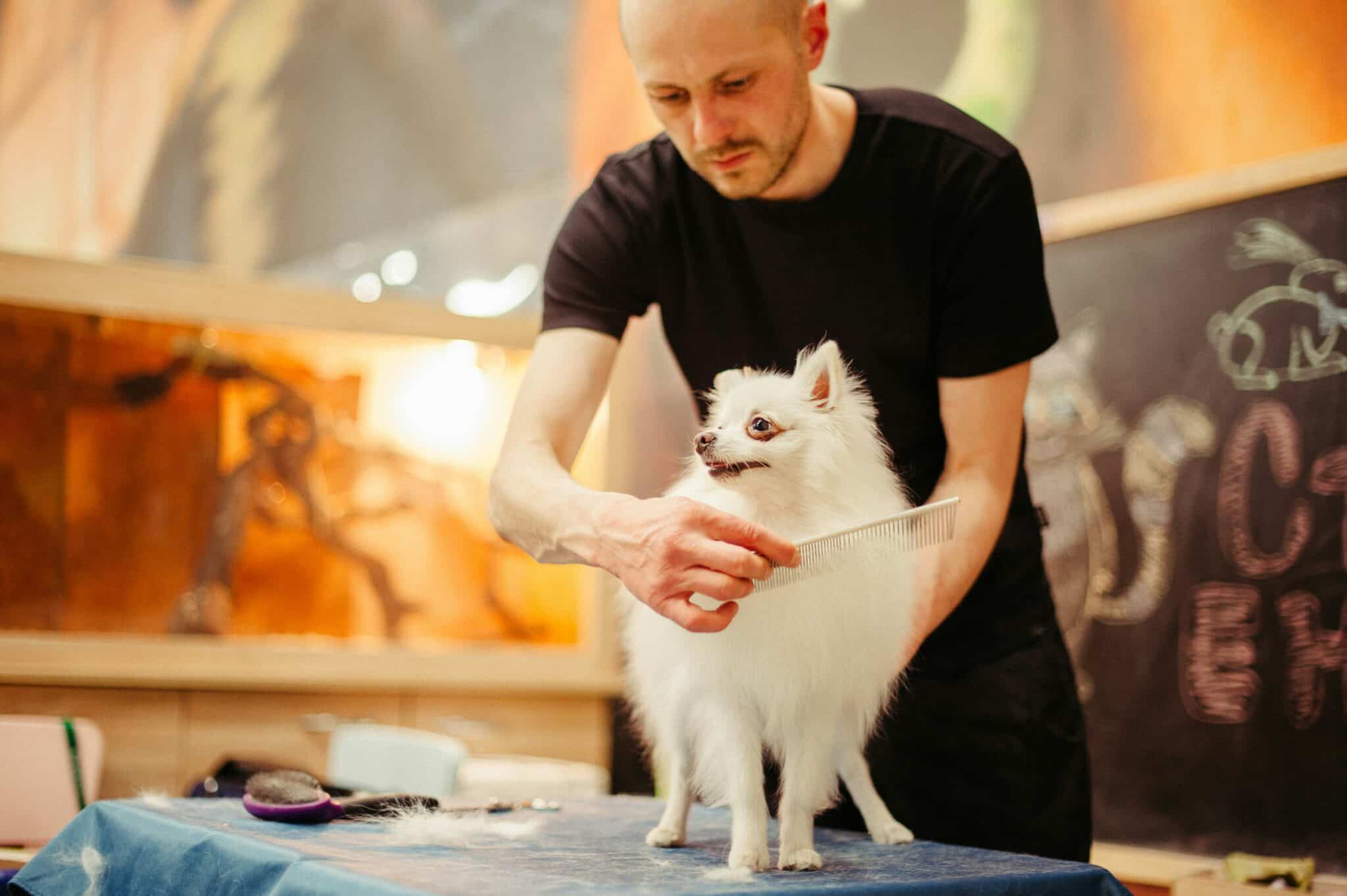 The United Kingdom looks tiny by comparison: a $562 million grooming services market in 2024, projected to reach $804 million by 2030, supported by 13.5 million dogs. But the aggregate figure is misleading. Per dog, an American owner spends roughly $22 a year on professional grooming services. A British owner spends close to £130 — about $165 — per year on the same. British dogs are, in cash terms, pampered roughly six times harder than American ones. The same pattern holds across pet hospitality, pet insurance, pet wellness and pet supplements. The UK is the smaller market in absolute terms, and the more developed market per pet.
This is not a quirk. It is what happens when a sector has been quietly refactored around a particular customer profile: the urban, single-person household with disposable income and no dependents. London, Manchester, Edinburgh, Bristol and Brighton all sit well above the US national average for single-person household density. The British market is small in aggregate because the British population is small in aggregate. Per emotionally-attached owner, it is the more profitable territory for premium operators — and the more strategically interesting one for international capital looking at the next decade.
From Companion Animal to Companion Substitute
The pet industry has spent twenty-five years rebranding itself away from the language of utility. The dog is no longer a working animal, a guard, a companion in the older sense; the dog is a “fur baby”. The cat is a “fur child”. The owner is a “pet parent”. This is not loose marketing language. It is a deliberate, measurable repositioning of the product around child-substitution economics — and it works because the demographic conditions for child substitution are themselves expanding faster than at any point since the 1930s.
OECD birth rates are at record lows across every advanced economy. South Korea is below 0.8 children per woman. Japan, Italy and Spain sit between 1.2 and 1.3. The UK has fallen to 1.49. Single-person households now make up around one-third of EU households and over 40 per cent in some Nordic and German cities. Tokyo, Berlin, Paris, London and increasingly Shanghai and Seoul are not getting younger. They are getting more atomised — and each atomised adult, on the available data, owns more pets, spends more per pet, and buys higher-margin pet categories than the family households they have structurally replaced.
The result is a consumer economy that has quietly reorganised around the lonely adult, and the pet sector is the leading indicator. Dog gyms in Shanghai. Pet acupuncture clinics in Berlin. Hydrotherapy studios in Manchester. Pet hospice and palliative care providers in Tokyo. Each of these categories existed for elite owners ten years ago. Each is now scaling toward mass-market price points, financed by the same disposable-income pool that used to flow into childcare, school fees and family holiday spend.
Why the Pet Economy Is Doubling
The doubling is not driven by more pets. The OECD’s pet population is growing at perhaps 2 per cent a year. The doubling is driven by spend per pet — and spend per pet is itself driven by a small number of structural pressures.
The first is humanisation. As the cultural distance between owner and animal shrinks, the willingness to spend in human-grade categories rises. Premium dog food now competes on packaging and ingredients with human ready-meal brands. Pet insurance now competes with private health products. Pet supplements, pet probiotics and pet mental-health categories did not exist as identifiable spending lines a decade ago and now collectively turn over several billion dollars a year.
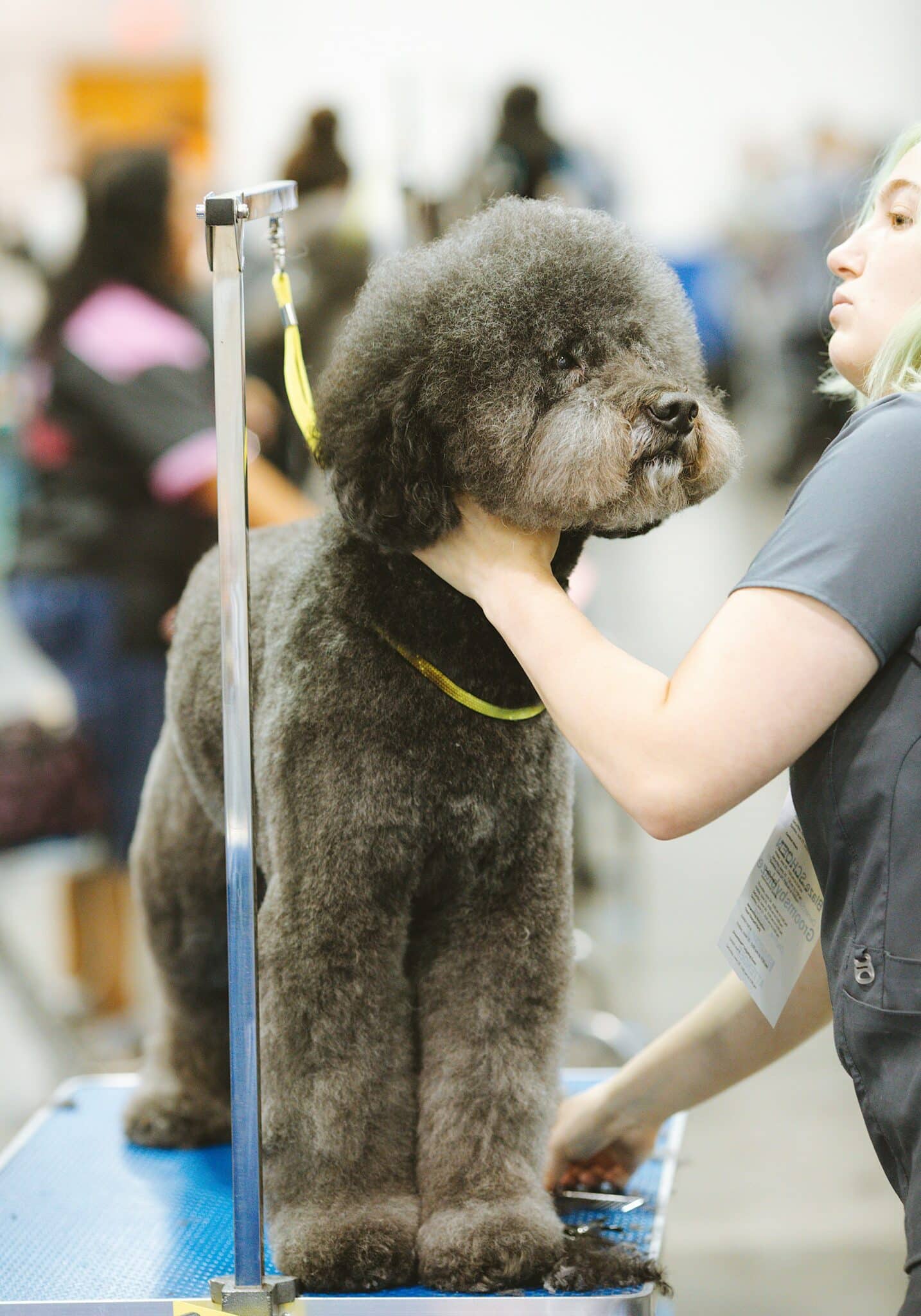
The second is asset-class capital. Private equity has spent the last five years aggressively rolling up veterinary practices, pet daycare chains, pet retail, pet pharmacy and pet insurance across the UK, Germany and the Nordics. The thesis is precisely the one Sweden’s padel investors got wrong: stable, recurring, emotionally inelastic spend in a market with high pricing power. In pets, however, the thesis holds, because the substitution effect runs the other way. Owners cut their own discretionary spending before they cut their pets’.
The third is geography. Asia Pacific is the fastest-growing region in pet services, at a near-9 per cent compound annual rate, and Asia has only just begun the demographic transition that drove the European and American pet boom of the 2010s. China’s birth rate has now fallen below Japan’s. Its single-occupant urban household share is climbing rapidly. The Shanghai dog gym is not a curiosity. It is a 2035 East Asian consumer economy operating today.
The Investable Categories — and the Ones That Aren’t
For European investors looking at the sector, the discipline is straightforward, and almost the inverse of the marketing. Premium services with emotional pricing power — fitness, rehabilitation, end-of-life care, pet mental-health categories, bespoke nutrition — are scaling at 10 to 15 per cent a year and will continue to do so for the foreseeable future. Commodity grooming, supermarket-tier pet food and lower-end retail accessories are saturated, low-margin and exposed to private-label compression. The two ends of the market are diverging fast, and the investable opportunity is almost entirely at the top.
The big winners of the next decade will be the operators that recognise, and price around, what they are actually selling. This is not pet care. It is human emotional infrastructure, delivered through a four-legged proxy. The most successful brands in the category — On’s owner-targeted running shoe playbook has a near-exact parallel here — will be the ones that position the product for the human, not the animal. The pet economy and the endurance economy and the boutique-wellness economy are, on closer inspection, the same business under three different categorisations: premium recurring spend by atomised, urban, emotionally-engaged adults, paid for in 30-minute increments.
A 34-year-old in Shanghai paying $3,500 a year for her dog to attend a fitness studio is not making a decision about her dog. She is making a decision about herself. The pet economy is the fastest-growing consumer category of the next decade because it is, structurally and demographically, the loneliness economy with fur on top. The companies that understand that early are about to take a great deal of money from the companies that don’t.
Related Reading
- The Business of Running: How Marathons Became a Global Money Machine
- How Sweden’s Padel Mania Ended in Bankruptcies, Debt and Empty Courts
- Why “Third Space” Real Estate Is Outperforming Pure-Play Leisure Assets in Europe
The post WEEKEND READ: Why The Billion-Pound Pet Economy Isn’t About Animals Anymore — It’s About Loneliness appeared first on European Business Magazine.