




























WEEKEND READ: The Luxury Correction — Why Richemont and Swatch Are Gambling in Opposite Directions

Quick Answer
As of April 2026, Swiss watch exports have fallen across consecutive months as the post-pandemic grey market bubble deflates — with secondary prices on key Rolex, Patek Philippe and Audemars Piguet references collapsing from their 2022 peaks. The detail not in the headline: Richemont’s Cartier has held price and allocation discipline with a rigidity that mirrors Ferrari’s supply constraint model, while Swatch has moved aggressively on volume and democratisation — meaning two of Switzerland’s biggest watchmakers are now running diametrically opposite strategies into the same correction. Which bet proves correct will define Swiss watchmaking’s competitive landscape for the next decade — and the Chinese demand recovery that would resolve the argument for both of them remains stubbornly absent.
EBM Exclusive Take
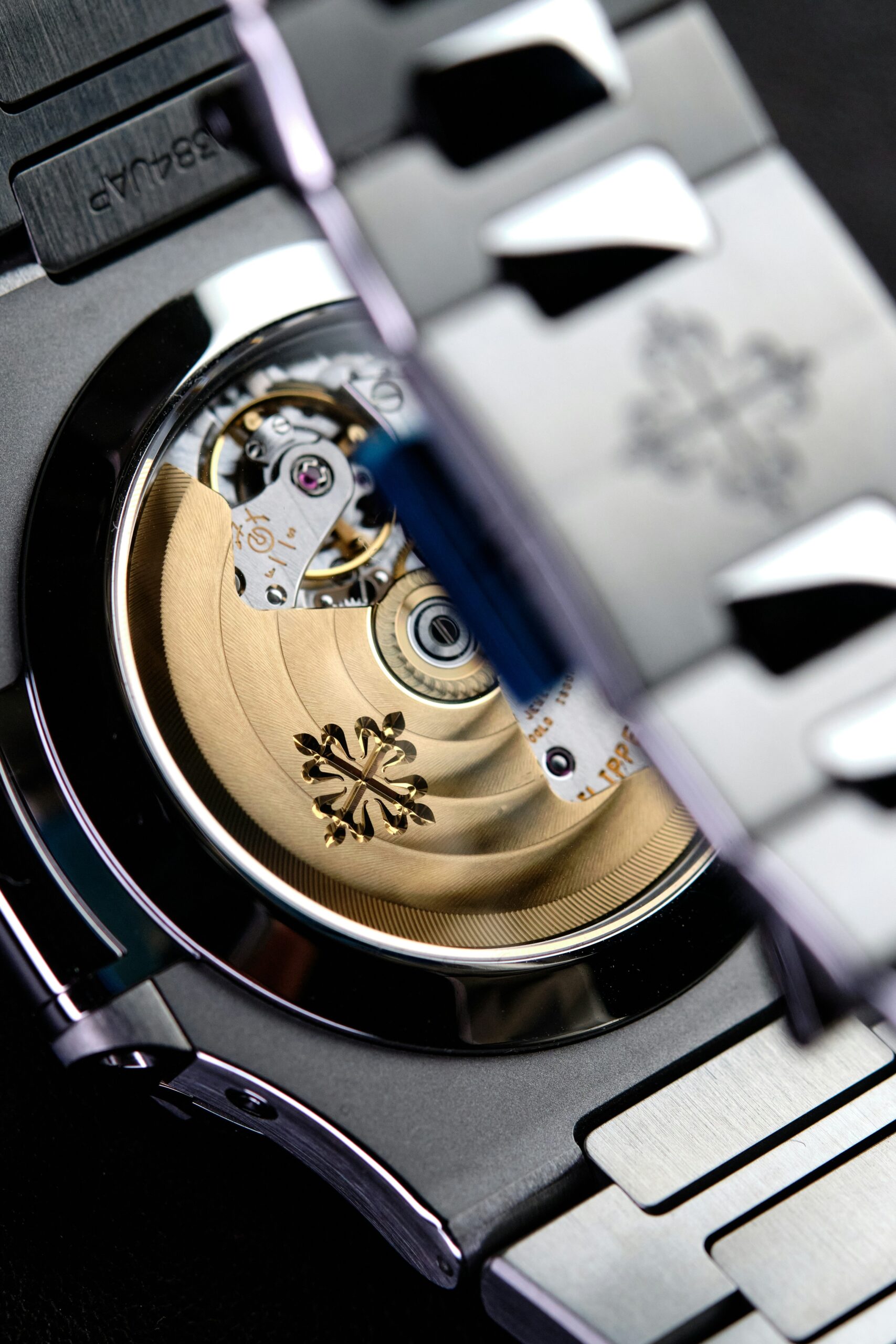 The Swiss watch correction is not a demand destruction story. It is a normalisation story — and the distinction matters enormously for how investors should read the sector. The 2021-22 boom was structurally anomalous: pandemic savings, closed travel spending, cryptocurrency wealth effects and social media-driven hype combined to create a grey market frenzy in which authorised dealers were selling Rolex Submariners at double retail and Patek Philippe Nautiluses were changing hands at five times their list price. That was not sustainable and it was not a signal of structural demand health. Its unwinding is not a crisis. It is a return to reality — and in that reality, the brands with the strongest fundamentals are separating cleanly from those that rode the wave without building the underlying architecture to survive its retreat.
The Correction in Numbers
Swiss watch exports have declined year on year across the majority of recent monthly reporting periods, with the Federation of the Swiss Watch Industry data showing particular weakness in the mid-to-high price segment — broadly defined as timepieces between CHF 500 and CHF 3,000 — and in exports to Hong Kong and China, which had been the sector’s most important growth markets through the boom years.
The grey market correction has been sharper. References that commanded 100% premiums over retail in 2022 are now trading at or below retail on secondary platforms. The Rolex Daytona, which had become a proxy asset class in its own right, has retreated significantly from its secondary market peak. The Patek Philippe Nautilus 5711 — discontinued in 2021 specifically to manage demand and which briefly traded at over CHF 100,000 on the secondary market against a retail price of approximately CHF 30,000 — has corrected substantially, though it retains a premium that reflects genuine scarcity rather than speculative frenzy.
For the watch industry’s largest listed groups, the implications of this correction fall very differently depending on how each brand positioned itself during the boom.
Richemont: Discipline as Strategy
Richemont’s response to the correction has been a masterclass in brand discipline that deserves more attention than it has received. The group — whose watch portfolio includes IWC, Jaeger-LeCoultre, Vacheron Constantin and Panerai alongside the jewellery maisons Cartier and Van Cleef & Arpels — has maintained strict allocation controls, refused to chase volume through price reductions and continued to invest in product and retail experience at a moment when the temptation to stimulate demand through discounting must have been significant.
Cartier in particular has emerged from the correction in a position of unusual strength. The brand’s decision to anchor its identity in jewellery-led watchmaking — the Tank, the Santos, the Ballon Bleu — rather than competing in the sports watch segment that drove the grey market frenzy has proven strategically prescient. Cartier buyers are not primarily grey market speculators. They are clients with a relationship to the brand that predates the boom and will outlast the correction. That client base provides a demand floor that purely horological brands, more exposed to the speculative buyer, do not have to the same degree.
Richemont’s jewellery division — Cartier and Van Cleef — has also provided a critical buffer. Hard luxury jewellery has proven considerably more resilient than watches through the current correction, with American consumers in particular continuing to spend at elevated levels on jewellery even as discretionary watch purchases have softened. That geographic and category diversification is not accidental. It is the product of a group strategy that has consistently prioritised stability over growth maximisation.
Swatch: The Democratisation Bet
 Swatch Group’s response to identical market conditions has been almost the mirror image of Richemont’s. Under CEO Nick Hayek, Swatch has leaned into accessibility, volume and the democratisation of watchmaking — a strategy that reflects both genuine conviction about where the market is heading and the commercial reality that Swatch’s brand portfolio is structurally more exposed to the mid-market correction than Richemont’s.
The group’s decision to maintain and in some cases accelerate production of its core Swatch and Longines lines — even as demand for mid-market watches softened — reflects a bet that volume and brand ubiquity will ultimately prove more durable than exclusivity in a market where the speculative premium has deflated. Omega, Swatch Group’s flagship prestige brand, has navigated a more complex path — its MoonSwatch collaboration with the Swatch brand generated extraordinary consumer interest and queue culture that briefly echoed the grey market dynamics of the boom years, but converting that buzz into sustained brand elevation has proved challenging.
The strategic risk for Swatch is the one that always accompanies democratisation in luxury: that accessibility, once granted, is almost impossible to retract. A brand that expands distribution, reduces friction to purchase and competes on availability trains its consumer to expect those conditions. Rebuilding the scarcity architecture that commands premium pricing is a generational project, not a quarterly one. Ferrari has never faced this challenge precisely because it has never made the concession that would create it — but Swatch is a fundamentally different business serving a fundamentally different consumer, and the democratisation bet may yet prove correct on its own terms.
China: The Variable Neither Group Controls
The single most important external variable for both Richemont and Swatch is Chinese demand recovery — or the continued absence of it. Chinese consumers drove Swiss watch export growth for the better part of a decade, and their retreat from the market since 2022 has been the dominant factor behind the correction in export volumes.
The Chinese luxury consumer has not disappeared. They have redirected spending — toward domestic experiences, toward categories perceived as less ostentatious in a political environment where visible wealth display carries risk, and toward domestic luxury brands that have improved dramatically in quality and design over the past five years. Whether Swiss watch demand recovers to its pre-correction trajectory in China depends on macroeconomic conditions — the property market correction that has compressed Chinese household wealth remains unresolved — and on political dynamics that neither Richemont nor Swatch can influence.
Both groups are managing that uncertainty by accelerating their focus on markets where demand is more predictable — the Gulf, Japan, Southeast Asia and, critically, the United States. American consumers have demonstrated sustained appetite for hard luxury even in a challenging macroeconomic environment, making US market share the most contested terrain in Swiss watchmaking right now.
What Investors Should Take From This
The Swiss watch correction is separating brands with genuine demand foundations from those that rode speculative momentum. Richemont’s discipline — in pricing, allocation and brand positioning — has produced a group that exits the correction in stronger competitive shape than it entered it. Swatch’s democratisation bet is a coherent strategic response to a different set of circumstances, but it carries brand equity risks that will take years rather than quarters to fully assess.
For investors with European luxury exposure, the watch sector correction is not a reason to exit the category. It is a reason to be considerably more precise about which brands within it have built the architecture to sustain value through cycles — and which ones were merely beneficiaries of a boom that, in retrospect, was always going to end.
Related Analysis
- Ferrari’s Untouchable Business Model: What European Luxury Can Learn From Maranello
- LVMH and the Tariff Wall: How Trump’s Trade War Is Hitting European Luxury
The post WEEKEND READ: The Luxury Correction — Why Richemont and Swatch Are Gambling in Opposite Directions appeared first on European Business & Finance Magazine.