












WEEKEND READ: The Business of Running: How Marathons Became a Global Money Machine
EBM WEEKEND READ
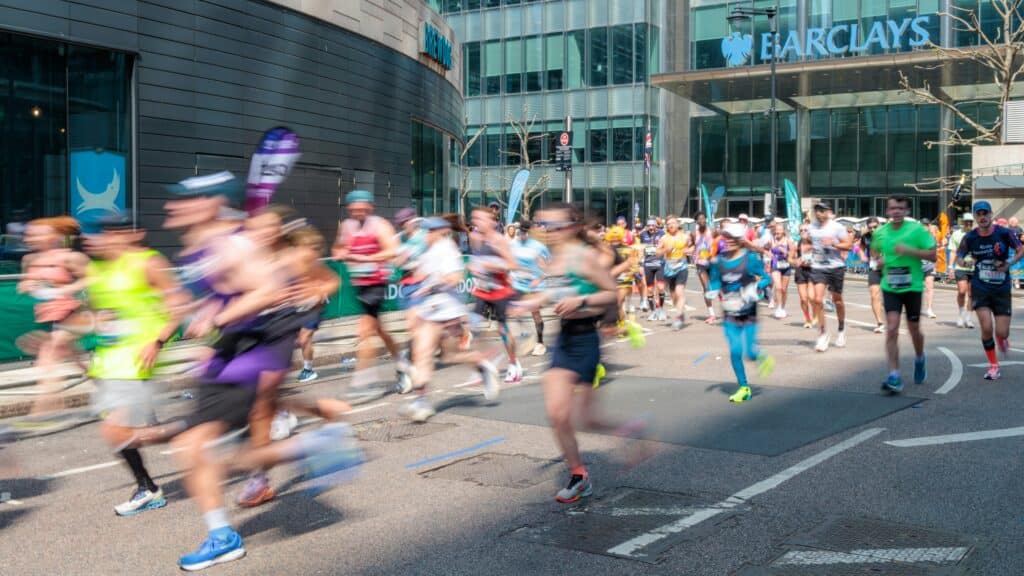
MAY 9th-The 2026 London Marathon was the largest mass-participation sporting event in human history. 59,830 finishers crossed the line on the Mall, breaking a Guinness World Record set by New York the previous November, and within weeks the ballot for 2027 had blown straight through it: 1,338,544 applicants, an 18% jump in twelve months. Hugh Brasher, the chief executive of London Marathon Events, has now confirmed organisers are actively modelling a two-day race — Saturday and Sunday — that internal forecasts suggest could deliver a £400 million boost to the capital’s economy.
That number is the story. Not the finishers, not the elite times, not the heartwarming charity bibs. £400 million for one weekend is what an Olympic city expects, not a 26.2-mile road race. And it is forcing a quiet reappraisal across European business of what a modern marathon actually is. The honest answer is that it is a tourism and consumer-brand ecosystem with a Premier League-scale commercial machine wrapped around it — and the running is the smallest part.
Marathon Day Is a Trade Show Disguised as a Sports Event
The global marathon-events market hit roughly $2.8 billion in registration, sponsorship, broadcast and ancillary revenue in 2025 — but that figure dramatically understates the real economic footprint, because most of the money never touches the race organisers. Hotels, airlines, restaurants, gear retailers, physiotherapists, charity-fundraising platforms and tourism boards capture the surrounding spend, and that surrounding spend is several multiples of the entry fee.
The Berlin Marathon alone now generates over €100 million a year in tourism revenue for the city. The 2026 Austin Marathon — a mid-tier US race, not even an Abbott Major — produced a projected $64 million economic impact on a single weekend, drawing 30,000 runners from all 50 US states and 50 countries. The maths scale rapidly upwards in the Abbott Majors. New York’s marathon weekend alone delivers more than $100 million in tax revenue to the city, before any private-sector multiplier.
What changed is that cities stopped treating marathons as logistical inconveniences and started treating them as intellectual property. The London Marathon is not run by the city. It is run by London Marathon Events, which holds the route, the brand and the broadcast rights and licenses corporate hospitality and sponsorship around it. TCS, the Indian IT services group, pays a reported nine-figure sum across its London and New York title sponsorships. Tata, TCS’s parent, controls Mumbai’s marathon outright. The model has been quietly imported by Tokyo, where the city government now treats race weekend as a strategic tourism asset on par with the cherry-blossom calendar.
The Amateur Runner Is the Product
The single biggest commercial shift over the past decade is who marathon brands actually sell to. Nike’s Vaporfly and Alphafly lines were originally engineered for Eliud Kipchoge’s sub-two-hour project. Today they are bought, in volume, by four-hour amateur marathoners willing to spend £250 to £300 on a shoe with a usable lifespan of 250 miles. That single product category — carbon-plate road racing shoes — was worth roughly $1.45 billion in 2024 and is forecast to scale past $22 billion by 2034, on a compound growth rate north of 27%.
The brand-building has been ruthless and effective. Hoka, owned by Deckers, posted FY2025 revenue of $2.23 billion, up 23.6% year-on-year. Switzerland-based On Running, the cleaner-aesthetic challenger backed by Roger Federer, grew sales 43% in the same period. Both have built their entire commercial proposition around amateur road and trail runners, not the elite circuit. Asics, New Balance and Adidas have followed, releasing carbon-plate models specifically priced for the recreational marathoner who wants the same kit the Kenyans use.
This is an unusual pattern in sport. Football boots, tennis rackets, F1 watches — most aspirational sports gear commands a premium because it is what the elite uses. In running, the elite has become a marketing layer for what is, in commercial terms, an amateur product. The global running shoe market is now worth $26 billion and projected to reach $38 billion by 2030, almost entirely on the back of recreational fitness consumers. The London Marathon ballot itself now functions as the most expensive free customer-acquisition event in the consumer-fitness industry.
The Next Decade Is Asia, the Middle East and the Two-Day Format
The growth engine has shifted east. China hosted fewer than 20 certified marathons in 2010. By 2024 it had over 1,900 — a near-hundredfold expansion driven by central government health-promotion policy, urban infrastructure investment and a rising middle-class consumer base. India’s Tata Mumbai Marathon and Airtel Delhi Half Marathon are now sponsorship-saturated events on a scale comparable to mid-tier European majors. Saudi Arabia, Dubai and Doha have built marathon weekends from scratch as part of their broader sport-as-soft-power strategy — the same diplomatic logic that placed LIV Golf, Premier Padel and the Saudi Pro League on the map.
The format itself is changing. London’s two-day proposal — splitting the race across Saturday and Sunday — is not just about absorbing 1.3 million applicants. It is a deliberate doubling of the hospitality and broadcast inventory. A two-day London weekend would, on internal modelling, generate roughly the same incremental hotel-night and corporate-hospitality value as adding a second Grand Prix to the British calendar. Other Abbott Majors are watching closely. If London goes two-day in 2028, Berlin and Chicago will follow within a cycle.
The risk for European race organisers is the same one that has caught every successful sports IP in the last twenty years. Once a marathon weekend is worth £400 million, the question of who actually owns the rights — the city, the operator, the title sponsor or the broadcaster — becomes contentious. London Marathon Events, as a private company holding civic IP under licence, is structurally exposed the moment a private-equity bidder decides the franchise is undervalued.
The amateur runner does not see any of this. They see a personal-best attempt, a charity bib, a finisher’s medal and a story to tell on Monday. That is exactly what the industry needs them to see. Behind it, marathon weekends have become one of the most efficient cross-channel commercial machines in modern sport — and the cities that worked out how to monetise endurance culture early are the ones now sitting on the most valuable annual sporting asset they own.
Related Reading
- The Padel Gold Rush: How a Niche Racket Sport Became a €6 Billion Global Industry
- Why “Third Space” Real Estate Is Outperforming Pure-Play Leisure Assets in Europe
How Saudi Arabia and Qatar Are Buying Their Way Into Premium Sport
The post WEEKEND READ: The Business of Running: How Marathons Became a Global Money Machine appeared first on European Business Magazine.