
























Venezuela to Export $2 Billion Worth of Oil to US in Unprecedented Deal
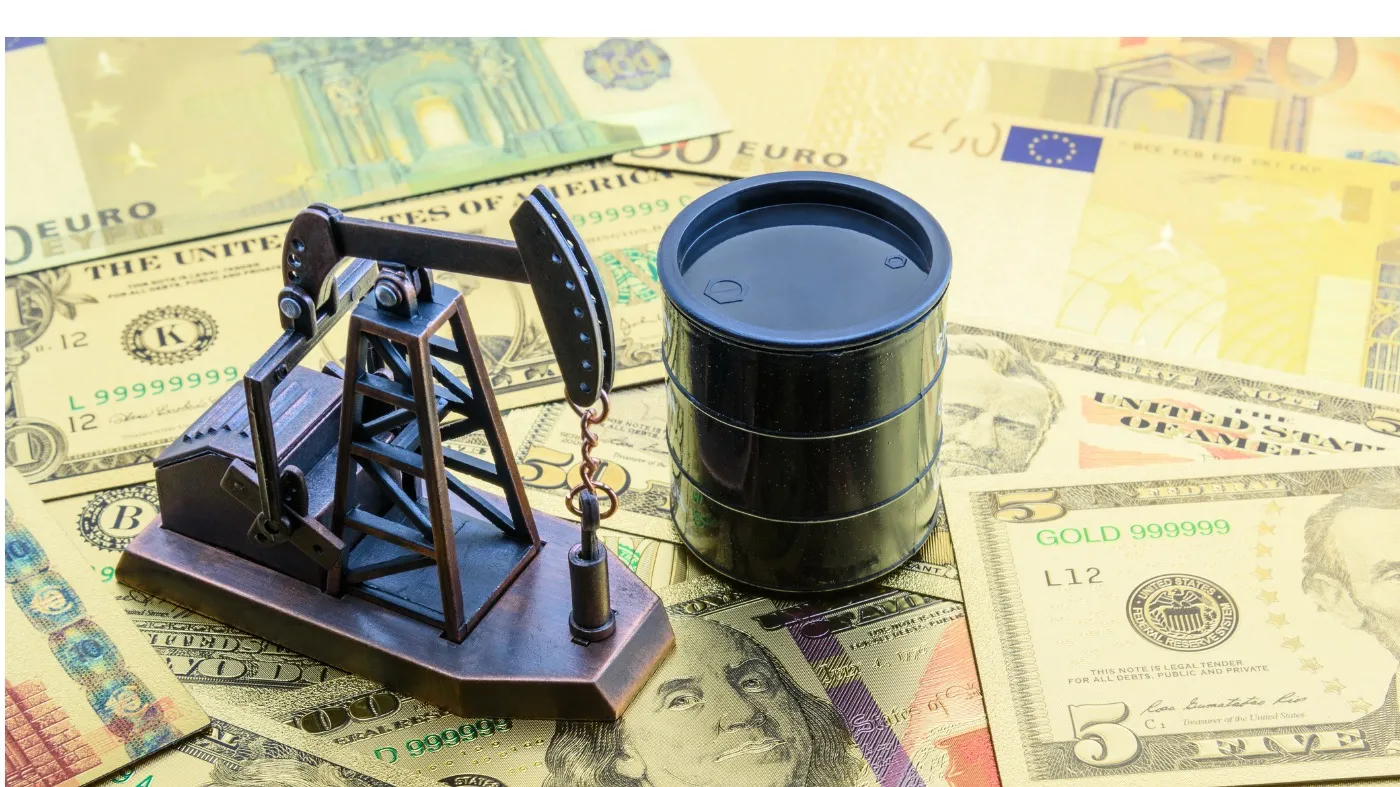
Trump seizes control of sanctioned Venezuelan crude as 30-50 million barrels diverted from China to US ports, raising questions over sovereignty and supply chain realignment
Venezuela will export up to $2 billion worth of oil to the United States under an extraordinary arrangement announced this week by President Donald Trump, marking the first major commercial consequence of the weekend military operation that resulted in the capture of Venezuelan President Nicolás Maduro. The deal, which involves between 30 and 50 million barrels of previously sanctioned crude, represents a dramatic reversal of Venezuela’s oil trade patterns and signals Washington’s intention to restructure global energy markets through direct control of strategic petroleum resources.
Trump stated on social media that Venezuela would be “turning over” the sanctioned oil, which will be “sold at its Market Price, and that money will be controlled by me, as President of the United States of America, to ensure it is used to benefit the people of Venezuela and the United States.” US Energy Secretary Chris Wright has been tasked with executing the arrangement, with crude diverted from ships and sent directly to American ports—a logistical operation that could initially require reallocating cargoes originally bound for China, according to sources familiar with the matter.
The arrangement follows months of escalating pressure on the Maduro government, culminating in the January 3 predawn raid that saw US special operations forces capture Maduro and his wife Cilia Flores. Top Venezuelan officials have denounced the operation as kidnapping and accused Washington of attempting to steal the country’s vast oil reserves—allegations that Trump’s subsequent announcements about controlling Venezuelan oil revenues have done little to dispel.
The China Factor: Disrupting Asia’s Crude Flows
The immediate commercial implications center on China, which has become Venezuela’s primary oil customer over the past decade as US sanctions closed Western markets. Chinese independent refiners, known as “teapots” and predominantly clustered in Shandong province, imported approximately 400,000 barrels per day of Venezuelan crude in 2025. Much of this supply serviced billions of dollars in oil-backed loans Beijing extended to Caracas under former President Hugo Chávez, with barrels sold at steep discounts to reflect both credit risk and sanctions complications.
Redirecting 30-50 million barrels to American ports would represent a significant disruption to these established trade flows. The crude currently sits aboard vessels that had been navigating sanctions through what industry insiders call “ghost ship” tactics—disabling position transponders while in Venezuelan waters, conducting ship-to-ship transfers in international waters, and employing intermediaries to obscure cargo origins. These vessels, caught by Trump’s December blockade of tankers entering and exiting Venezuelan ports, now find themselves effectively impounded with their cargoes subject to American seizure.
Chinese state-owned CNPC produces Venezuelan oil through joint ventures with state oil company PDVSA, while Beijing has backed the Venezuelan petroleum sector financially and embedded itself in mining operations producing critical minerals used in advanced weapons systems. The US recently sanctioned Chinese firms and vessels dealing with Venezuela’s oil industry, creating additional pressure on already strained supply chains. China’s foreign ministry condemned Maduro’s capture as a violation of international law and Venezuelan sovereignty, though Beijing’s practical options for response remain limited given its dependence on stable energy imports and vulnerability to US secondary sanctions.
Infrastructure Crisis: The $58 Billion Question
The broader question is whether American oil companies will commit the capital required to revitalize Venezuela’s collapsed petroleum infrastructure. PDVSA itself acknowledges that its pipelines haven’t been updated in 50 years, with estimates suggesting $58 billion would be needed to restore operations to anything approaching peak production levels. Independent analysis from energy consultancy Rystad Energy places the figure even higher, estimating approximately $110 billion in upstream investment to lift production from current levels of 800,000 barrels per day to the 2 million barrels per day the country last produced in 2017.
Venezuela’s oil reserves—estimated at 303 billion barrels or roughly 17% of global totals—remain the world’s largest, dwarfing even Saudi Arabia’s 297 billion barrels. Yet these reserves, concentrated in the extra-heavy crude deposits of the Orinoco Belt, require significant technical expertise and specialized infrastructure to extract and process. The crude is so viscous it must be blended with lighter hydrocarbons or partially refined in upgraders before it can be transported or sold internationally.
Years of capital flight, loss of technical expertise, and decaying infrastructure left PDVSA struggling to maintain even basic operations before Maduro’s capture. The socialist revolution launched by Chávez in the early 2000s systematically purged experienced managers and replaced meritocratic hiring with political patronage. A string of deadly accidents plagued facilities, including a 2012 explosion at the Cardon refinery complex—one of the world’s largest—that killed dozens and accelerated production decline even as oil prices soared above $100 per barrel.
The nationalization campaign that began in 2007 drove out ExxonMobil and ConocoPhillips, both of which subsequently filed arbitration claims. ConocoPhillips was ultimately awarded approximately $8.7 billion by the International Centre for Settlement of Investment Disputes (ICSID) in 2019, a decision Venezuela unsuccessfully attempted to annul in January 2025. ExxonMobil won smaller awards totaling approximately $2 billion. Neither company has recovered more than token payments, leaving outstanding claims approaching $10 billion—debts that now complicate Trump’s appeals for fresh American investment.
Market Dynamics: Oversupply in an Era of Abundance
The oil market’s tepid response to Venezuelan developments underscores how dramatically global supply dynamics have shifted. Despite the geopolitical drama of a US military operation capturing a sitting head of state, Brent crude slipped to around $60 per barrel while West Texas Intermediate dropped below $58. The explanation lies in fundamental oversupply: new production from Brazil, Guyana, Argentina, and the United States continues entering the market while OPEC+ has begun unwinding voluntary cuts totaling nearly 4 million barrels per day. The International Energy Agency projects supply could exceed demand by as much as 2 million barrels per day in 2026.
This oversupply context creates challenges for the investment thesis Trump is promoting. Energy consultancy Kpler estimates that with sanctions relief and improved management, Venezuelan production could rise by up to 400,000 barrels per day, taking output to 1.2 million barrels per day by end-2026. A larger increase to 1.7-1.8 million barrels per day by 2028 would require significant mid-cycle investment and repairs at key upgraders operated by Chevron. However, restoring production above 2 million barrels per day appears unlikely without comprehensive reform at PDVSA and major new upstream contracts with foreign operators.
Phil Flynn, senior market analyst at Price Futures Group, suggested the potential is substantial if infrastructure constraints can be overcome: “For oil, this has the potential for a historic event. The Maduro regime and Hugo Chavez basically ransacked the Venezuelan oil industry.” Yet other analysts remained skeptical. “Upstream production is not a light switch,” cautioned Sarah Meyer of Crystol Energy. “Even with political change, infrastructure constraints do not disappear overnight.”
Some market observers predict Venezuelan crude could eventually push prices to sub-$50 WTI levels if production scales rapidly, with Canada emerging as the biggest casualty as heavy sour crude from Venezuela displaces Canadian oil sands exports to Gulf Coast refineries. The Merey grade produced from the Orinoco Belt has specialized applications in these facilities, which were originally configured to process Venezuelan characteristics before sanctions redirected supply chains.
The Corporate Response: Cautious Optimism Meets Bitter Experience
American oil majors have responded to Trump’s intervention with studied caution, mindful of previous expropriation experiences and uncertain about security conditions on the ground. Shares of Chevron, ExxonMobil, and ConocoPhillips rose following Maduro’s capture as investors speculated about potential opportunities, yet none has committed to expansion plans.
Chevron, which maintained operations throughout the sanctions period under special licenses and currently employs 3,000 staff in Venezuela, issued the most circumspect statement: “Chevron remains focused on the safety and wellbeing of our employees, as well as the integrity of our assets. We continue to operate in full compliance with all relevant laws and regulations.” The company has not announced plans to increase its presence despite being best positioned to scale operations given its existing footprint and joint ventures with PDVSA.
ConocoPhillips spokesperson Dennis Nuss stated the company is “monitoring developments in Venezuela and their potential implications for global energy supply and stability,” but added “it would be premature to speculate on any future business activities or investments.” ExxonMobil has not responded to requests for comment, though CEO Darren Woods told Bloomberg in November: “We’ve been expropriated from Venezuela two different times.”
The outstanding arbitration awards create a complex dynamic. ConocoPhillips and ExxonMobil both have strong incentives to return if their claims can be settled as part of a broader arrangement, effectively converting unpaid judgments into equity stakes or production rights. However, the legal and political mechanisms for such conversions remain unclear, as does the question of who possesses authority to commit Venezuela to binding agreements while Trump asserts Washington will “run the country” during an undefined transition period.
Oil services companies anticipate significant business opportunities if infrastructure rebuilding materializes. Shares of SLB rose more than 10% following the military operation, while Halliburton gained 9% and Baker Hughes added 4% as investors priced in potential contracts to rehabilitate wells, pipelines, and processing facilities. Yet these gains may prove premature: oil executives operating in Venezuela estimate that turning around production would cost $10 billion annually and requires a stable security environment—conditions that remain far from assured as Venezuelan military units, civilian militias, and opposition groups navigate the post-Maduro power vacuum.
Geopolitical Precedent: Resource Control Through Military Force
Beyond the immediate commercial questions, the Venezuelan oil deal establishes a precedent that resonates far beyond Latin America. Trump’s explicit statement that he will personally control Venezuelan oil revenues—bypassing both the Venezuelan state and normal international commercial frameworks—represents an unprecedented assertion of American resource rights over a sovereign nation’s primary economic asset.
The arrangement evokes 19th and early 20th-century practices when European powers and the United States routinely seized customs houses and natural resource operations to secure debt repayment or strategic access. The difference is that such practices had largely been abandoned in the post-World War II international order, replaced by treaty-based frameworks for investment protection and dispute resolution—the very frameworks that produced the ICSID awards ConocoPhillips and ExxonMobil have been unable to collect.
For energy-producing nations watching these developments, the implications are profound. If military intervention becomes an acceptable tool for resolving commercial disputes or securing resource access, the risk calculus for nationalizing foreign assets shifts dramatically. Conversely, if Trump’s approach succeeds in breaking Chinese influence in Venezuela and establishing American control over critical resources, other resource-rich nations aligned with Beijing may find themselves vulnerable to similar pressure.
The International Energy Agency and various geopolitical analysts have noted that the Venezuela operation may embolden similar interventions elsewhere. Iran, with its substantial petroleum reserves and close ties to China and Russia, presents an obvious parallel. So too does Libya, where competing governments have long struggled for control of oil infrastructure while foreign powers maneuver for influence. The question is whether Venezuela represents an isolated case or the beginning of a new era in which military power directly determines resource allocation.
Conclusion: From Blockade to Control
The $2 billion oil deal represents the opening chapter of what Trump has indicated will be extensive American involvement in Venezuela’s petroleum sector. Moving from blockade to capture to commercial control within weeks, the administration has demonstrated both willingness to use military force for resource objectives and determination to restructure supply chains that had tilted toward China over the past two decades.
The fundamental question remains whether American oil companies will commit the tens of billions required to rehabilitate infrastructure, and whether they can do so profitably in an oversupplied global market with oil prices below $60 per barrel. The arbitration debts, security uncertainties, and unclear political transition all complicate investment decisions, even as Trump promises regulatory flexibility and assured returns.
For China, the diversion of Venezuelan crude to American ports represents a strategic setback in Latin America and a reminder of Washington’s enduring ability to project force in the Western Hemisphere. For Venezuela’s population—already devastated by hyperinflation and mass emigration—the outcome depends on whether American management can revive oil production and whether revenues genuinely flow to public benefit or primarily to settling corporate claims and funding American strategic priorities.
As Energy Secretary Wright begins executing the deal, global markets will watch closely to see if the $2 billion in “sanctioned oil” represents merely seized inventory or the first installment of a transformed Venezuelan petroleum industry operating under American control. The answer will help determine whether Trump’s Venezuela operation proves a strategic masterstroke or an overreach that alienates allies, emboldens adversaries, and ultimately fails to deliver the resource security Washington seeks.
Related Topics:
The post Venezuela to Export $2 Billion Worth of Oil to US in Unprecedented Deal appeared first on European Business & Finance Magazine.