























Venezuela After Maduro: The Economic and Political Implications of Regime Change
Why Maduro’s removal marks a turning point for Latin America’s economic future
The overnight capture of Venezuelan President Nicolás Maduro by United States special forces on January 3, 2026, represents the most dramatic intervention in Latin American affairs since the end of the Cold War. Yet beyond the military spectacle lies a more fundamental question: what does the end of the Maduro regime mean for Venezuela’s economy, its place in global markets, and the wider recalibration of power across the Western Hemisphere?
The answer matters far beyond Caracas. Venezuela sits atop the world’s largest proven oil reserves—303 billion barrels, nearly 18 per cent of the global total. For two decades, that wealth has been systematically mismanaged, plundered and weaponised by a socialist government that presided over one of the most catastrophic economic collapses in modern peacetime history. The removal of Maduro opens the possibility of economic reconstruction on a scale rarely attempted outside post-conflict zones. But it also raises profound questions about sovereignty, investment risk, and the long-term viability of US-led regime change in an era of multipolar competition.
The economic case against Maduro: A textbook failure of governance
Nicolas Maduro inherited an economy already strained by the policies of his predecessor Hugo Chávez, but his tenure transformed crisis into catastrophe. Between 2013 and 2020, Venezuela’s GDP contracted by 73 per cent in per capita terms—a collapse more severe than the Great Depression in the United States and comparable only to economies devastated by war or state failure.
Hyperinflation reached nearly ten million per cent by 2019, wiping out savings, destroying businesses, and forcing the country into a de facto dual-currency system. Price controls, profit controls, uncompensated expropriations and reckless monetary expansion created a vicious cycle of economic destruction. By 2017, hunger had escalated to the point where 75 per cent of the population had lost an average of over 8 kilograms, while healthcare systems collapsed, maternal mortality surged, and preventable diseases returned.
The oil sector—Venezuela’s economic lifeline—suffered particularly acute damage. Production fell to just one million barrels per day, less than a third of what the country was pumping before the socialist regime took power. Technical experts were replaced with political loyalists, investment dried up, and infrastructure deteriorated to the point where even basic maintenance became impossible.
This was not merely economic mismanagement. The UN reported 5,287 extrajudicial killings by government forces in 2017 alone, with at least 1,569 more in the first half of 2019. Political opponents were imprisoned, media outlets shuttered, and democratic institutions hollowed out. By the time of Maduro’s capture, Venezuela had become what analysts describe as a narco-state, with senior officials indicted in US courts for drug trafficking and terrorism.
More than 6.8 million Venezuelans—nearly one-quarter of the population—had fled the country by May 2025, creating one of the largest refugee crises in the world and placing immense strain on neighbouring Colombia, Brazil, Peru and Ecuador.
The question facing investors, policymakers and Venezuelan citizens is not whether Maduro had to go—the humanitarian and economic case is overwhelming—but what comes next.
The oil prize: Potential and pitfalls
Venezuela’s oil reserves are both its greatest asset and its most complex challenge. At 303 billion barrels, Venezuela holds nearly 18 per cent of the world’s total proven reserves, dwarfing even Saudi Arabia’s 267 billion barrels. President Trump made clear in his Mar-a-Lago press conference that access to this resource was central to the intervention: “We’re going to have our very large United States oil companies go in, spend billions of dollars, fix the badly broken infrastructure.”
Yet the reality is far more complicated than Trump’s optimistic framing suggests. Venezuela’s oil is predominantly heavy, sour crude that requires specialised equipment and advanced refining capacity—much of which has deteriorated after years of underinvestment. International oil companies were expelled or nationalised in the early 2000s, and producers have not forgotten being kicked out of Venezuela when the country expropriated foreign assets.
The investment required to restore production is staggering. Analysts estimate it would take decades of investment and billions of dollars to meaningfully increase output. Infrastructure is crumbling, skilled labour has emigrated, and the legal framework for foreign investment remains uncertain. The country’s refineries, pipelines and export terminals all require extensive rehabilitation.
Moreover, the timing is complicated by global energy markets. Oil prices have been in check throughout 2025 due to oversupply fears, with Brent and WTI crude each shedding nearly 20 per cent over the year. The immediate impact on global oil prices is likely to be muted—analysts project increases of just two to three dollars per barrel—because Venezuela currently produces less than one per cent of global output.
The longer-term question is whether the world needs Venezuelan oil at all. Until recently, the consensus was that global oil demand would peak within four years due to electric vehicles and climate policies. But as the US, China and Canada weaken climate policies and EV sales slow, the prospect of investing in Venezuela has become more attractive.
For European businesses watching from afar, Venezuela’s oil sector presents a case study in geopolitical risk and resource nationalism. The scramble for energy security that has defined Europe’s strategic response to recent shocks makes Venezuelan oil theoretically valuable—but only if political stability can be assured.
Political transition: The Libya question
The most immediate uncertainty facing Venezuela is political. Trump declined to back opposition leader María Corina Machado, instead stating his administration had been in contact with Maduro’s vice president Delcy Rodríguez. This has alarmed Venezuelan democrats and foreign policy analysts alike, who warn that dealing with regime remnants rather than elected opposition leaders could perpetuate instability.
Hardline elements of the Maduro regime remain in control on the ground, including Defence Minister Vladimir Padrino López and Interior Minister Diosdado Cabello. The military, deeply embedded in a system of corruption and patronage, has little incentive to cede power without guarantees of amnesty and protection.
Jorge León, head of geopolitical analysis at Rystad Energy, predicts Venezuela is likely to resemble post-Gaddafi Libya rather than a smooth democratic transition, owing to remaining support for Maduro’s Chavismo movement and multiple opposition leaders in exile vying for power. If that proves accurate, the economic implications are grim: prolonged instability, disrupted oil exports, continued migration flows, and the risk of civil conflict spreading across the region.
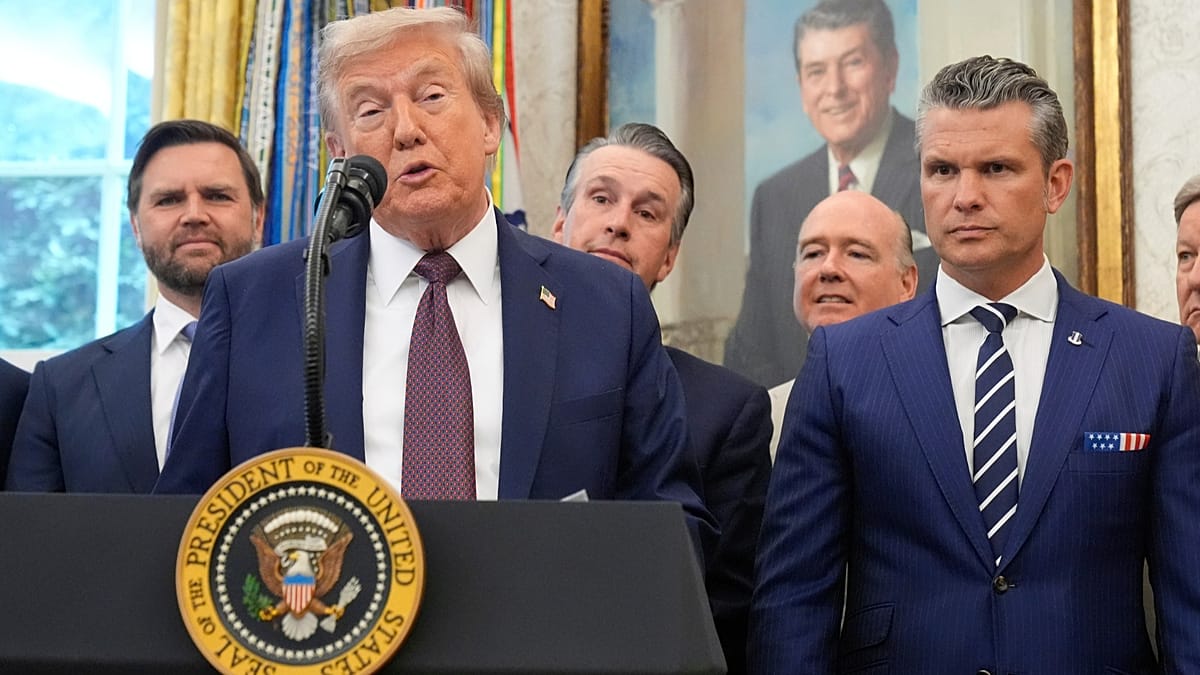
Trump’s statement that the US will “run” Venezuela until a “proper transition” raises its own concerns. The operation signals that the Trump Corollary outlined in the 2025 National Security Strategy is not mere bluster, but it also thrusts Washington into nation-building mode—a process that has historically produced mixed results at best.
For European investors navigating emerging market risk, the Venezuela transition offers a stark reminder that resource wealth alone does not guarantee stability or returns. The presence of Chinese debt—Beijing has lent more than $60 billion to Venezuela in recent decades—further complicates the picture, as does the involvement of Russian military and intelligence assets.
Regional implications: Migration, trade and US influence
The Venezuela crisis has already reshaped Latin America’s economic and political landscape. The mass exodus of 6.8 million Venezuelans has placed enormous strain on social services in Colombia, Brazil, Ecuador and Peru, while remittances from the diaspora have become a critical economic lifeline for those who remained.
The removal of Maduro could accelerate or reverse these flows depending on the success of reconstruction efforts. If stability returns and economic opportunities emerge, some migrants may return. If the transition descends into chaos, a fresh wave of refugees could overwhelm regional capacity, triggering political backlash and border tensions.
The intervention also marks a decisive reassertion of US influence in the Western Hemisphere. It dovetails with the changing geopolitics of Latin America, signalling Washington’s intention to clean up the neighbourhood and establish a zone of greater strategic benefit. For Latin American governments, the message is clear: the Trump administration is willing to use military force to achieve regime change, regardless of international opinion.
Several regional leaders—including those in Mexico, Colombia and Brazil—condemned the US intervention, but it remains unclear whether countries in the region will be willing or able to truly push back on Washington’s actions. The operation exposes the limits of regional institutions like the Organization of American States and underscores the asymmetry of power in hemispheric relations.
For European policymakers, Venezuela offers a parallel to debates over sovereignty, intervention and economic reconstruction in their own neighbourhood. The EU has long supported a democratic transition in Venezuela but has been wary of military intervention. UK Prime Minister Keir Starmer said Britain would “shed no tears” over the end of Maduro’s rule but emphasised support for international law, reflecting Europe’s more cautious approach.
Investment implications: Who benefits?
If Venezuela stabilises, the potential returns are substantial—but so are the risks. Several sectors stand to benefit from reconstruction efforts:
Energy infrastructure: Rebuilding Venezuela’s oil industry will require massive capital investment in refineries, pipelines, extraction technology and export facilities. US oil companies including ExxonMobil and ConocoPhillips, which were forced out in the 2000s, may seek to return. Chevron, currently the only major US firm operating in the country, is positioned to expand operations significantly.
Construction and engineering: Venezuela’s infrastructure—roads, bridges, ports, electricity grids—has deteriorated dramatically. International contractors with experience in post-conflict reconstruction could find lucrative opportunities, though security concerns will remain paramount.
Financial services: Venezuela’s banking system has been hollowed out by hyperinflation and capital flight. The country launched a new currency in 2021, dropping six zeros from its bolivar notes, but rebuilding trust in financial institutions will require comprehensive reform. European banks expanding into Latin America may see opportunities in trade finance and corporate lending.
Consumer goods and retail: With GDP having collapsed by 73 per cent and basic goods scarce for years, pent-up demand for everything from food to electronics could drive a consumption boom if incomes recover. However, purchasing power will remain constrained until the labour market stabilises.
Mining and minerals: Beyond oil, Venezuela has significant deposits of gold, iron ore, bauxite and rare earth elements. These have been largely undeveloped or controlled by criminal networks during the Maduro era. A stable government could attract mining investment, though environmental and social governance standards will be crucial.
The caveat to all of this is political risk. Venezuela’s legal system is weak, property rights are poorly defined, and the risk of future expropriation cannot be dismissed. US oil companies have not forgotten being kicked out in the early 2000s, and any investor entering Venezuela must weigh the potential returns against the possibility of another populist backlash in a decade or two.
For European firms evaluating emerging market opportunities, Venezuela presents a classic risk-reward calculation. The upside is substantial but highly contingent on factors—political stability, legal reform, security—that remain deeply uncertain.
Lessons for Europe: Resource curse and institutional resilience
Venezuela’s collapse offers sobering lessons for resource-rich economies and those managing economic transitions. Countries that discover resources after forming robust democratic institutions are usually better able to avoid the resource curse. Norway, for instance, has enjoyed steady growth since discovering North Sea oil in the 1960s, with the petroleum sector now accounting for just 20 per cent of GDP thanks to diversification and strong governance.
Venezuela took the opposite path. By the time Chávez and Maduro captured and hollowed out the country’s democratic institutions—from the electoral authority to the military to the media—there was nothing and nobody to stop terrible policy. The judiciary and legislature, which in most countries would have contained the damage, had been neutered.
For Europe, grappling with its own challenges around economic competitiveness and institutional reform, Venezuela is a cautionary tale. Strong institutions matter more than natural resources. Transparent governance, independent judiciaries, free media and competitive markets are not luxuries—they are prerequisites for sustained prosperity.
The Venezuela case also highlights the dangers of economic over-dependence on a single commodity. Oil as a percentage of Venezuela’s exports rose from around 71 per cent in 1998 to nearly 98 per cent by 2013, leaving the economy catastrophically exposed when prices collapsed in 2014. Economic diversification—the kind Europe has pursued through its single market and industrial policy—is essential for resilience.
What happens next: Three scenarios
The trajectory of Venezuela’s reconstruction will depend on decisions made in Washington, Caracas and beyond over the coming months. Three broad scenarios are possible:
Optimistic case: A credible transition government takes power with US backing, security forces accept the change, and major powers including the EU commit to reconstruction assistance. Oil production gradually recovers as international companies return, investment flows increase, and Venezuelan migrants begin returning home. Economic growth resumes within two to three years, and Venezuela re-emerges as a stable, if still fragile, democracy.
Probability: Low to moderate. This requires near-perfect political alignment, substantial external support, and luck.
Base case: A messy but manageable transition unfolds with significant US involvement, partial cooperation from military elites, and continued political fragmentation. Oil production improves slowly, investment returns cautiously, and economic recovery is uneven. Security concerns persist, governance remains weak, and the risk of future instability endures. Venezuela becomes a semi-functional petrostate rather than a thriving democracy.
Probability: Moderate to high. This mirrors outcomes in other resource-rich states with weak institutions.
Pessimistic case: The transition collapses into factional conflict, with competing power centres fighting for control. Oil exports halt, infrastructure is damaged in fighting, and a humanitarian crisis deepens. Regional instability spreads, migration surges, and Venezuela becomes a failed state requiring sustained international intervention. Economic reconstruction is delayed by a decade or more.
Probability: Low to moderate, but rising if political missteps accumulate.
Europe’s stake in Venezuela’s future
For European businesses and policymakers, Venezuela may seem distant, but its trajectory has direct implications. Global oil markets remain interconnected, and any significant supply disruption—or expansion—affects prices from Rotterdam to Rome. The success or failure of reconstruction will shape perceptions of emerging market risk across Latin America, influencing capital flows and investment decisions from São Paulo to Buenos Aires.
More broadly, Venezuela tests the viability of external intervention as a tool for resolving governance failures. Europe has taken a more cautious stance than Washington, preferring diplomatic pressure and sanctions to military action. The outcome in Venezuela will inform debates over how democracies should respond to authoritarian collapse, state failure and humanitarian catastrophe.
Finally, Venezuela’s crisis underscores the importance of institutional quality and economic diversification—themes central to Europe’s own reform agenda. In a world where resource wealth can be both blessing and curse, the foundations that matter most are rule of law, transparent governance, and resilient institutions.
Conclusion: Opportunity amid uncertainty
The removal of Nicolás Maduro was inevitable. The humanitarian catastrophe he presided over, the economic collapse he engineered, and the kleptocracy he commanded left no other path forward. Venezuela had become a textbook case of how not to manage a resource-rich economy, a cautionary tale of corruption, mismanagement and authoritarian control.
What remains uncertain is whether his removal marks the beginning of genuine reconstruction or merely the opening chapter in a prolonged period of instability. The oil reserves are real, the investment opportunities substantial, but so too are the political risks and governance challenges.
For investors, the calculus is clear: Venezuela offers potentially transformative returns, but only for those willing to tolerate extreme uncertainty and patient enough to wait years for payoffs. For policymakers, Venezuela is both opportunity and warning—a chance to support democratic renewal, but also a reminder that economic reconstruction requires far more than military intervention.
The next six to twelve months will determine whether Venezuela emerges as a post-conflict success story or descends into the kind of fractured, violent instability that has plagued Libya, Yemen and Syria. Either way, the world—and Europe—will be watching closely.
Related reading:
The post Venezuela After Maduro: The Economic and Political Implications of Regime Change appeared first on European Business & Finance Magazine.