
















Trump Threatens 200% Tariff on French Wine as Macron Rejects “Board of Peace” Gambit
US President weaponizes trade policy to coerce French participation in controversial global mediation initiative, risking €820M annual champagne exports and escalating transatlantic tensions already inflamed by Greenland crisis
President Donald Trump threatened Tuesday to impose devastating 200% tariffs on French wines and champagnes after French President Emmanuel Macron reportedly declined joining Trump’s “Board of Peace” initiative—a controversial global mediation body demanding $1 billion membership fees and raising fundamental questions about United Nations sovereignty. The extraordinary tariff threat, delivered to reporters at Palm Beach International Airport, represents the latest weaponization of trade policy in Trump’s expanding confrontations with European allies, complementing the 10% tariffs (escalating to 25% by June) already imposed on eight European nations including France over the Greenland territorial dispute.
“Did he say that? Well, nobody wants him because he will be out of office very soon,” Trump responded when informed of Macron’s stance, dismissively referencing the French president’s constitutionally mandated departure in May 2027. “I’ll put a 200% tariff on his wines and champagnes, and he’ll join, but he doesn’t have to join.” The threat immediately sent shockwaves through France’s €3.8 billion wine and spirits export sector, with the United States representing France’s largest wine market and accounting for approximately 25% of total French beverage alcohol exports.
Strategic Stakes for French Wine Industry
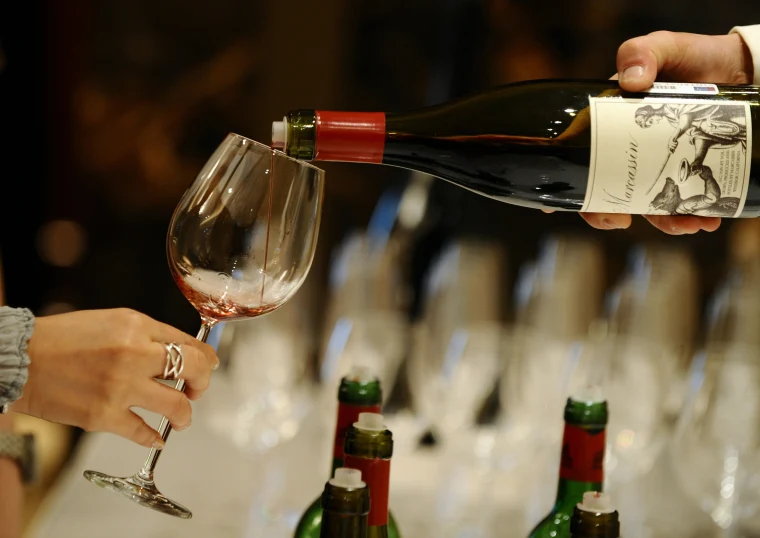
The proposed 200% levy would prove catastrophic for French wine producers already navigating challenging market conditions. France exported €3.8 billion in wines and spirits to the United States in 2024, with the US market absorbing 27.4 million bottles of champagne alone—valued at approximately €820 million according to Comité Champagne data. Gabriel Picard, chairman of the French wine and spirits export lobby FEVS, told Reuters Monday that the industry had already experienced 20-25% declines in US activity during the second half of 2024 following previous trade measures, before Trump’s latest threat materialized.
The timing couldn’t be worse for champagne houses. Global shipments plummeted 9.2% in 2024 to just 271.4 million bottles, with French domestic consumption falling 7.1% and export markets showing extreme price sensitivity. Average champagne prices in the US market dropped from $50.20 per bottle in 2023 to $44.26 in 2024 according to customs data, reflecting reduced sales of prestige cuvées and aggressive competitive pressure from Prosecco, which hit record exports of 660 million bottles globally.
Current US tariffs on EU wines and spirits already stand at 15%—a rate French producers have lobbied intensely to eliminate since Trump and European Commission President Ursula von der Leyen agreed a US-EU trade deal in Scotland last summer. The proposed 200% levy would triple retail prices overnight, effectively pricing French wines out of American consumer reach and handing massive market share gains to domestic California producers, Australian imports, and Italian sparkling wines.
Industry analysts calculate the 200% tariff would add approximately $65 to the average directly imported bottle and $168 to re-imported prestige cuvées, transforming €40 champagnes into $150+ luxury purchases accessible only to the wealthiest consumers. Given that champagne exports to the US represent 9.9% of total champagne volume sales and 17.9% of total export value, such pricing would trigger supply chain collapse throughout Champagne’s 34,000-hectare protected appellation.
Board of Peace: Geopolitical Leverage or Vanity Project?
The “Board of Peace” initiative that triggered Trump’s wine war threat began as a September 2025 proposal focused on Gaza ceasefire mediation but has expanded into a sprawling global conflict resolution mechanism that diplomats warn could undermine UN Security Council authority. A draft charter obtained by Reuters reveals extraordinary financial requirements: countries seeking membership lasting beyond three years must contribute $1 billion in cash, with Trump designated as inaugural chairman presiding over all membership decisions.
Approximately 60 countries received invitations, with Hungary, Vietnam, and Morocco accepting. Trump confirmed Tuesday he has extended invitations to Russia—raising profound questions about how Vladimir Putin’s presence would facilitate impartial mediation—while Macron’s France, along with most major European democracies, remains conspicuously absent. Sources close to Macron confirmed Monday the French president intends to decline participation, viewing the initiative as geopolitically problematic and institutionally redundant given existing UN mechanisms.
In a diplomatic breach underlining deteriorating US-France relations, Trump published what he claimed was a private text message from Macron seeking to arrange dinner in Paris during Trump’s World Economic Forum visit to Davos this week. “I do not understand what you are doing on Greenland,” Macron wrote according to Trump’s post, directly challenging the American president’s territorial ambitions toward the semi-autonomous Danish territory.
The leaked exchange illustrates the comprehensive breakdown in transatlantic cooperation, with European unity solidifying around defending Greenland’s right to self-determination and Denmark’s sovereignty. EU ambassadors convened emergency meetings Sunday following Trump’s Greenland tariff announcements, weighing retaliatory measures including €93 billion in tariffs on US goods and deployment of the Anti-Coercion Instrument—a never-before-used mechanism enabling punitive economic measures against countries attempting to coerce policy changes through trade threats.
Pattern of Tariff Coercion Draws Legal Scrutiny
Trump’s 200% wine tariff threat follows established patterns of weaponizing trade policy to achieve non-economic foreign policy objectives—a practice facing increasing judicial scrutiny regarding constitutional separation of powers. Congress constitutionally controls taxing authority, and multiple Trump tariffs imposed during his second term face legal challenges questioning presidential overreach under the International Emergency Economic Powers Act (IEEPA).
The wine threat specifically mirrors Trump’s March 2025 warnings of 200% tariffs on wine and alcoholic beverages during earlier transatlantic tensions, suggesting the President maintains a repertoire of sectoral targeting designed to maximize political pain. French wine represents culturally totemic exports with concentrated regional production—champagne originates exclusively from Champagne’s 34,000 hectares—creating acute political pressure on Macron from economically vulnerable constituencies.
Yet European officials increasingly view such threats as negotiating theater rather than actionable policy, particularly given the complex domestic political calculations surrounding food and beverage pricing. Imposing 200% wine tariffs would trigger fierce backlash from American restaurants, retailers, and consumers who regard French wine and champagne as premium category staples. The Wine & Spirits Wholesalers of America reported 10% sales declines for champagne in 2024, demonstrating market price sensitivity that would intensify dramatically under triple-digit tariff scenarios.
Macron’s Political Calendar Complicates Calculus
Trump’s dismissive reference to Macron being “out of office very soon” reflects accurate constitutional reality—France holds presidential elections in spring 2027, with Macron constitutionally barred from seeking a third consecutive term. Yet that lame-duck status paradoxically strengthens Macron’s resolve to resist Trump’s coercion, as the French president no longer faces electoral consequences for defying American pressure.
Macron’s center-right alliance currently governs in uneasy coalition following parliamentary elections that fractured the French political landscape. Appearing to capitulate to Trump’s wine extortion would provide powerful ammunition to Marine Le Pen’s National Rally and left-wing populists who characterize Macron as subservient to American interests. Standing firm against Trump—particularly on issues involving French national pride like wine—offers rare opportunities for political consensus across France’s polarized electorate.
The geopolitical theater extends to Davos, where both leaders attend the World Economic Forum this week. Macron arrives Tuesday before returning to Paris that evening, while Trump’s schedule includes multilateral discussions on Ukraine, Middle East stability, and trade frameworks. Whether the two presidents meet directly, and if such meetings produce wine tariff de-escalation, will significantly impact near-term market sentiment for French beverage exports.
For French winemakers watching from Bordeaux, Burgundy, and Champagne’s chalk cellars, Trump’s threats inject devastating uncertainty into an industry already struggling with climate volatility, shifting consumer preferences toward non-alcoholic alternatives, and brutal price competition from New World producers. The 200% tariff—if implemented—would not merely damage sales; it could permanently restructure global wine trade patterns, accelerating diversification away from US dependence toward Asian and emerging markets where French wines face fewer political headwinds.
As EU ambassadors deliberate retaliatory options and French industry groups scramble to calculate economic impacts, one certainty emerges: Trump’s transactional approach to foreign policy, wielding tariffs as diplomatic cudgels, has transformed fine wine from cultural diplomacy symbol into collateral damage in great power confrontations that show no signs of de-escalating.
Further Reading
Trump threatens 200% tariff on French wine, leaks Macron text exchange – Euronews (January 20, 2026)
https://www.euronews.com/business/2026/01/20/trump-threatens-200-tariff-on-french-wine-leaks-macron-text-exchange
Trump Threatens Tariffs on French Wines to Get Macron to Join Board of Peace – Reuters/US News (January 20, 2026)
https://www.usnews.com/news/top-news/articles/2026-01-20/trump-threatens-tariffs-on-french-wines-to-get-macron-to-join-board-of-peace
Trump threatens 200% tariff on French wine in ‘Board of Peace’ push – UPI (January 20, 2026)
https://www.upi.com/Top_News/US/2026/01/20/Trump-threatens-tariffs-France-Board-of-Peace/2331768894443
Champagne Export Prices Drop 8% in U.S. After Decade-Long Surge and New 15% Tariff – Vinetur (November 5, 2025)
https://www.vinetur.com/en/2025110492953/champagne-export-prices-drop-8-in-us-after-decade-long-surge-and-new-15-tariff.html
French Wine and Spirits Exports Slides Further in 2024 on Weaker China Demand – Vino Joy News (February 18, 2025)
French Wine and Spirits Exports Slides Further in 2024 on Weaker China Demand
The post Trump Threatens 200% Tariff on French Wine as Macron Rejects “Board of Peace” Gambit appeared first on European Business & Finance Magazine.