























Traders Braced for Oil Market Upheaval After Trump’s Venezuela Strikes

Muted initial response masks deeper uncertainty over Latin America’s energy future
Oil markets opened Sunday evening with surprising calm following the dramatic US military capture of Venezuelan President Nicolás Maduro, but traders warn that the muted initial reaction belies profound uncertainty about what comes next for a country holding the world’s largest proven oil reserves.
Brent crude and West Texas Intermediate both edged higher in early Asian trading but remained well below the $70-per-barrel threshold that would signal serious supply concerns. The subdued response reflects a stark reality: Venezuela currently produces less than one per cent of global output, making any immediate supply disruption manageable in an already oversupplied market.
Yet beneath the surface calm lies a more complex calculation. Markets face massive volatility as traders weigh the risk of civil war against a potential oil recovery, with the outcome likely to reshape Latin American energy flows and investment risk calculations for years to come.
The immediate impact: Why prices barely moved
Venezuela produces only about 800,000 barrels of oil per day, a fraction of the 3.5 million barrels it pumped before the socialist regime took power in 1999. That collapse—driven by corruption, underinvestment and mass emigration of skilled workers—means the country’s immediate contribution to global supply is negligible.
More importantly, timing matters. Oil markets in 2025 posted their worst annual performance in six years, with persistent oversupply keeping prices subdued throughout the year. The market is oversupplied, so there are less concerns over the loss of some supply, according to industry analysts.
Arne Lohmann Rasmussen, chief analyst at Global Risk Management, told CNBC that markets had already priced in a conflict with Venezuela that would disrupt oil exports, reducing the shock factor when Trump’s forces struck Caracas in the early hours of Saturday morning.
The quality of Venezuelan crude also limits its fungibility. More than 67 per cent of Venezuela’s output is heavy crude requiring specialised refining equipment, meaning it cannot easily substitute for lighter grades traded on international markets.
China’s strategic loss: The geopolitical dimension
Beyond the immediate supply calculus lies a deeper geopolitical shift. Venezuela exports most of its oil to China and India, with Beijing accounting for roughly 80 per cent of purchases. These barrels have been critical to China’s strategy of stockpiling cheap crude at steep discounts due to geopolitical risk premiums.
By removing Maduro, Washington effectively severs a critical Latin American artery for China, which has been the primary buyer of Venezuelan crude in exchange for debt repayment. Beijing has lent more than $60 billion to Venezuela in recent decades, using oil-for-loans arrangements to secure energy supplies while expanding influence in America’s backyard.
For European businesses tracking geopolitical risk, the Venezuela operation demonstrates how quickly resource flows can be weaponised in great power competition. The move fits into the broader pattern of strategic rivalry reshaping global markets that has defined the post-pandemic era.
A Chinese oil tanker that had been transporting Venezuelan crude for five years and was heading to Venezuela diverted course immediately following the US strikes, according to shipping data—a sign of Beijing’s uncertainty about the new landscape.
The Libya question: What happens next?
The real uncertainty facing oil markets is not about the next few days but the next few months. Jorge León, head of geopolitical analysis for Rystad Energy, expects Venezuela is likely to look more like post-Gaddafi Libya, owing to remaining support for Maduro’s Chavismo movement and multiple opposition leaders in exile who are all likely to vie for power.
If that proves accurate, the implications for energy markets are grim. Libya’s oil production has never recovered to pre-2011 levels, plagued by militia control of fields, infrastructure attacks, and political fragmentation that makes long-term investment impossible.
Trump’s statement that the US will “run the country” until a “proper transition” raises as many questions as it answers. The president declined to back opposition leader María Corina Machado, instead indicating his administration had been in contact with Maduro’s vice president Delcy Rodríguez—a signal that alarmed Venezuelan democrats who fear dealing with regime remnants will perpetuate instability.
Hardline elements of the Maduro regime remain in control on the ground, including Defence Minister Vladimir Padrino López and Interior Minister Diosdado Cabello. The military, deeply embedded in a system of corruption and patronage, has little incentive to cede power without guarantees of amnesty.
Colombian President Gustavo Petro has deployed troops to the 2,000-kilometre border, describing the strike as an “assault on sovereignty” and activating contingency plans for what he expects to be a massive influx of refugees or even military spillover.
Trump’s oil gambit: Billions promised, but will companies bite?
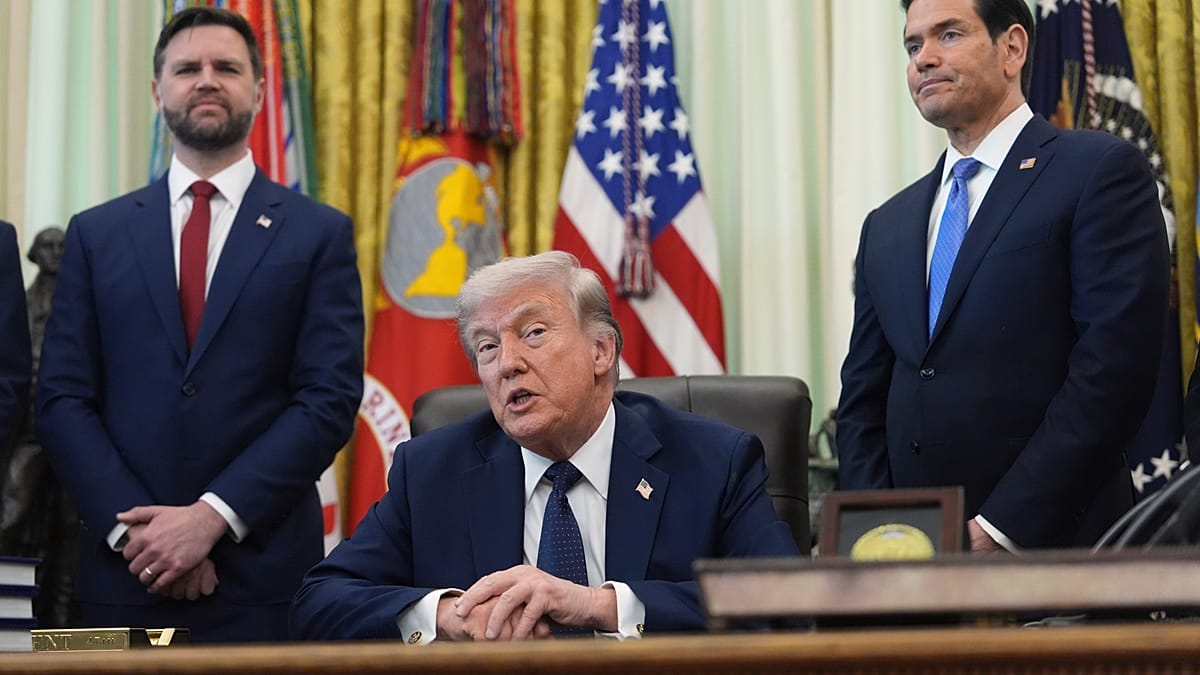
“We’re going to have our very large United States oil companies go in, spend billions of dollars, fix the badly broken infrastructure”, Trump declared at his Mar-a-Lago press conference on Saturday, flanked by Secretary of State Marco Rubio and Defence Secretary Pete Hegseth.
The promise is ambitious but faces formidable obstacles. International oil companies have not forgotten being expelled and nationalised in the early 2000s when Hugo Chávez seized foreign assets. Exxon Mobil and ConocoPhillips were forced out, and their executives are unlikely to rush back without iron-clad legal guarantees and political stability.
Chevron, currently the only major US firm operating in Venezuela, issued a cautious statement saying it “remains focused on the safety and wellbeing of our employees, as well as the integrity of our assets” while continuing to “operate in full compliance with all relevant laws and regulations.”
The company’s carefully worded response reflects the uncertainty on the ground. Andy Lipow, president of Lipow Oil Associates, warned that Venezuela’s oil exports could come to a complete halt since it is unclear who is in charge in Caracas, with buyers likely unsure to whom they should send money.
Even if political stability emerges quickly—an optimistic assumption—the infrastructure challenges are staggering. Venezuela’s refineries, pipelines and export terminals have deteriorated after decades of underinvestment. The port of La Guaira has sustained severe damage during the strikes, according to early assessments from state-run Petróleos de Venezuela (PDVSA).
For European investors evaluating Latin American opportunities, Venezuela presents a classic high-risk, high-reward scenario. The potential returns are substantial—303 billion barrels of proven reserves dwarf even Saudi Arabia’s 267 billion—but the political and operational risks are equally immense.
Market structure: Why oversupply limits upside
The timing of Trump’s Venezuela operation may actually prove fortuitous for managing oil price volatility. Global oil markets enter 2026 facing significant oversupply concerns, with production outpacing demand growth and inventories building across major consuming regions.
If Venezuela remains unstable and prices are elevated on higher risk and slightly lowered global supply, those dynamics may actually help offset the coming wave of oversupply, according to León at Rystad Energy.
OPEC+ is scheduled to meet Sunday in a regularly scheduled monthly gathering, where member countries are expected to confirm a previously decided pause on production rate changes through the first quarter of 2026. The cartel has been walking a tightrope, trying to support prices without ceding market share to US shale producers.
The Venezuela situation gives OPEC+ breathing room. Any supply disruption—even a modest one—helps justify continued production restraint without triggering accusations of artificial price manipulation.
Giovanni Staunovo, a strategist at UBS, noted that exports and production from Venezuela came under downward pressure following the US oil tanker blockade and the risk is that this trend could continue. Trump’s administration had been seizing Venezuelan tankers in the Caribbean since December, pushing West Texas Intermediate futures up roughly 4 per cent even before the weekend strikes.
Long-term scenarios: From transformation to catastrophe
Oil analysts are sketching out several potential trajectories for Venezuelan production, each with vastly different implications for global energy markets:
Optimistic case: A credible transition government takes power with US backing, security forces accept the change, and major oil companies commit billions to infrastructure rehabilitation. Production gradually recovers toward 2-2.5 million barrels per day within five years, adding meaningful supply to global markets and keeping prices in check.
Probability: Low. This requires near-perfect political alignment, sustained capital investment, and years of patient reconstruction in a country where institutions have been hollowed out.
Base case: A messy but manageable transition unfolds with significant US involvement, partial cooperation from military elites, and continued political fragmentation. Production improves slowly to 1.2-1.5 million barrels per day, but security concerns and governance weaknesses constrain growth. Venezuela becomes a semi-functional petrostate rather than a thriving democracy.
Probability: Moderate to high. This mirrors outcomes in other resource-rich states with weak institutions.
Pessimistic case: The transition collapses into factional conflict, with competing power centres fighting for control of oil fields and export infrastructure. Production falls below current levels, potentially dropping to 400,000-500,000 barrels per day. A humanitarian crisis deepens, migration surges, and regional instability spreads.
Probability: Low but rising if political missteps accumulate in coming weeks.
Phil Flynn, senior market analyst at Price Futures Group, called the Venezuela situation “potentially a historic event” for oil markets, noting that the Maduro and Chávez regimes had “basically ransacked the Venezuelan oil industry.”
Yet even Flynn acknowledged that even if international access were fully restored tomorrow, it could take years and incredible expense to bring Venezuelan oil production fully back online.
Europe’s stake: Why this matters beyond energy
For European policymakers and businesses, Venezuela’s trajectory carries implications beyond commodity prices. The operation tests the viability of US-led regime change as a tool for resolving governance failures—a debate with obvious parallels to European security concerns in its own neighbourhood.
The success or failure of reconstruction will shape perceptions of emerging market risk across Latin America, influencing capital flows from São Paulo to Buenos Aires. European banks with Latin American exposure are closely monitoring political developments, knowing that instability in Venezuela could trigger contagion effects throughout the region.
More broadly, Venezuela underscores lessons about institutional quality and economic diversification that resonate with Europe’s own reform debates. Countries that discover resources after forming robust democratic institutions typically avoid the resource curse. Norway has thrived with North Sea oil; Venezuela has collapsed despite far larger reserves.
The difference lies not in geology but governance—a reminder that strong institutions, transparent legal frameworks and competitive markets matter more than natural resources in determining long-term prosperity.
What traders are watching now
As oil markets digest the weekend’s events, several factors will determine whether prices remain subdued or surge:
Political clarity in Caracas: Who actually controls the government, military and oil infrastructure? Until that question is answered, buyers will remain cautious and investment will stay frozen.
Chinese response: Beijing has been Venezuela’s largest customer and creditor. If China retaliates by disrupting other commodity flows or ramping up support for anti-US regimes elsewhere, the geopolitical risk premium could rise sharply.
Regional spillover: Colombia’s border deployment and warnings from other Latin American leaders suggest the potential for wider instability. If Venezuelan refugees flood neighbouring countries or armed groups exploit the chaos, the situation could deteriorate rapidly.
US policy consistency: Trump’s promise to “run” Venezuela until a transition is complete raises questions about American commitment. If domestic political pressure builds against nation-building, Washington may pull back, creating a power vacuum.
Infrastructure damage: Early reports suggest production facilities remain largely intact, but the full extent of damage from the strikes won’t be clear for days or weeks. Any significant infrastructure destruction could constrain production even if political stability returns.
Vandana Hari, chief executive of Vanda Insights, summarised the immediate market view succinctly: the immediate implications for the oil market are minimal—”not much beyond another uptick in the Venezuela risk premium”.
But she and other analysts acknowledge that the situation could evolve rapidly. Oil markets have a long history of pricing in stability only to be shocked by sudden deterioration. Libya, Iraq and Syria all showed how quickly resource-rich states can descend into chaos, taking oil production offline for years or even decades.
For now, traders are watching, waiting and hoping that Trump’s Venezuela gambit produces reconstruction rather than collapse. The answer will shape not just oil prices but the broader geopolitical landscape of the Western Hemisphere for years to come.
Further reading:
- Navigating Oil Price Movements: Essential Elements
- Crude Oil Futures and Geopolitical Uncertainty
- Geopolitical Risks in Infrastructure Portfolios
- European Economic Outlook 2025
- How European Banks Navigate Emerging Markets
The post Traders Braced for Oil Market Upheaval After Trump’s Venezuela Strikes appeared first on European Business & Finance Magazine.