





























The Strongest Currency on Earth Is Slowly Strangling the Companies That Made It Strong
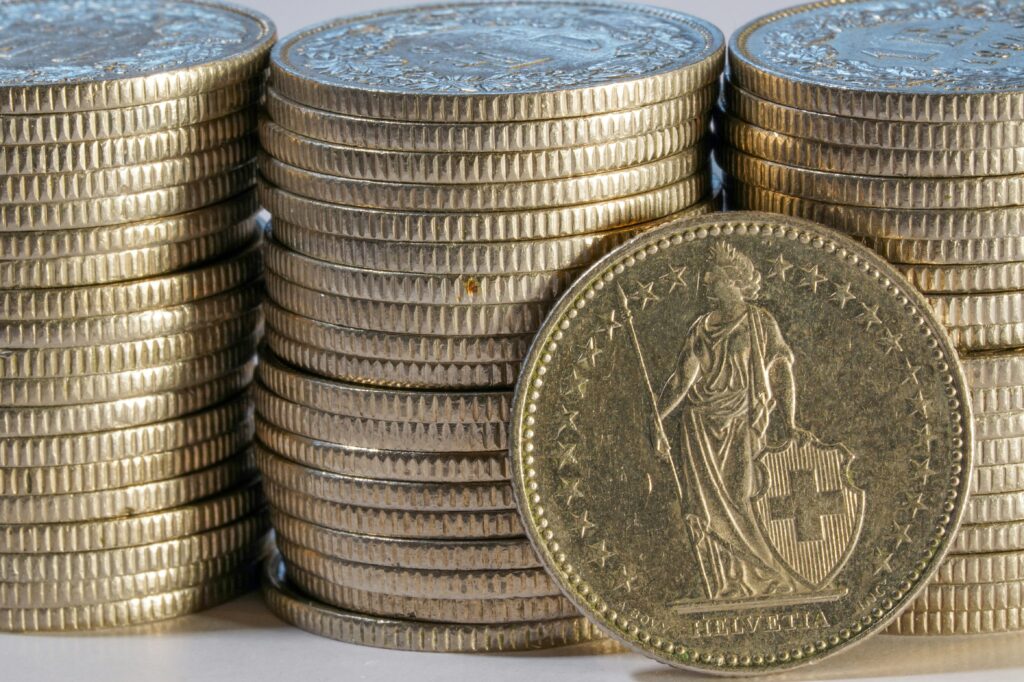
The Swiss franc is the strongest currency on earth. That is not a boast. It is a problem.
In the first six weeks of 2026, the franc has gained 3.5 per cent against the US dollar, hitting an 11-year high in late January. Against the euro, it has climbed to its strongest level in more than a decade, with demand described by ING Bank strategists as “exceptional.” This follows a 12.7 per cent appreciation against the dollar across the whole of 2025. The euro, which started last year at CHF 0.94, fell to an all-time low of CHF 0.918 in November before settling around CHF 0.93.
For Swiss consumers, this is a gift. Shopping in the eurozone has never been cheaper. Holidays abroad are more affordable. Cross-border workers — more than 400,000 of whom commute daily from France, Germany, and Italy — are taking home fatter pay packets in local currency terms.
For Swiss companies, it is something closer to a slow-motion crisis.
Switzerland’s economy is built on exports. Pharmaceuticals, precision engineering, watchmaking, financial services, and luxury goods generate the bulk of corporate earnings, and the vast majority of that revenue is earned in euros, dollars, and other currencies. When those earnings are converted back into an ever-stronger franc, profits shrink — even when underlying business performance is solid.
The effect is compounding. In 2025, the franc appreciated significantly beyond what inflation differentials alone would justify. Swiss inflation fell to effectively zero — 0.1 per cent in December, with some months printing negative. The eurozone, by contrast, was still running inflation above 2 per cent. Normally, a currency strengthens gradually to reflect lower domestic inflation, preserving purchasing power parity over time. But in 2025, the franc overshot that fundamental path, driven by safe-haven demand that had little to do with Switzerland’s own economy and everything to do with the chaos elsewhere.
The triggers were global: unpredictable US trade policy under Trump, including tariffs of up to 39 per cent slapped on Swiss goods in August before a preliminary deal brought them down to 15 per cent in November; questions over Federal Reserve independence; geopolitical instability from Ukraine to the Middle East; and a European economy that stubbornly refused to accelerate. Every spike in uncertainty sent capital flooding into Swiss francs. The dollar has shed roughly 10 per cent since early 2025, and the franc has absorbed much of that flight.
The sectors most exposed are those that define Swiss economic identity. Watch exports fell 1.7 per cent in 2025 to CHF 25.5 billion, with the US — Switzerland’s largest watch market at 17 per cent of exports — particularly disrupted by shifting tariffs. Volumes dropped 4.8 per cent, meaning the decline in value was cushioned only by the industry’s continued push into higher price points. For companies like Swatch and Richemont, the franc’s strength compounds an already difficult picture of weakening Chinese demand and cautious consumer spending.
In pharmaceuticals, the country’s largest export sector, the dynamics are different but the currency pain is the same. Roche and Novartis generate the vast bulk of their revenue in dollars and euros. A strong franc does little to reduce foreign demand for cancer drugs — demand is relatively price-inelastic — but it hammers reported profits when translated back into Swiss francs. As one economist noted, this inelasticity actually makes the problem worse for the Swiss National Bank, because the normal self-correcting mechanism — where a strong currency reduces exports, which in turn weakens the currency — does not fully operate.
Nestlé, the world’s largest food company, faces similar translation headwinds. Its new CEO is plotting a strategic overhaul to reignite growth, but no amount of restructuring can offset the maths of earning in weakening currencies and reporting in a strengthening one.
The Swiss National Bank is trapped. Its policy rate has been at zero since late 2024, having been cut five consecutive times. Inflation is at 0.1 per cent. Chairman Martin Schlegel acknowledged at Davos in January that inflation could print negative in 2026, and said the SNB would return to negative interest rates “if we need to.” But the bar is high. Negative rates — which Switzerland endured for seven years from 2015 to 2022 — are deeply unpopular with savers, punishing for banks, and corrosive to the pension system. Most economists now expect the SNB to hold at zero until at least 2028.
The SNB’s other traditional tool — selling francs on the open market to weaken the currency — has also been constrained. Foreign currency purchases collapsed to just CHF 1.2 billion in 2024, down from CHF 133 billion the year before. The reason is political: the Trump administration has previously labelled Switzerland a “currency manipulator,” and aggressive intervention risks provoking retaliatory tariffs.
So Swiss companies are left to adapt, as they have done before. Over decades, the country’s exporters have built international production networks — manufacturing where they sell, rather than where they are headquartered — precisely to insulate themselves from franc strength. This flexibility is a competitive advantage, but it cannot eliminate translation effects on reported earnings.
A UBS survey of 300 Swiss companies in late 2025 found that businesses expect the euro to weaken further to CHF 0.91 by the end of 2026, with the dollar at CHF 0.78. UBS itself is slightly more optimistic, forecasting CHF 0.95 for the euro — but only if the German economy accelerates. If it doesn’t, and if geopolitical risks intensify, the franc could climb further still.
The franc’s strength is a reflection of everything Switzerland does right: low debt, stable politics, minimal inflation, a productive economy. It is also, for the companies that power that economy, a relentless and largely inescapable tax on success.
The post The Strongest Currency on Earth Is Slowly Strangling the Companies That Made It Strong appeared first on European Business & Finance Magazine.